A Love Story That Grew During Freedom Struggle: Why Did Nehru Send INS Trishul to Britain after Edwina's Death?
The growing closeness between Nehru and Edwina had become a subject of discussion during India's freedom struggle.

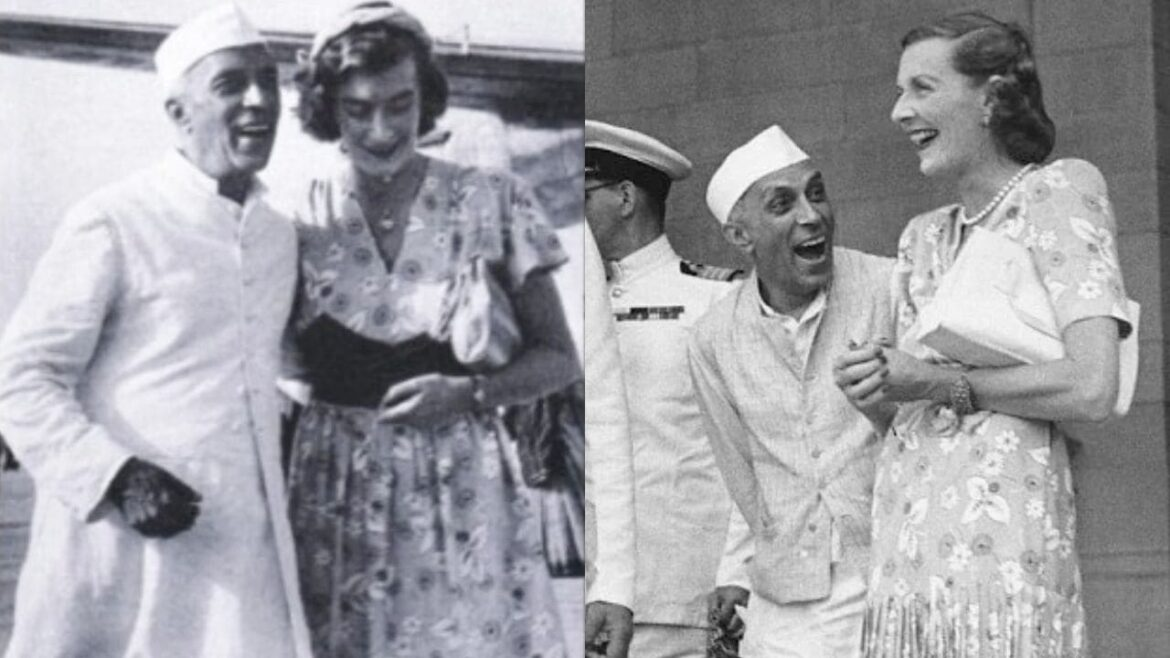
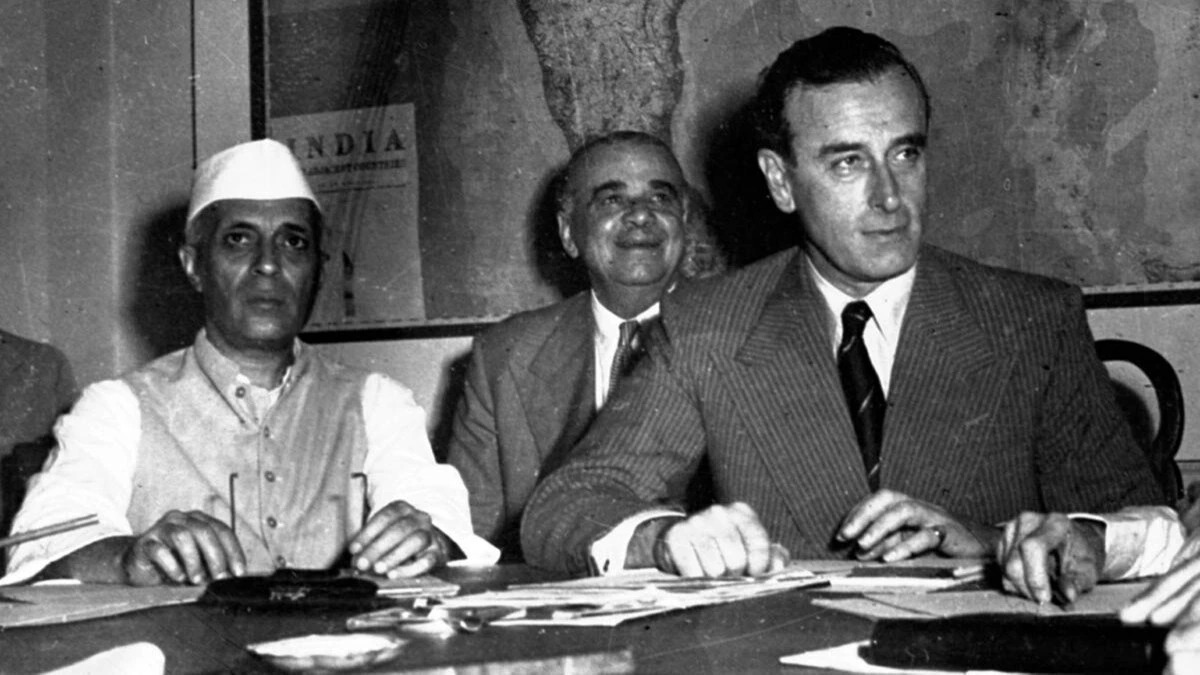
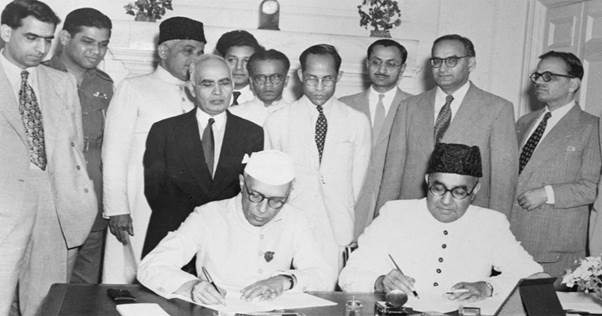
Jawaharlal Nehru and Edwina Mountbatten | Image Source: Post Oast
In the 1940s, India’s freedom struggle was at its peak. While on one side, revolutionaries were fighting the British and sacrificing their lives for independence, on the other, a story was silently unfolding within political circles, one that would continue to be discussed for a long time. Among these notable events, one name has repeatedly come up: the relationship between Jawaharlal Nehru and Edwina Mountbatten, the wife of India’s last British Viceroy, Lord Louis Mountbatten. At that time, the nation was in the final phase of its freedom struggle, when many revolutionaries, including Subhas Chandra Bose, had risked everything in the decisive battle against the British. This struggle continued, but during this period, the growing closeness between Nehru and Edwina had become a subject of discussion. Several politicians, officials, and biographers of that time mentioned these relations in their memoirs and books, because of which this love story remains recorded as a controversial chapter between history and politics.
In March 1947, the British government sent Lord Louis Mountbatten, its last Viceroy, to India so that the process of transfer of power could be completed. Along with him, his wife, Edwina Mountbatten, also came to India. Edwina was already well known as an influential and attractive personality in British society. It is said that within just a few days of her arrival in India, she was introduced to Jawaharlal Nehru, and gradually, a deep emotional bond developed between the two. Many people of that time noticed their growing closeness. Even Nehru’s close associate Maulana Abul Kalam Azad, mentioned that Nehru appeared to be particularly influenced by Lady Mountbatten in his book, India Wins Freedom.
The friendship between Jawaharlal Nehru and Edwina Mountbatten gradually became so well known that stories about it began to be heard in both Delhi and London. Historian Stanley Wolpert, in his famous biography Nehru: A Tryst with Destiny, wrote that an unusual closeness between the two could be seen even during public events. At the same time, indications of this relationship were also found in the private diaries of British and Indian officials. It is also said that the two were seen swimming together in the swimming pool of Viceroy’s House, after which discussions about their friendship intensified. It was also said at the time that Lord Louis Mountbatten himself was not unaware of this relationship. Even so, their marriage was already considered a kind of “open marriage,” in which both of them lived their social lives independently.
These discussions gained further momentum when Edwina’s daughter, Pamela Hicks, in later years, acknowledged in her book, Daughter of Empire: Life as a Mountbatten, that there was a deep love between her mother and Jawaharlal Nehru. Pamela wrote that whenever her mother was with Nehru, a certain calmness could be seen within her, as if she had finally found the kind of intellectual and emotional companionship she had long been searching for. It is also said that the two exchanged letters for years, and whenever Nehru travelled to London, he would meet Edwina Mountbatten without fail. In this way, their relationship was not confined only to the period of India’s independence, but rather continued to remain a subject of discussion in the years that followed.
As time passed and many chapters of history changed, the story of Nehru and Edwina’s friendship continued to live on in the same way. On February 21, 1960, when Edwina Mountbatten died suddenly, the depth of this relationship once again came before the world. Edwina had expressed a wish to be buried at sea after her death. In accordance with her wish, her coffin was lowered into the sea from the British naval ship HMS Wakeful. However, during this sea burial, an incident took place that drew everyone’s attention, which was that India’s Prime Minister Jawaharlal Nehru had sent the Indian Navy’s warship INS Trishul to Britain, which sailed alongside HMS Wakeful and paid a wreath tribute to Edwina at sea.
When Edwina’s coffin was being lowered into the sea, marigold garlands were released into the water from the Indian warship INS Trishul. It is said that this decision was taken by Jawaharlal Nehru himself, so that India could express its respect during Edwina Mountbatten’s final rites. This incident raised an important question: just how deep was this relationship that it led the Prime Minister of a sovereign nation to send a naval warship to attend the funeral of a foreign woman?
On May 27, 1964, Jawaharlal Nehru passed away, but even today, the story of Nehru and Edwina Mountbatten is seen as a symbol of the complex relationship between history, politics, and personal life. At the same time, it also raises the question of how, when the country was going through the struggle for independence and the tragedy of Partition, personal stories unfolding at the highest levels of power became a subject of discussion. The presence of INS Trishul during Edwina’s sea burial turned this story into a lasting symbol in history.