The Hidden Truth of the Mountbatten Plan: Why Was the Whole Country Kept in the Dark for Two Days?
August 15, 1947: A Celebration of Freedom, and a Hidden Truth That Chills the Blood

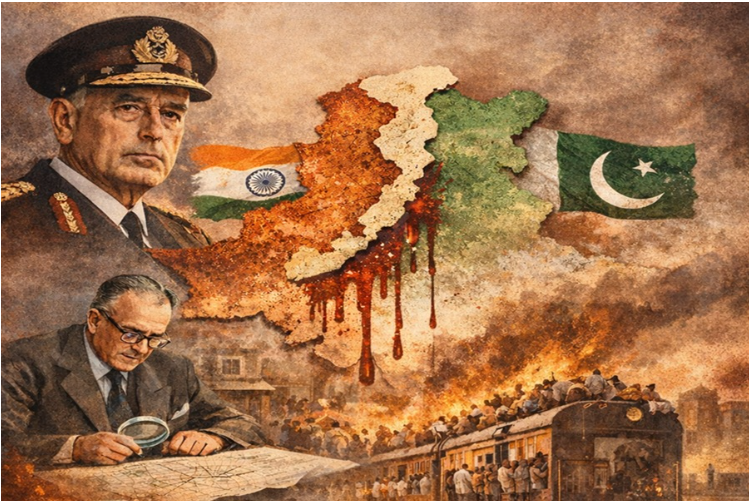
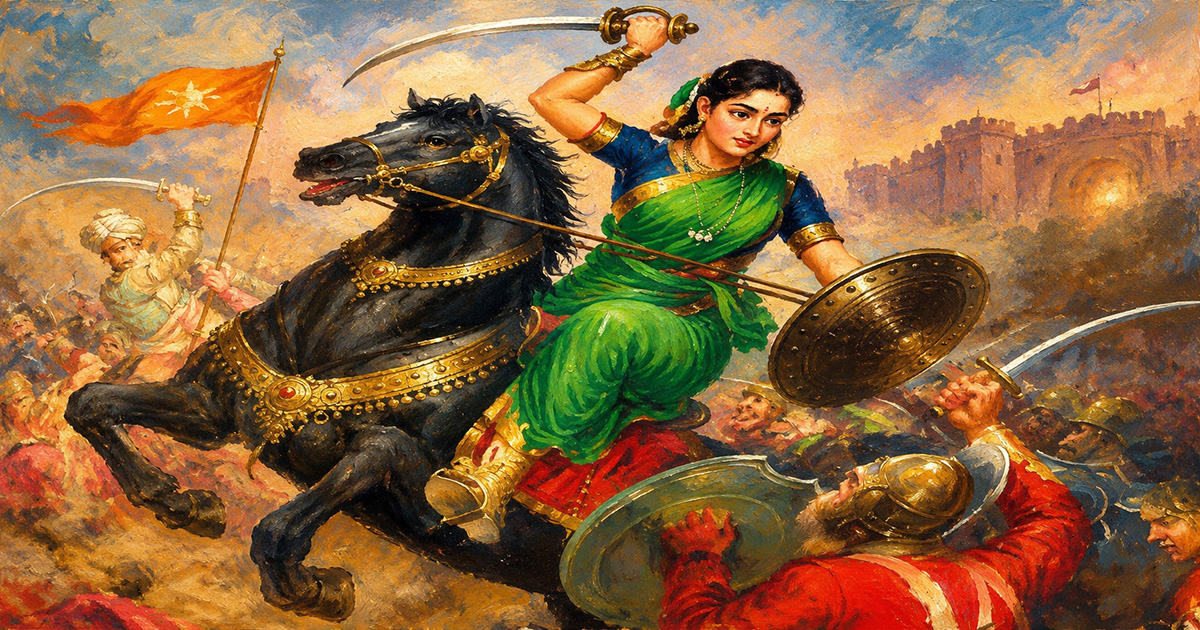
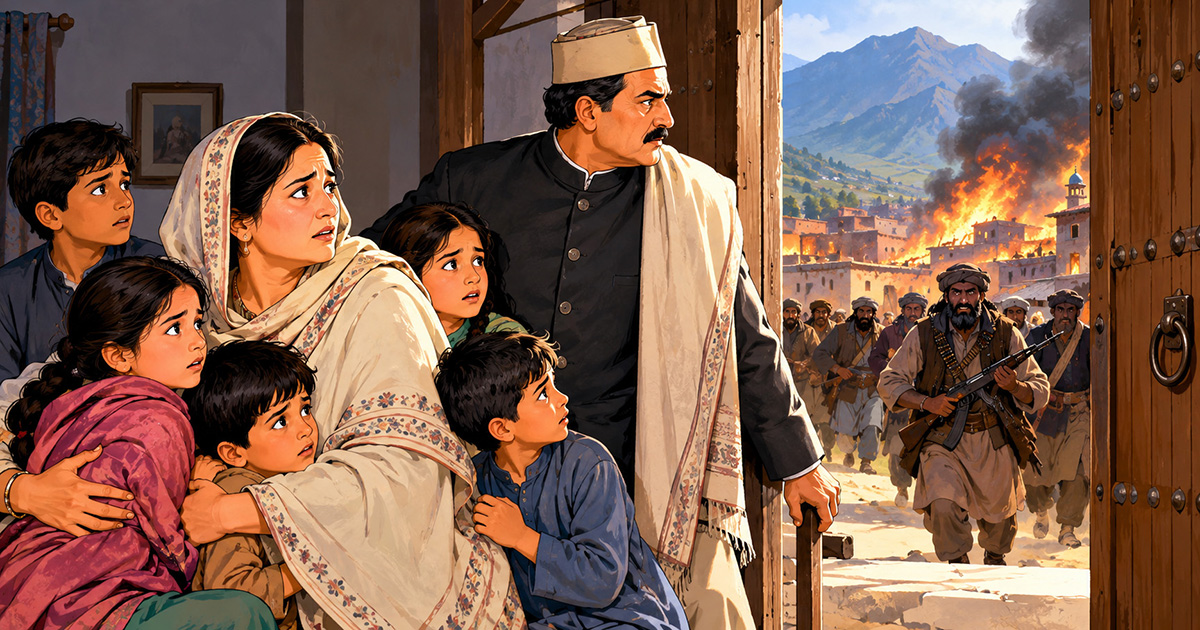
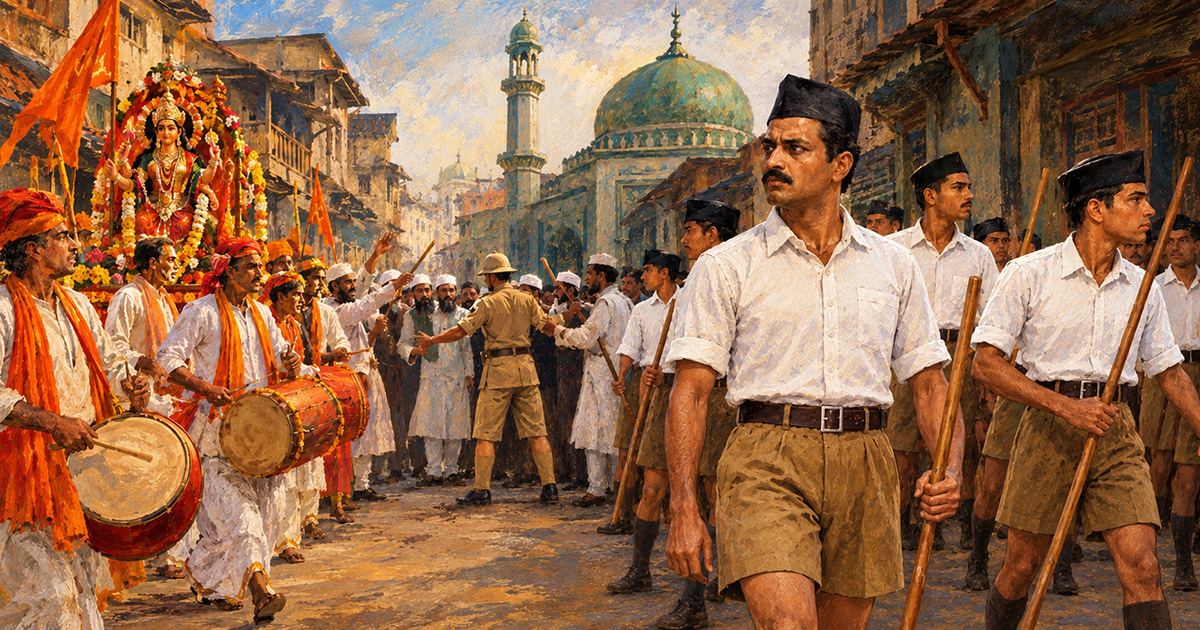
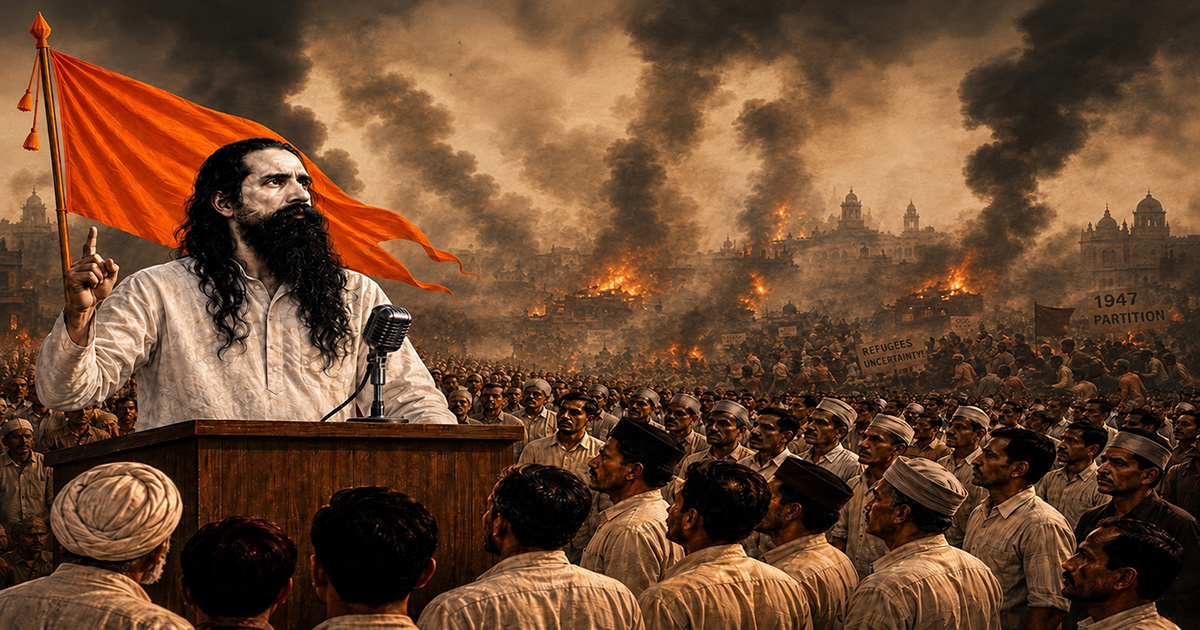
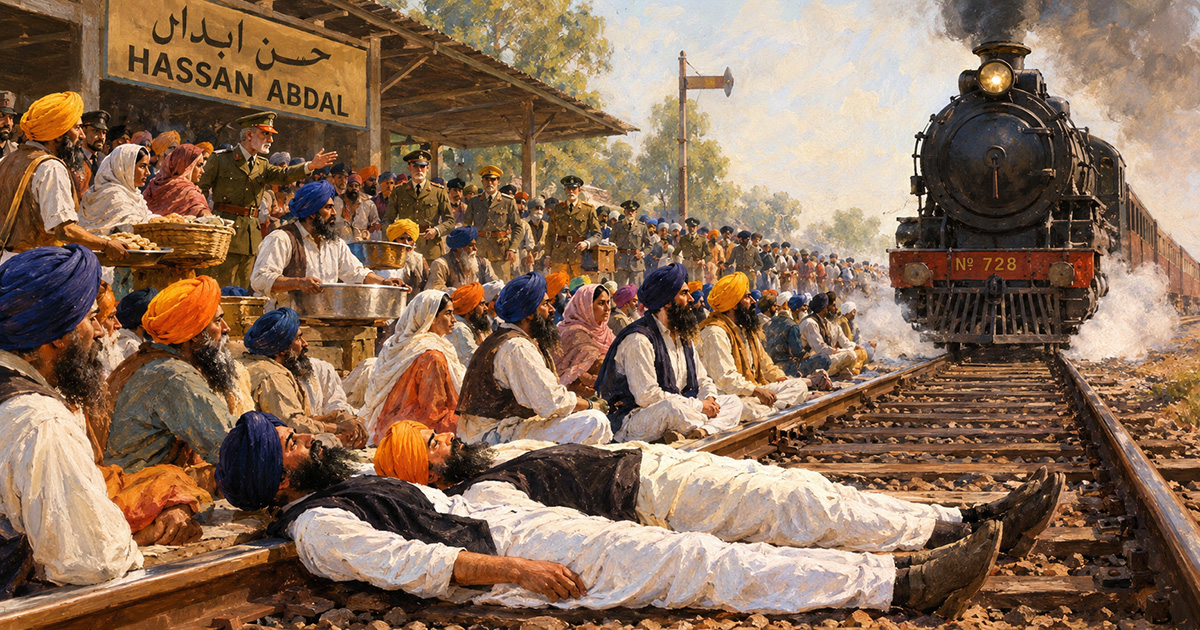
This image is AI-generated
On one side, August 15, 1947, was a day of celebration, the birth of an independent India. On the other side lay a truth so disturbing that it still sends shivers down the spine. Did you know that when the division of the country created India and Pakistan, hundreds of millions of people did not even know which country they belonged to? The most shocking fact of all is that Radcliffe had already drawn the partition maps before independence itself. Yet, Mountbatten kept them secret until 15 August. That hidden truth plunged the entire nation into uncertainty and chaos. Radcliffe himself was so disturbed by the consequences of his decision that he refused his fee, burned all his papers, and never returned to India. Let us now explore, in detail, the hidden truth behind the Mountbatten Plan—and how that deliberate silence pushed the country toward anarchy and bloodshed.
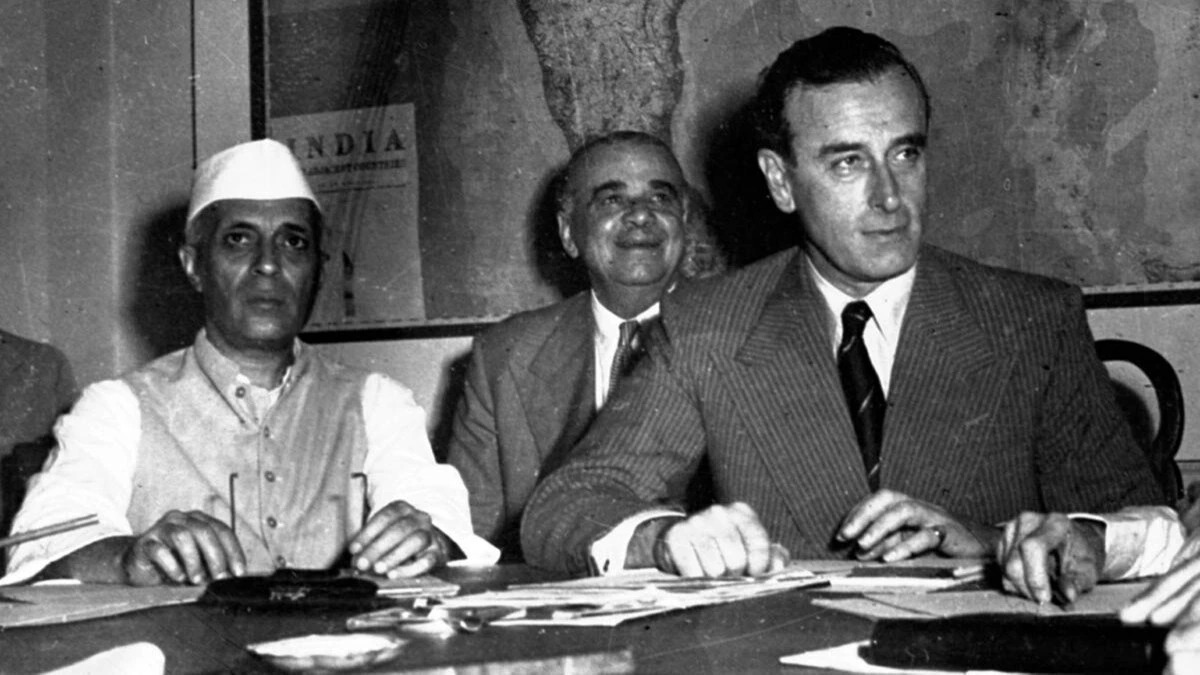
On June 3, 1947, Lord Louis Mountbatten announced the plan for the partition of India. Under this scheme, Punjab and Bengal were to be carved up along religious lines. But behind the curtain of this grand announcement lay a grimmer reality. The task of drawing the new borders was given to a British barrister, Sir Cyril Radcliffe, who had never set foot in India before. He was entrusted with deciding the fate of 400 million people in just five weeks.
Radcliffe hastily sketched the boundaries based on maps, demographic data, and files, without ever seeing the lands or the communities he was dividing. Villages, farms, and even individual homes were sliced in two. The people of Punjab and Bengal waited in unbearable suspense, hearts pounding with one question: “Which country will we belong to tomorrow?” Yet no one had a clear answer for them.
The most shocking part of the story is this: Radcliffe completed the partition maps days before independence itself. Yet, Mountbatten chose to keep them secret. The boundary lines were locked away in the Viceroy’s House in Delhi, and strict orders were issued that they would not be released until August 15. In other words, while the nation danced on the threshold of freedom, the real borders remained hidden.
When India and Pakistan woke up as independent dominions on August 15, 1947, millions still did not know whether their village, town, or district lay in India or Pakistan. The Radcliffe Line was officially announced only on August 17—two days after independence. Those two days were a void filled with uncertainty, rumours, and terror. People were going to sleep in one country and waking up in another.
Former Union Minister Jaswant Singh wrote in his book, “Jinnah: India, Partition, Independence,” that at that moment, neither India nor Pakistan knew where their borders lay. This confusion gave birth to panic, violence, and mass displacement. The countryside erupted; people abandoned their homes, and what had begun as uncertainty turned almost overnight into a horrific human slaughter.
The silence around the maps was the Mountbatten Plan’s biggest hidden truth. Historian Stanley Wolpert, in his book “Shameful Flight”, argues that by keeping the Radcliffe Line secret, Mountbatten turned the transfer of power into a grand theatrical illusion. According to him, the haste and secrecy at the heart of the plan came not from sober statesmanship but from a desire to exit quickly, leaving the bloodshed and blame behind.
Radcliffe himself was so disturbed by the consequences of his work that he refused his fee, burned his notes, and never returned to India. The rushed process meant that in just those two days of darkness, hundreds of thousands of lives were shattered. Many historians believe that had the borders been made clear earlier, a significant number of lives could have been saved.
Today, this story teaches a painful but vital lesson: political calculations and human pride can come at a terrible price. The Mountbatten Plan was not merely a blueprint for independence; it was an act of rushed, callous engineering that kept millions in the dark for two days—and that darkness fed the flames of violence.
The legacy of Partition continues to shape the politics, memories, and relations of the subcontinent. It reminds us that secrecy and haste in history can birth long‑lasting tragedies, and that human lives must never be sacrificed at the altar of political convenience. The question still haunts our historical conscience: was this sheer impatience, or a calculated strategy camouflaged as a hurried transfer of power? That is the buried truth that still echoes through the pages of history.
.jpg)