The Battle of Kashi in 1664: When Naga Sadhus Crushed the Mughal Army to Defend Kashi Vishwanath
In 1664 CE (Vikram Samvat 1721), during what is remembered as the ferocious war, the Dashanami Naga Sadhus fiercely defended the Kashi Vishwanath Temple and inflicted a decisive defeat upon the Mughal forces.

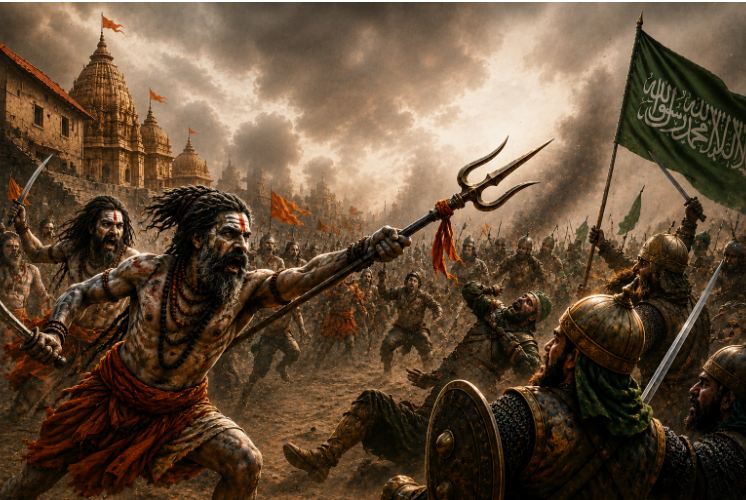
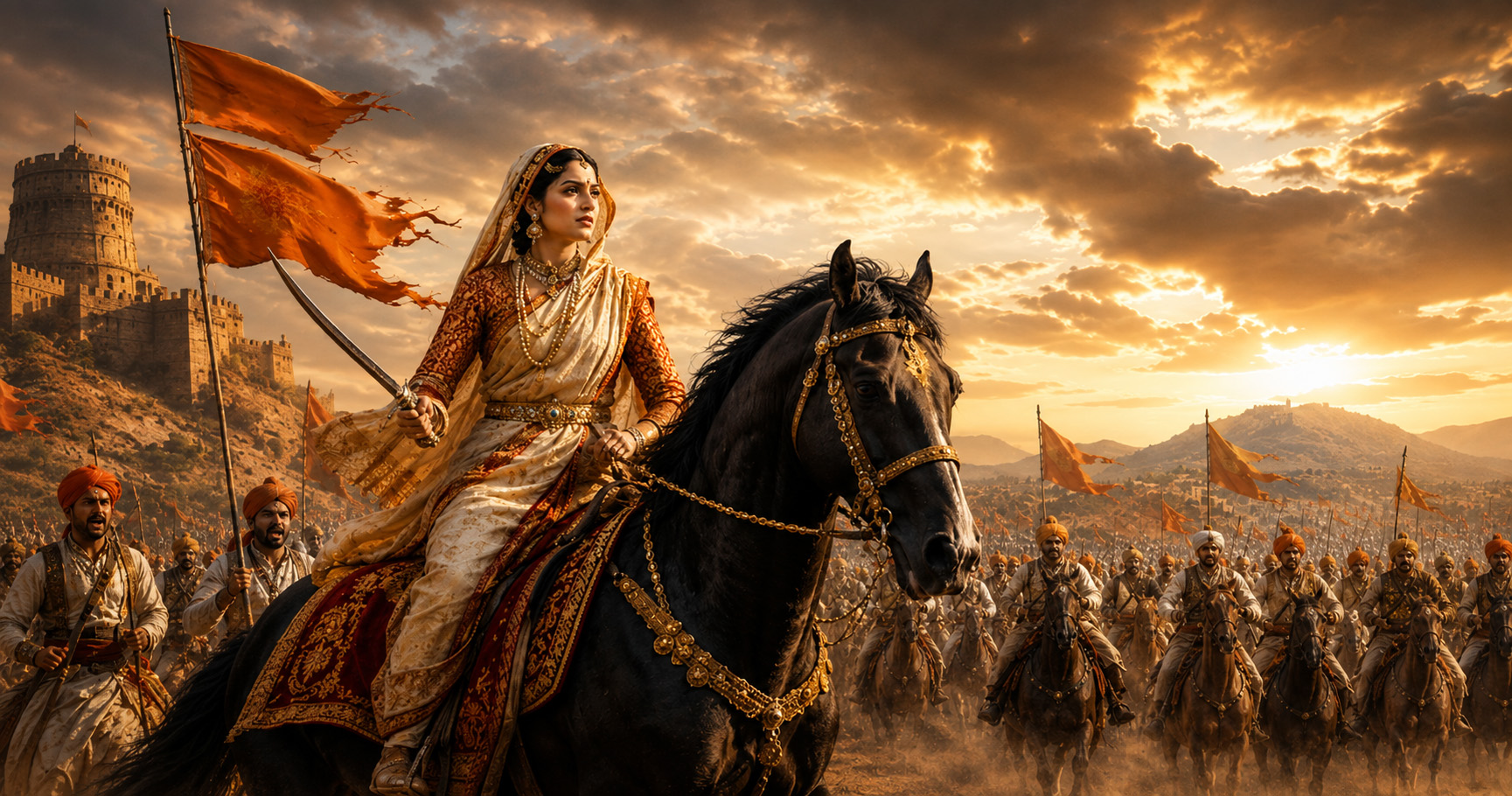
Battle of Kashi fought by Naga Sadhus against the Mughals | This image is AI-generated
There came a day on the sacred soil of Kashi when the mighty Mughal army was defeated in battle by Naga Sadhus. In 1664 CE (Vikram Samvat 1721), during what is remembered as the ferocious war, the Dashanami Naga Sadhus fiercely defended the Kashi Vishwanath Temple and inflicted a decisive defeat upon the Mughal forces. This episode remains one of the most remarkable sagas of Hindu resistance — a story where renunciation and the sword stood side by side in defense of faith.
The incident belongs to the mid-17th century. The Kashi Vishwanath Temple, regarded as one of the most sacred among the twelve Jyotirlingas and mentioned in texts such as the Skanda Purana and the Mahabharata, had endured repeated invasions over centuries.
In 1194, Qutb al-Din Aibak destroyed the temple. Later, in 1585, Raja Todar Mal helped rebuild it. During the reign of Aurangzeb (1658–1707), imperial religious policies became increasingly harsh. During this period, state policies were increasingly shaped in accordance with Islamic Sharia principles. A policy encouraging the demolition of temples was implemented. In addition, public celebrations of Hindu festivals such as Holi and Diwali were restricted, and the Jizya tax was reimposed on non-Muslims.
In 1664, a Mughal force led by commanders Mirza Ali and Abdul Ali marched toward Kashi with the intention of looting and demolishing the temple. The Mughal army numbered in the thousands and possessed advanced weaponry for its time.
Faced with this threat, the Dashanami Naga Sadhus of the Mahanirvani Akhara prepared for battle. These warrior ascetics belonged to the tradition established by Adi Shankaracharya and were organized into ten divisions — Giri, Puri, Bharati, Vana, Aranya, Parvat, Sagar, Tirtha, Ashram, and Saraswati. Among them were both Shastradhari (protectors of sacred knowledge) and Astradhari (armed warrior monks).
As the Mughal assault intensified, imperial soldiers advanced toward the Kashi Vishwanath Temple. But suddenly, they encountered fierce resistance. The Naga Sadhus charged into battle armed with tridents, swords, and unshakable spiritual conviction. The Dashanami warriors fought with extraordinary bravery. Despite their superior numbers and weapons, the Mughal forces were shaken by the sudden and ferocious attack. The sadhus adopted encirclement tactics and inflicted heavy casualties upon the invaders.
According to Sir Jadunath Sarkar in "A History of Dasnami Naga Sanyasis (1955)", he mentions, “In Samvat 1721 (1664 CE), they achieved victory in battle against the Sultan in the Kashi region… The battle lasted from sunrise to sunset, and the Dashanamis displayed great valor. They preserved the honor of Vishwanath’s seat and defeated the Muslim commanders Mirza Ali and Abdul Ali.”
Similarly, James G. Lochtefeld, in "The Illustrated Encyclopedia of Hinduism, Volume 1", mentions that in 1664 the warrior ascetics of the Mahanirvani Akhara fought a battle in Banaras near the Gyanvapi well, where they secured a major victory against the Sultan’s army and protected the temple. Several historians identify this “Sultan” as Aurangzeb himself. Akhara records and later scholarly works have also referenced this event.
Following this defeat, Aurangzeb reportedly refrained from attacking Kashi again for several years. However, in 1669, he issued an imperial order for the destruction of the temple, after which the Gyanvapi Mosque was constructed at the site. The courage displayed by the Naga Sadhus stands as a powerful example of Hindu resistance — a tradition that continued well into the 18th century. Even today, the akharas preserve this legacy during gatherings such as the Kumbh Mela.
This episode reminds us that whenever faith and civilization face danger, even ordinary-looking individuals can rise as extraordinary heroes. History teaches us through such stories that courage, unity, and conviction possess the power to challenge even the mightiest empires.