Two Months After the Muslim League’s Birth: The Pattern Against Hindus That Still Haunts Bangladesh

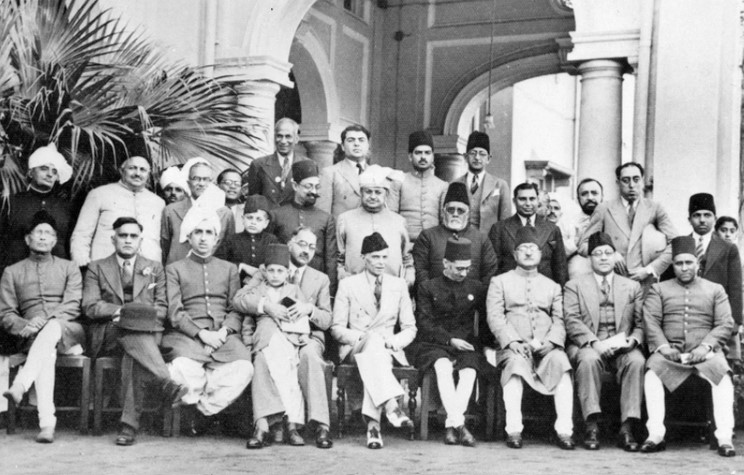
On a winter afternoon, December 30, 1906, Dhaka became the birthplace of a divisive political idea that had the support of the British Empire. Inside the Muhammadan Educational Conference, amid formal speeches, the All-India Muslim League was founded.

All India Muslim League (Source: The Hindu)
Nawab Salimullah of Dhaka, its principal host, framed the organisation as a necessary defence against what he called “Hindu domination.” Aga Khan accepted its leadership. Outside the hall, Bengal still lived as it always had — Hindus and Muslims sharing streets, markets, and livelihoods. Inside, however, a new doctrine was adopted that Muslim political security required separation and superiority. Dhaka, freshly made capital of Muslim-majority East Bengal after the 1905 partition, was chosen deliberately. Read the story of how an experiment of a separate electorate created a 120-year discrimination against Hindus.
First Blood
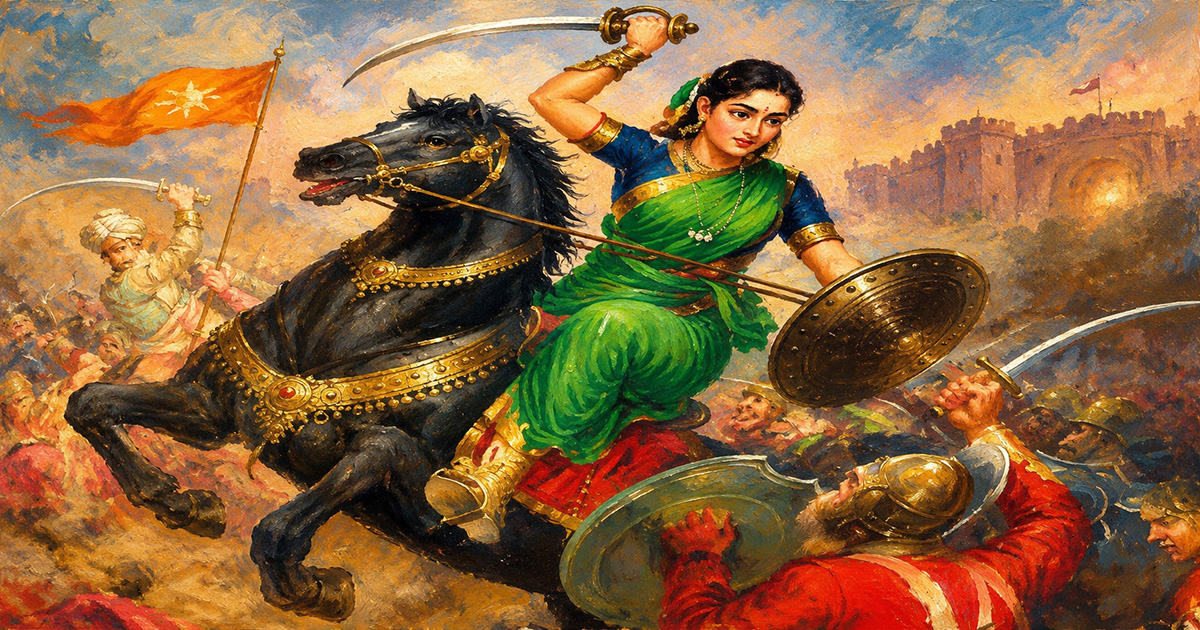
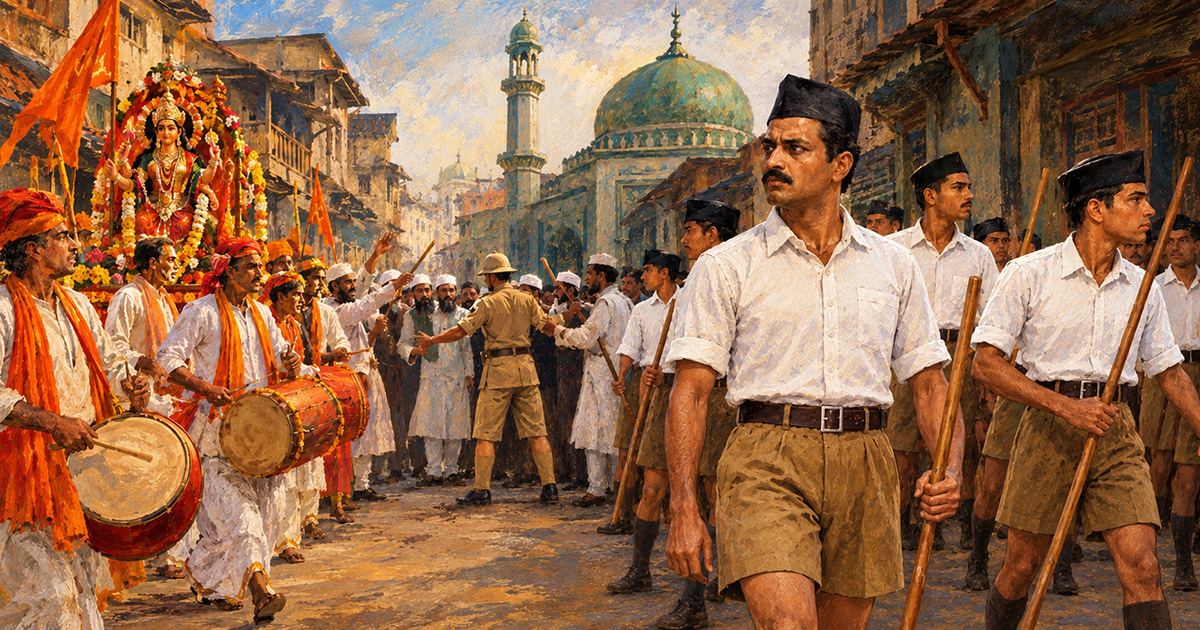
Just 2 months after the formation of the Muslim League, in February 1907, during the Jamalpur fair in Mymensingh, Hindu Swadeshi volunteers urged traders to boycott British goods. The clash began with words, but the violence that followed was neither spontaneous nor local. That night, mosques across the district circulated the “Lal Ishtahar,” the Red Pamphlet, forged in Nawab Salimullah’s name. It openly called for attacks on Hindus, sanctioned looting, and promised immunity for murder, even reducing Hindu women to spoils. British records later noted the disturbing uniformity: Identical pamphlets appearing simultaneously in distant villages, read aloud after dawn prayers, mobilising crowds that had not gathered by chance.
The Template
Before sunrise, Hindu neighbourhoods were deliberately isolated. Water pipes were cut, escape routes blocked, fear engineered. Armed mobs advanced with chaos and lathis. In Jamalpur, more than twenty Hindus were hacked to death. In Narayanganj, Hindu-owned factories were burned. Villages were looted methodically. Habil Sircar, a Swadeshi volunteer, was dragged from a temple and butchered in public. Over a hundred Hindus were killed, and thousands fled. British magistrates described the riots as marked by “unnatural coordination.” Yet the Muslim League, newly formed, issued no condemnation. Nawab Salimullah continued to celebrate the political rewards of partition. A lesson was absorbed: Organised violence could enforce political entitlement without penalty.
Repetition Through Riots
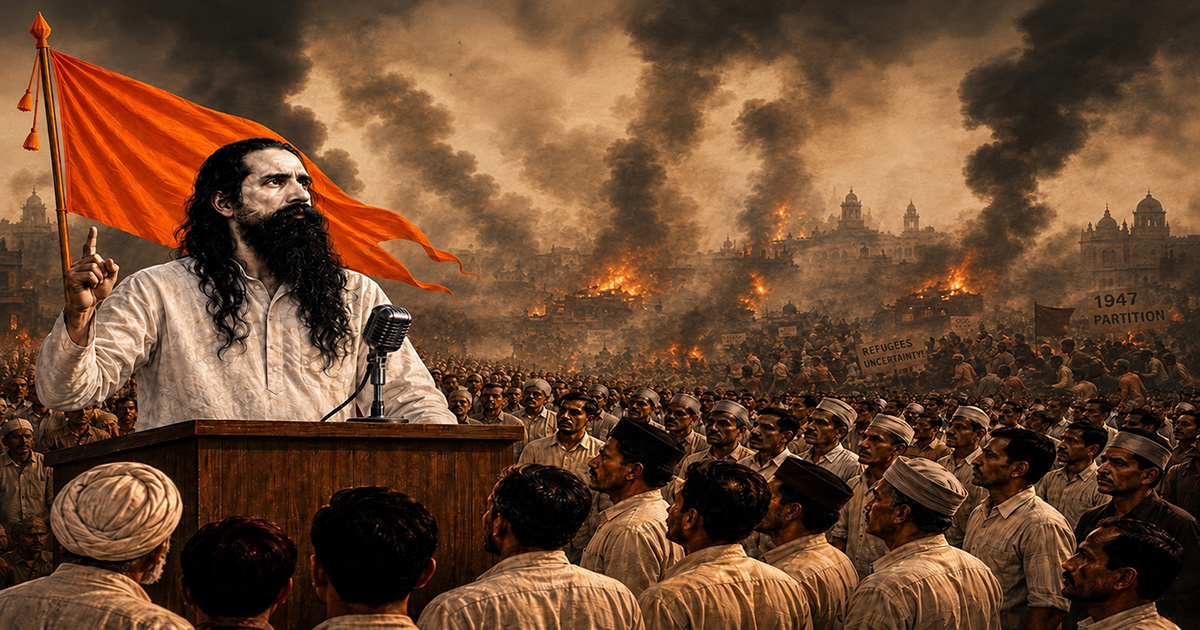
What happened in Mymensingh (now Bangladesh) did not remain an aberration; it became a pattern. Over the following decades, riots repeatedly followed the same script across Bangladesh – mobilisation through religious networks, targeted attacks on Hindu homes and livelihoods, and silence or justification from political leadership. In 1946, the Muslim League’s call for Direct Action Day turned Calcutta and the surrounding districts into killing grounds, leaving over 4,000 Hindus dead. Riots spread outward like aftershocks, accelerating fear and flight. Violence was no longer episodic; it was instrumental — a method to reshape demography through terror.

People fleeing after the partition of India
From Riots to 2025
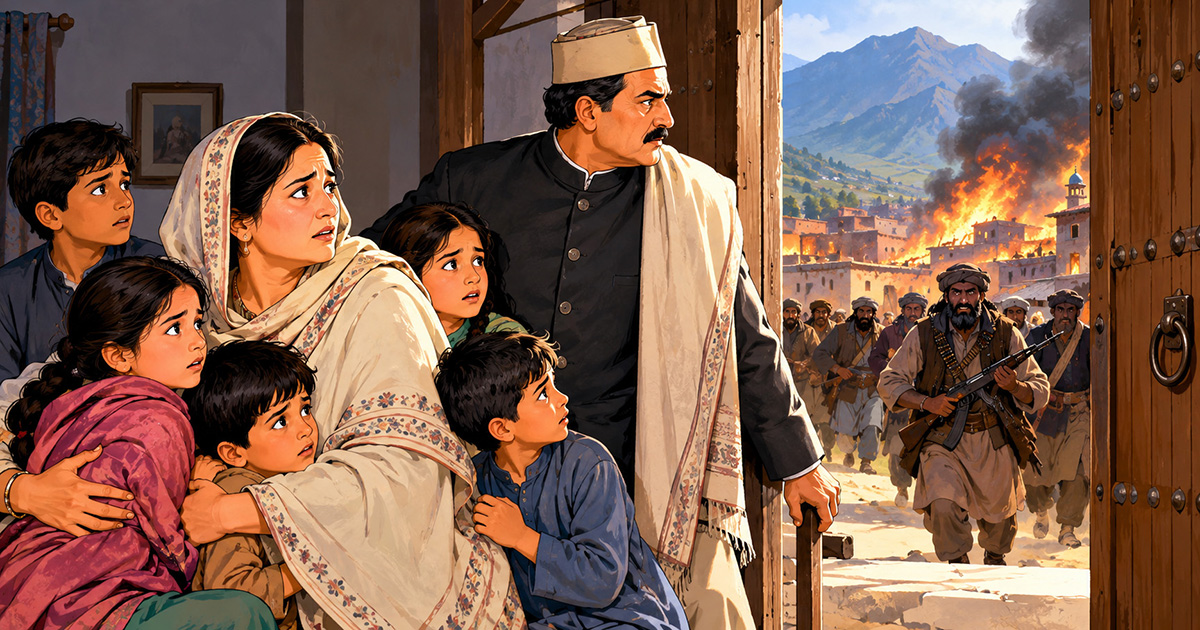
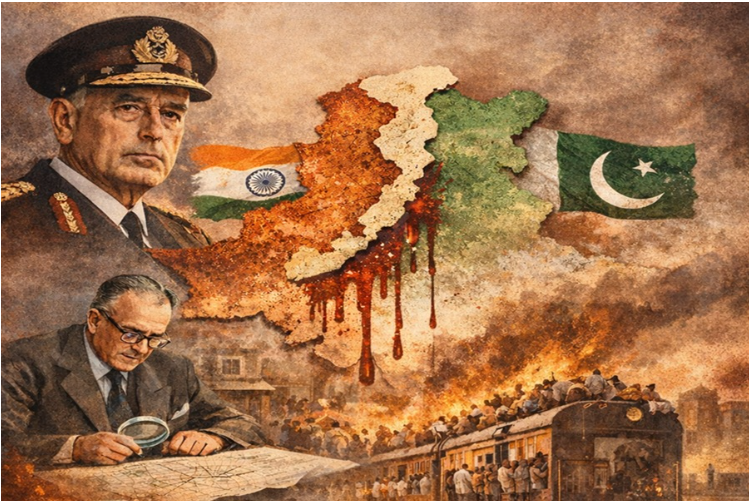
Partition in 1947 transformed East Bengal into East Pakistan, but the riots did not end — they acquired legal and political cover. Hindus, once 33% of the population, declined rapidly through killings, dispossession, and forced migration. The Enemy Property Act of 1965 legalised the seizure of Hindu land. In 1971, during the Bangladesh genocide, Islamist groups such as Jamaat-e-Islami — ideological heirs of Muslim League politics — assisted the Pakistan Army, with Hindus forming a disproportionate share of the victims. Independence did not reverse the current. By 2024, following political upheaval, Jamaat-BNP networks unleashed more than 2,000 documented attacks — temples destroyed, homes marked, families assaulted or killed. Census figures recorded the result: 7.9% remaining population of Hindus.
Unbroken Chain of Violence
The story, when read whole, is unbroken. Dhaka 1906 articulated the idea. Mymensingh 1907, tested it with blood. Every riot that followed refined the method. What began as a claim of political protection evolved into a system of exclusion where Hindu life became expendable. 120 years later, Bangladesh’s Hindus are not victims of sudden chaos but of a long inheritance — a legacy born politely in a conference hall and that has continued for generations, through violence.
.png)
.jpg)