How Mathura-Vrindavan Defied Aurangzeb's Attempt to Erase Lord Krishna's Sacred City?
In history, there remains a period when an attempt was made to erase the identity of Mathura and Vrindavan.

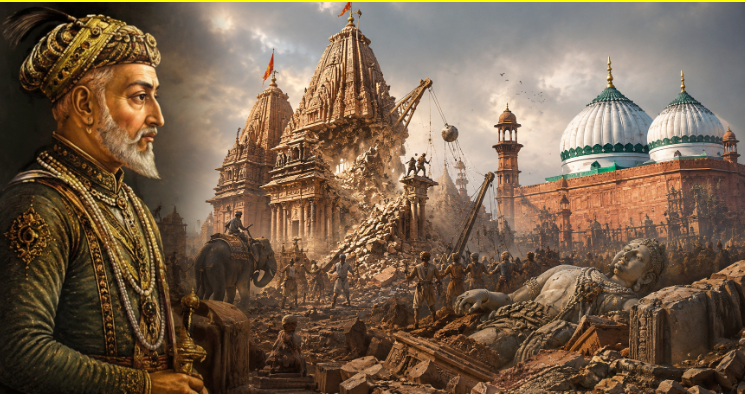
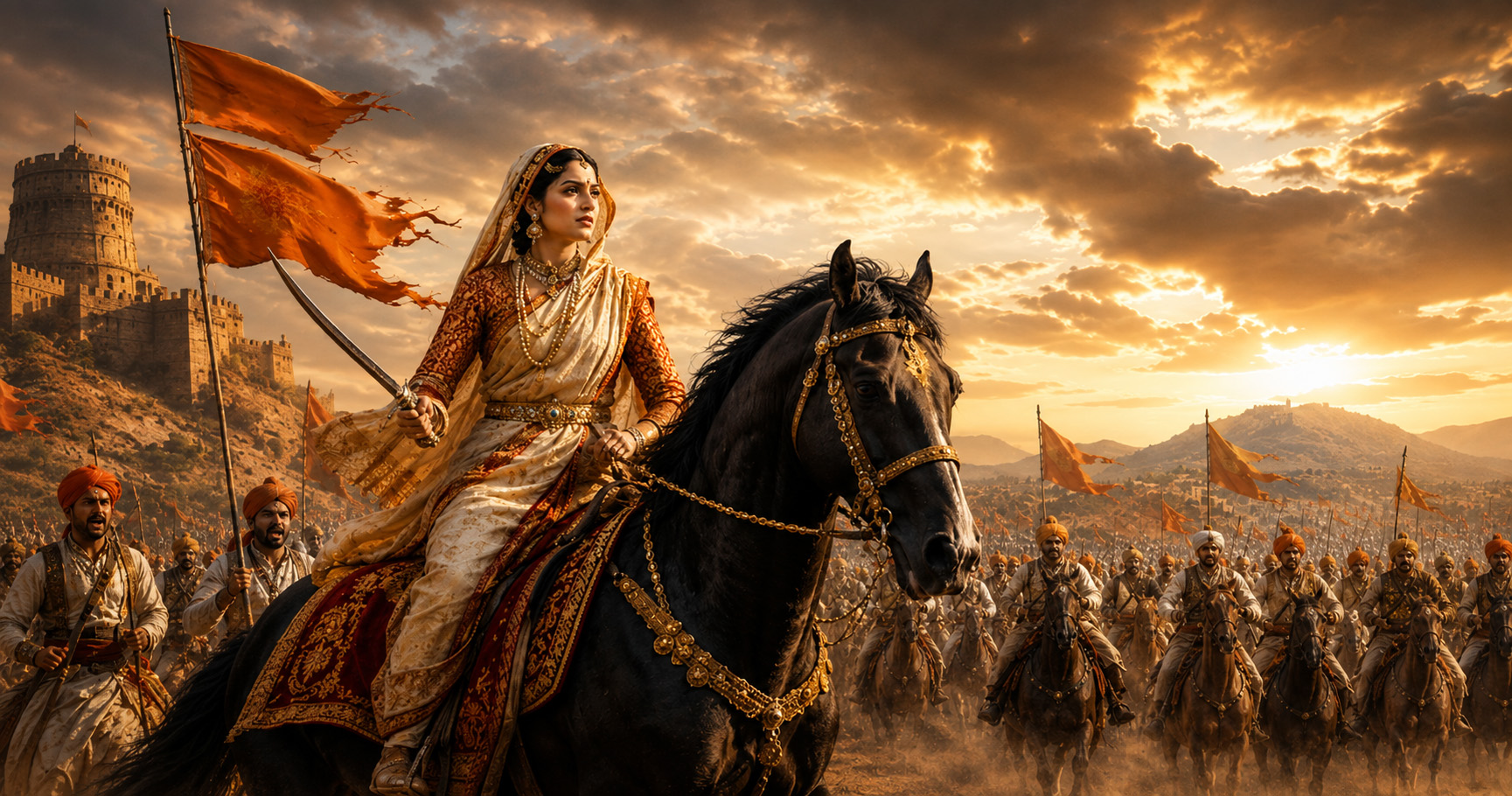
When Aurangzeb attacked Mathura-Vrindavan | This image is AI-generated
In India's civilizational history, Mathura is not merely a city; it is a sacred center of faith for millions. It is believed to be the birthplace of Lord Krishna, the land from which the message of love, dharma, and the Bhagavad Gita spread across the world. Yet, in history, there remains a period when an attempt was made to erase the identity of this holy city. Temple spires were demolished, idols were destroyed, religious sites were occupied, and even the names of cities were changed.
When Aurangzeb ordered the destruction of the grand Keshav Dev Temple in Mathura, his objective was not merely to demolish a building; it was to break what he saw as the cultural backbone of Hindu society. However, the greatest lesson of history is that while rulers may change names on paper and coins through power, they cannot erase the faith that lives in the hearts of millions. Today's story explores how even the sacred land of Lord Krishna could not escape the policies and actions of Mughal emperor Aurangzeb.
The story begins on July 31, 1658, when Aurangzeb ascended the Mughal throne. He sought to establish himself as a strict Islamic ruler. He imprisoned his father, Emperor Shah Jahan, eliminated his brothers—his eldest brother Dara Shikoh, his youngest brother Murad Baksh, and another elder brother Shah Shuja—and gradually began shaping the empire according to his religious vision.
Initially, Aurangzeb did not openly target Hindu temples because powerful Rajput rulers such as Raja Jai Singh of Amber and Raja Jaswant Singh of Marwar remained allied with him. However, after the deaths of Jai Singh in 1667 and Jaswant Singh in 1678, he felt that no major political restraint remained.
From this point onward, Aurangzeb's policies became increasingly rigid. He viewed major Hindu religious centers not merely as places of worship but also as sources of social and cultural strength. In his eyes, large temples represented parallel centers of influence that could challenge Mughal authority. Consequently, on April 9, 1669, he issued an imperial order directing the demolition of major Hindu temples and educational institutions. Under this policy, the Kashi Vishwanath Temple and the Keshav Dev Temple in Mathura became targets.
When the Keshav Dev Temple was demolished in January 1670, it was not only the destruction of a structure—it also marked the beginning of an attempt to alter Mathura's identity. Aurangzeb ordered the destruction of the magnificent temple built at the birthplace of Lord Krishna. Historians describe the temple as so grand that its towering spires could be seen from miles away. It had been constructed in the early 17th century by the Bundela ruler Raja Veer Singh Deo at a cost of approximately ₹3.3 million, making it one of the wealthiest and most celebrated temples in northern India.
The Mughal court historian Muhammad Saqi Mustaid Khan wrote in his Persian chronicle Maasir-i-Alamgiri that an Eidgah was subsequently built at the site following the temple's demolition.
Several historical sources also mention that temple idols were taken to Agra and buried beneath the steps of the Jama Masjid. But Aurangzeb did not stop there. He renamed Mathura as "Islamabad" and Vrindavan as "Mominabad." These names appeared in Persian documents, Mughal-era coins, and official records for a considerable period. Although several cities were renamed during various periods of Muslim rule, the cases of Mathura and Vrindavan are often viewed as unique because both cities are directly associated with the worship of Lord Krishna.
It was during this period that resistance to Aurangzeb's rule intensified. Jat, Maratha, Rajput, and Sikh rebellions gained momentum. In the Mathura region, the Jat leader Gokula led an uprising against Mughal authority, while the Marathas later emerged as a major challenge to Mughal power in northern India.
The renaming of Mathura and Vrindavan was not simply an administrative decision. It was an effort to reshape cultural identity. Aurangzeb wanted future generations to remember these cities not as Hindu pilgrimage centers but as symbols of Mughal Islamic rule. Consequently, the names "Islamabad" and "Mominabad" were incorporated into official decrees, revenue records, and mint inscriptions.
According to the Vrindavan Research Institute and several historians, documents preserving these names still exist today, demonstrating that this was not merely a popular legend but a historical reality. Yet one thing remained unchanged through the centuries—the faith of the people. Aurangzeb could issue decrees, rename cities, and demolish temples, but he could not erase Mathura and Vrindavan from the hearts of devotees. Pilgrims continued to call the city "Mathura Ji," saints continued to refer to "Vrindavan Dham," and the traditional names lived on in devotional songs, religious discourses, and pilgrimages.
As a result, after Aurangzeb died in 1707, the names imposed during his reign gradually disappeared from official usage as well. Even today, this history is not merely a matter of the past. In ongoing legal disputes related to Mathura and Vrindavan, Mughal-era coins and Persian documents bearing the names "Islamabad" and "Mominabad" have been cited as historical evidence. Yet the most enduring truth remains that while Aurangzeb was able to change names through political power, he could never alter the cultural identity and faith of the people.
That is why, centuries later, the names he imposed have largely vanished into history, while the world continues to know and revere these sacred lands as Mathura and Vrindavan.