Rani Abbakka's Battle of Ullal: How the Rani’s Brilliant Naval Strategy Burned the Portuguese Fleet
While the battle in Ullal took place in 1568, its seeds were sown as far back as 1555, when the Portuguese first invaded the kingdom of Ullal.

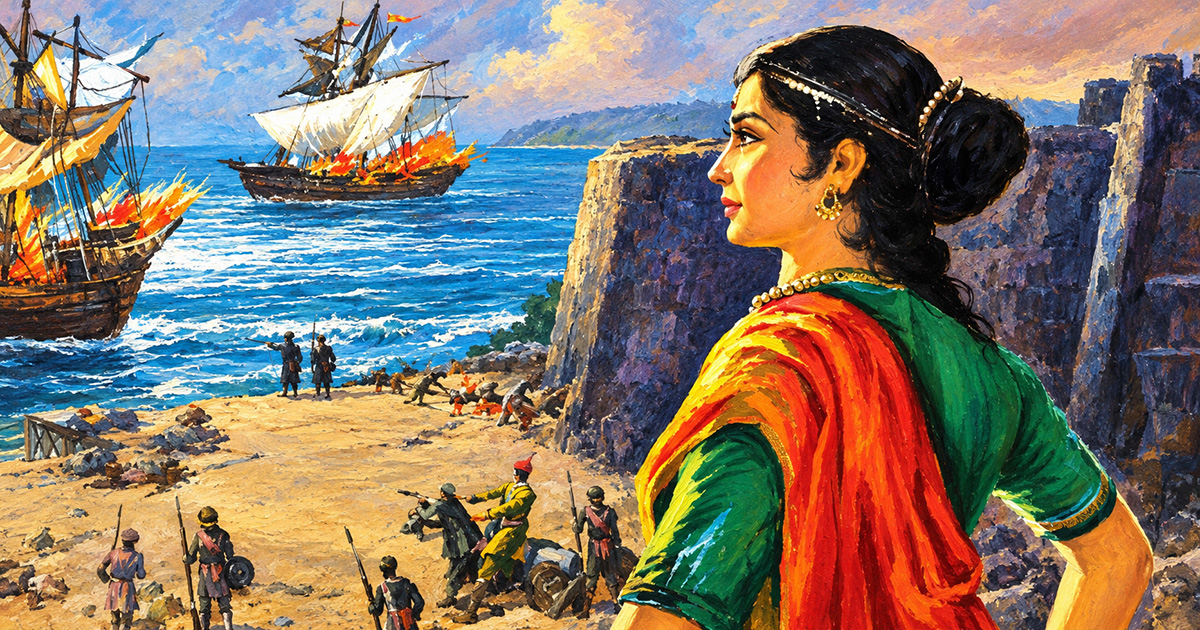
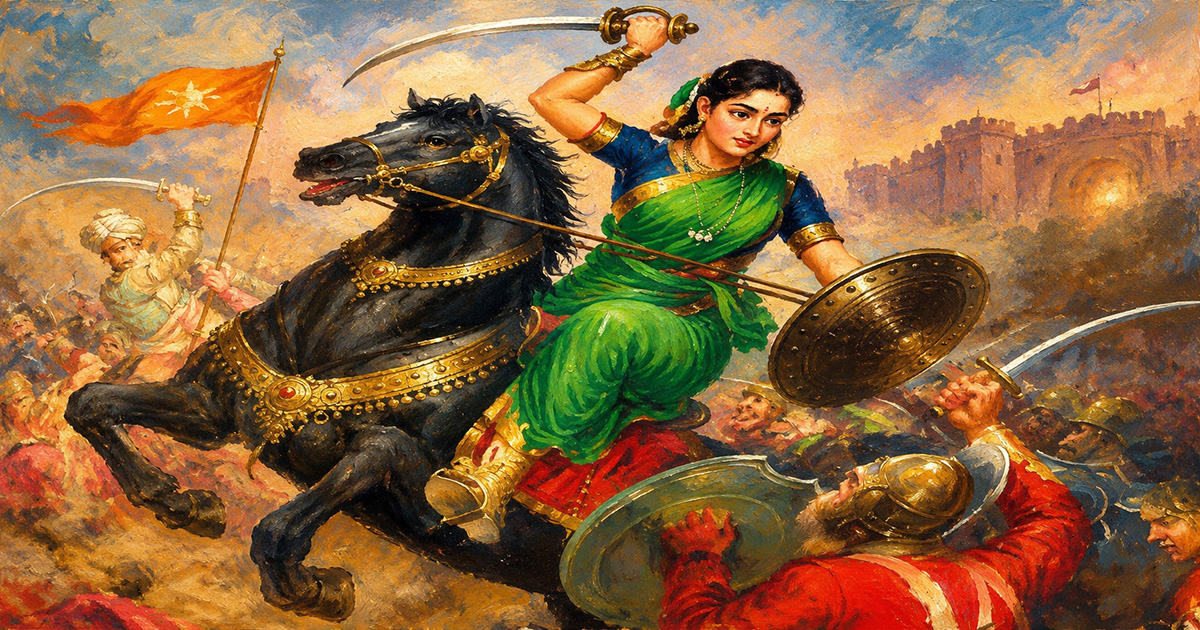
Rani Abbakka Chowta of Ullal | This image is AI-generated
From the Ullal Fort, Rani Abbakka Chowta watched flames consume the Portuguese fleet anchored off the coast. The vessels that had once carried the pride of Europe's most formidable maritime empire were now engulfed in fire, their ships collapsing into the dark waters as panicked sailors scrambled to escape. Moments earlier, under the cover of night, sitting on swift boats, Rani Abbakka’s men had slipped silently, armed with arrows, and struck the Portuguese fleet. Rani Abbakka’s battle at Ullal against the Portuguese was her finest of all.
While the battle in Ullal took place in 1568, its seeds were sown as far back as 1555, when the Portuguese first invaded the kingdom of Ullal, which the fierce Rani Abbakka Chowta led. After the Rani refused to pay tribute or recognise Portuguese authority, they sought to seize Ullal and control its thriving spice trade, prompting the Portuguese to launch repeated assaults on Ullal.
The Portuguese campaigns against Rani Abbakka crossed all limits in 1568, when, determined to crush her resistance once and for all, the Portuguese Viceroy António de Noronha dispatched General João Peixoto with a large force. The invaders managed to capture parts of Ullal and entered the royal palace, convinced that victory was theirs. But they were wrong. Rani Abbakka had escaped somewhere safe near the palace while waiting for the perfect moment to strike. That moment came at midnight.
Gathering around 200 carefully chosen warriors, Abbakka launched a surprise assault on the sleeping Portuguese camp. Fighting under the cover of darkness, her soldiers overwhelmed the enemy before they could organise a defence. General João Peixoto was killed, nearly seventy Portuguese soldiers were captured, and the surviving troops fled towards Mangaluru in complete disarray. What had appeared to be a decisive Portuguese victory had transformed into one of their most humiliating defeats on the Indian coast.
Rani Abbakka’s massive assault against the Portuguese | Image Source: India Today
Abbakka refused to let the retreating enemy regroup. She immediately ordered a naval counterattack towards Mangaluru, where the Portuguese sought refuge. Rani Abbakka was well known for her naval strategies, consisting of small, fast-moving boats crewed by local fishermen, Arab traders, and seasoned coastal warriors. These vessels could navigate the shallow waters and creeks with ease, while the Portuguese troop, built for open-sea warfare, struggled to manoeuvre close to the shore. She had also strengthened Ullal's coastal defences with watchtowers and artillery while building a strong intelligence network through local seafaring communities.
Using small boats that could move swiftly through the estuaries, her forces approached the anchored Portuguese vessels at night. Flaming arrows set several ships ablaze, throwing the fleet into confusion. According to regional accounts, Admiral Mascarenhas was killed during the fighting, while coordinated attacks by Abbakka's allies forced the Portuguese to abandon the palace.
Her victories were not the result of superior numbers or firepower but of tactical brilliance. Abbakka understood the coastline better than her enemy, used local intelligence to monitor Portuguese movements, struck when they were least prepared, and turned geography into a weapon. By avoiding conventional naval battles and relying instead on swift coastal raids, surprise attacks, and coordinated assaults by diverse local communities, she outmanoeuvred one of the world's most formidable maritime powers. The Queen of Ullal proved that courage, local knowledge, and unconventional warfare could challenge even the mightiest empire. Her victories at Ullal and the subsequent counterattack on Mangaluru remain among the earliest and most remarkable examples of indigenous maritime resistance in Indian history.
.jpg)