No Gun, No Uniform… Yet This Tribal Farmer Took on China in 1962: Know the Incredible Story of Alorno Pul
This tribal youth did not fight as a soldier on the battlefield, yet he carried the burden of the war on his shoulders. He helped the Indian Army. He was a true patriot.

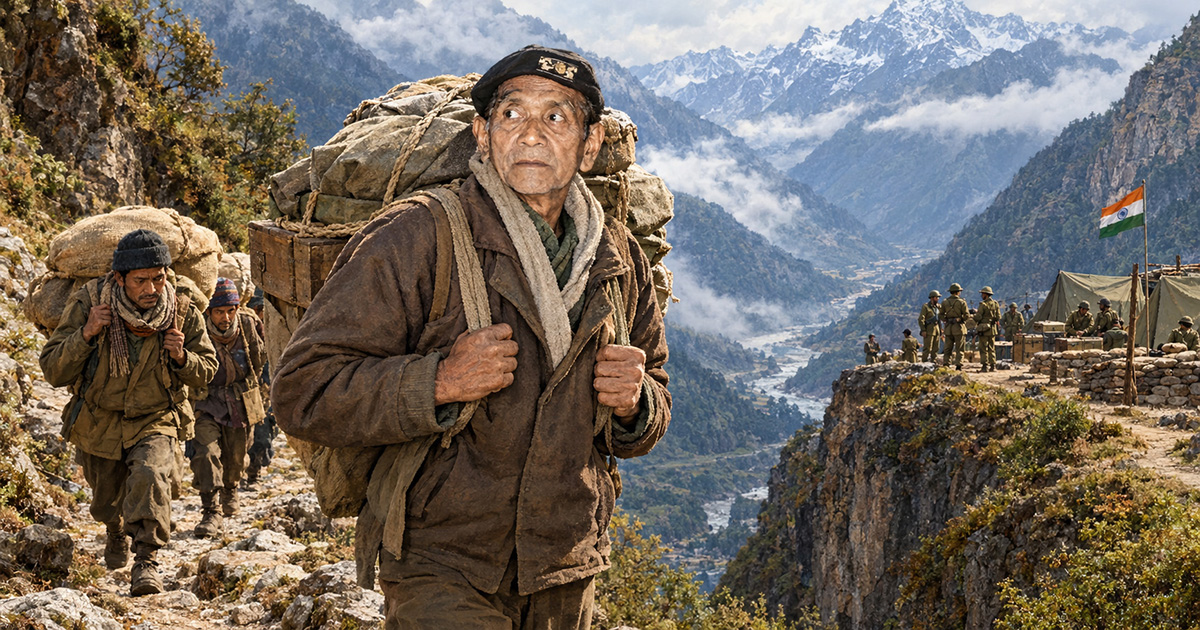
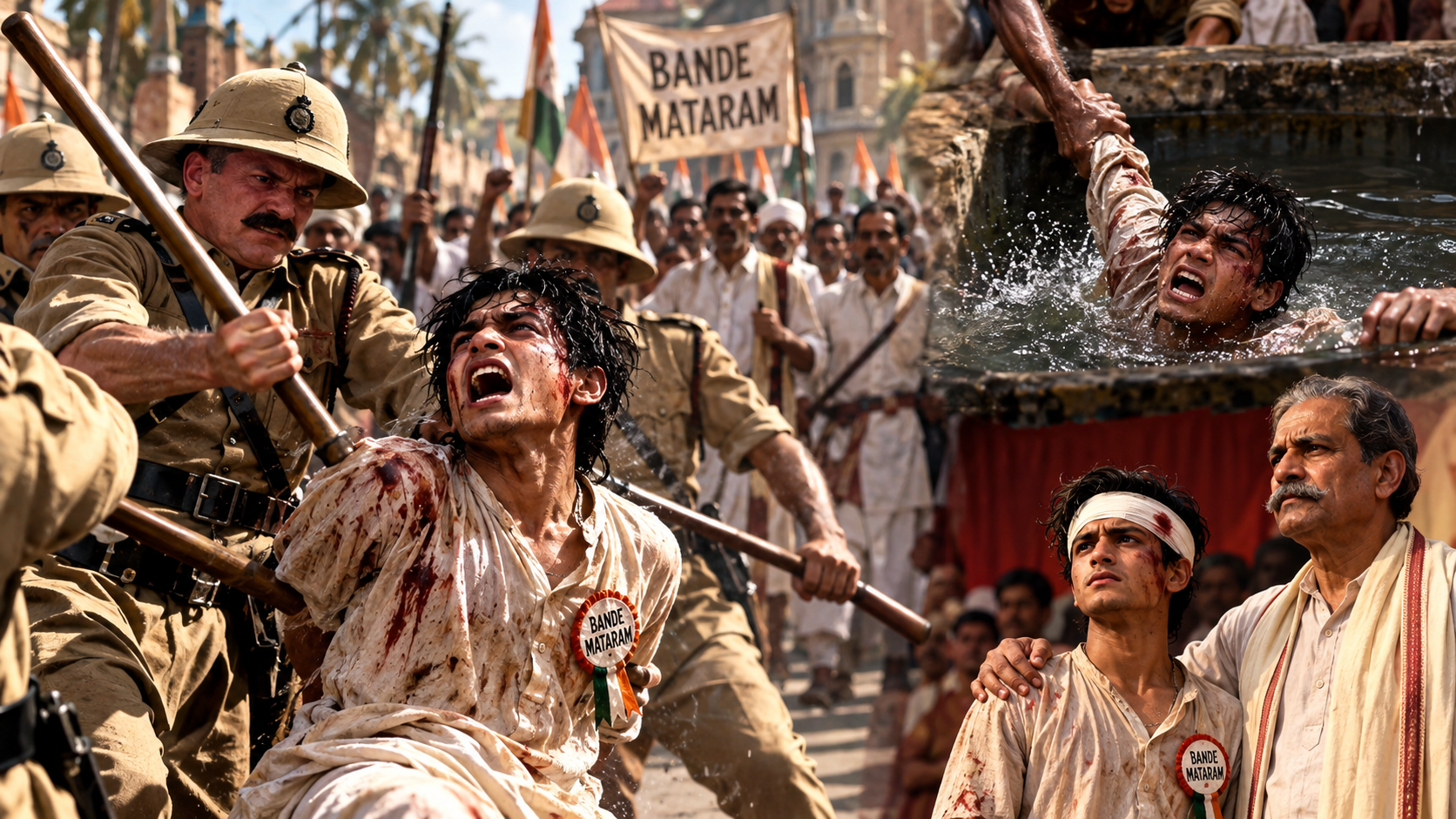
Alorno Pul, the farmer who helped the Indian Army during the 1962 war | This image is AI-generated
The remote hills of Arunachal Pradesh have been witness to the bravery of a young man who, in a time of crisis, wrote a new chapter in bringing his fellow countrymen together. This is the story of the 1962 India-China War. At the centre of this story was a young man who, without ever picking up a gun, caused heavy losses to the Chinese Army with his own hands. This tribal youth did not fight as a soldier on the battlefield, yet he carried the burden of the war on his shoulders. He helped the Indian Army. He was a true patriot—a farmer from the Mishmi tribal community named Alorno Pul. Born in Walla village in Arunachal Pradesh’s Anjaw district, Alorno displayed extraordinary courage during the India-China War, a story that very few people know about today.
On October 20, 1962, China suddenly launched an attack on India’s eastern sector. Following this, the Walong Sector of Arunachal Pradesh became an important front in the war. Surrounded by rugged mountains, the Walong Sector is located near the tri-junction of India, Tibet, and Myanmar. Therefore, preventing the enemy from entering this area was a priority for the Indian Army. Although nearly 15 years had passed since India gained independence, the Nehru government had neither provided the soldiers with modern weapons nor given them adequate military training to fight in difficult mountainous regions. Forget training and weapons… in the bone-chilling cold of the mountainous areas, the soldiers did not even have warm clothes to wear. There was also a severe lack of roads for the movement of military vehicles along the borders.
Under such circumstances, the Indian Army faced not only the challenge of the enemy, but also the complex problem of supplying ammunition, weapons and logistical materials. In stark contrast, the Chinese Army had been working on plans to attack India for years. They were fully prepared. Chinese soldiers had already lived in mountainous areas and assessed the geographical conditions there. Their agents present inside Indian territory were providing them with information at every moment.
After the war began, a problem arose regarding the supply of logistics and military materials to Indian soldiers. The personnel involved in the supply system were facing difficulties because they did not have knowledge of the local geography. In such circumstances, the Indian soldiers felt the need for the support of local people. During this difficult period, Alorno Pul stood with the Indian Army. Along with him, a team of 122 villagers from Walla, Kamdi, Changung, Ngi, and Sung villages came forward to help the Indian Army. Alorno and his companions were ordinary farmers. But they volunteered as porters to help the Indian Army. On those mountain routes, which are still difficult to access even today, Alorno Pul moved forward carrying on his shoulders the supplies on which the lives and fighting capability of Indian soldiers depended.
Alorno Pul and his companions carried supplies in the darkness of night so that they would not be spotted by the Chinese Army. Every step brought a new danger. In front of them were the towering mountain peaks and the Chinese Army, while behind them were deep ravines. On top of that, there was the danger of wild animals. Despite being surrounded by dangers from all sides, Alorno did not give up. He continued carrying supplies on his shoulders along with his companions and remained involved in the supply effort.
As the war progressed, Alorno’s role went far beyond that of merely a porter. A few days after the war began, he learned that, like him, the commander of the Chinese Army, Soham Tosik, also belonged to the Mishmi tribal community. Then an idea came to him. He met the Chinese commander along with the headman of his village. Alorno strengthened his introduction by connecting it with their old ethnic ties. The Chinese commander also began helping Alorno. Alorno began collecting input from him and passing it on to the Indian Army. This helped the Indian Army defeat the Chinese Army on several fronts.
However, compared with the Chinese Army, the Indian soldiers had neither good weapons nor adequate facilities. Despite the lack of warm clothing in the severe cold and while remaining hungry, Indian soldiers continued to fight China. Then came the time when the situation at the front began to change rapidly. The Indian Army had to retreat from the Namti and Dong areas. Several of Alorno Pul’s companions attained martyrdom alongside the Indian soldiers. Some were captured by China. Alorno managed to escape. After the Chinese Army advanced, the surrounding villages were evacuated. There was a shortage of rations in Walong. The people who remained began struggling with hunger. Alorno carried grain from other places and arranged food supplies for those people as well.
The Battle of Walong was extremely difficult for the Indian Army. Even in these difficult circumstances, Alorno came forward to help the army of his country. The names that often find a place in the pages of history are those of people who picked up guns. People like Alorno are often left behind those pages. But the truth is that during the war with China in 1962, every Indian stood united like Alorno Pul to defend the country. Whatever they could do, they did to help. This is why the Government of India decided in 1966 to observe October 20 every year as National Solidarity Day, honouring the spirit of unity and determination shown by citizens during the 1962 war.