From the Last Battle of Sirijap to a Chinese Prison: The Prisoner-of-War Saga of Major Dhan Singh Thapa
On the morning of October 20, 1962, the Sirijap-1 post, located on the northern bank of Pangong Lake in Ladakh, was surrounded by the Chinese Army.

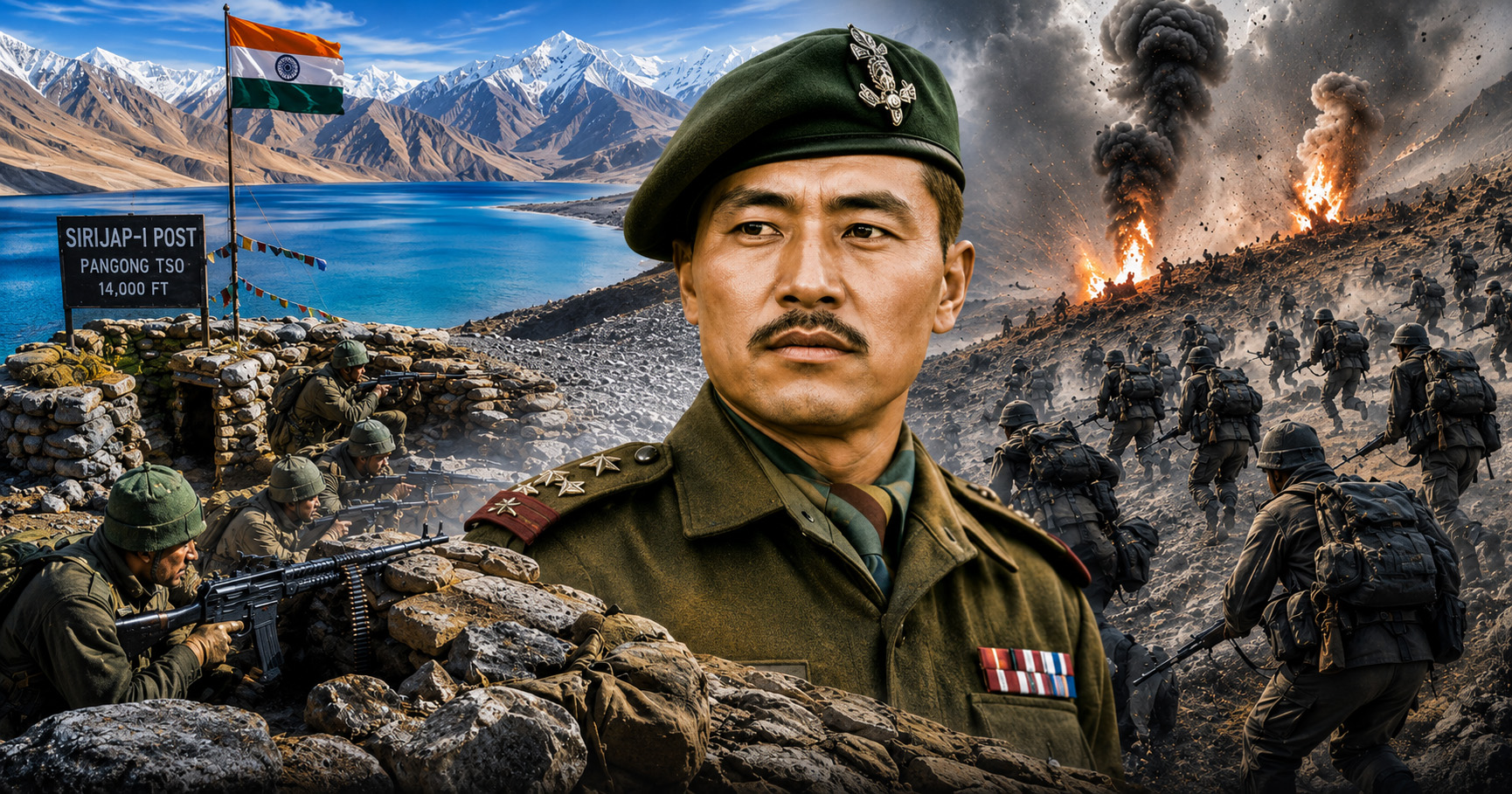
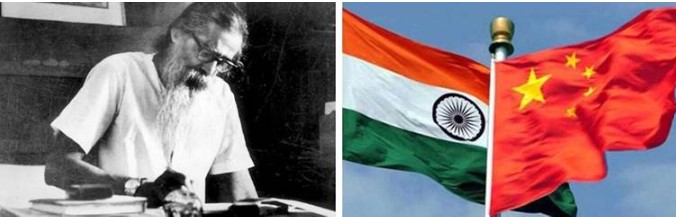
Major Dhan Singh Thapa, the hero of the 1962 India-China war | This image is AI-generated
On the morning of October 20, 1962, the Sirijap-1 post, located on the northern bank of Pangong Lake in Ladakh, was surrounded by the Chinese Army. In front were more than 600 Chinese soldiers, behind lay the lake, overhead there was relentless artillery and mortar fire, and defending the post were only 28 Indian Gorkha soldiers. Leading the post was Major Dhan Singh Thapa, Company Commander of the 1st Battalion, 8 Gorkha Rifles. That day, India believed it had lost him. But the truth was something else. The officer whom the nation believed had been martyred and posthumously awarded the Param Vir Chakra was, in reality, alive in a Chinese prison, where he endured inhuman suffering as a prisoner of war for several months.
Born on April 28, 1928, in Shimla, Dhan Singh Thapa was commissioned into the 8 Gorkha Rifles on August 28, 1949. By October 1962, tensions along the India–China border had reached their peak. Under India's Forward Policy, several small outposts had been established north of Pangong Lake. Among them, Sirijap-1 was the most important because it formed the first line of defence for the Chushul Airstrip. Had this post fallen, Chinese pressure on the Chushul sector would have increased many times over.
On the night of October 19, 1962, Major Thapa could clearly see that an unusually large number of Chinese troops were assembling around his post. He gave his men only one order: "Dig fast, dig deep."
He knew that an attack was now only a matter of time. At around 4:30 a.m. on October 20, the Chinese Army opened heavy artillery and mortar fire. For nearly two and a half hours, the entire post shook under a relentless barrage of shells.
Wireless communication was almost completely destroyed. Immediately afterwards, hundreds of Chinese soldiers advanced towards the post. Major Thapa and his Gorkhas responded with light machine guns and .303 rifles, inflicting such heavy losses that the first Chinese assault was repulsed. But this was only the beginning.
Some time later, the second assault began. This time, the bombardment was even more intense. Chinese troops also advanced from the lake using amphibious craft. Despite this, the Gorkhas once again forced them to retreat. The Chinese then launched their third and final assault.
This time, armoured vehicles and tanks advanced alongside the infantry. After hours of continuous fighting, the post was almost completely destroyed. Most of the Indian soldiers had either attained martyrdom or had been seriously wounded. During the battle, a shell landed directly on Major Thapa's bunker.
Amid the smoke and debris, he somehow managed to crawl out. By then, he had almost exhausted his ammunition. Even so, he refused to surrender. He jumped into the trenches and engaged several Chinese soldiers in close combat. Eventually, he was captured by the Chinese while seriously wounded.
Most of the soldiers at the post had either laid down their lives or been taken prisoner. The information that reached the Indian headquarters stated that no one at Sirijap-1 had survived. Even the soldiers who managed to escape did not know that Major Thapa had been captured alive. As a result, the Government of India and the Indian Army declared him martyred.
In recognition of his extraordinary bravery, it was announced on January 26, 1963, that he would be awarded the Param Vir Chakra posthumously. At that time, no one knew that the true recipient of the award was still alive in a Chinese prison. Then began the most difficult chapter of his life: the life of a prisoner of war.
China kept him in a prisoner-of-war camp along with other Indian officers and soldiers. According to available military records, he was subjected to continuous interrogation. He was pressured to make statements against the Indian Army, the Government of India, and India's military preparations. Attempts were also made to force him to sign propaganda material.
Each time, he refused. As a result, he was repeatedly punished. Contrary to accepted military conventions, he was treated harshly and subjected to both physical and psychological torture. Memoirs of Indian officers who were held in the prisoner-of-war camps reveal that Chinese authorities often kept prisoners separated from one another in an effort to break their morale. Food was scarce, medical facilities were inadequate, and prisoners were constantly exposed to political propaganda.
Many Indian officers later recalled that they were repeatedly pressured to declare that India had started the war, but the overwhelming majority refused to make any such statement. Among these prisoners was Lieutenant Colonel Harish Chandra Hasabnis (H. S. Hasabnis), who later became well known and, in his memoirs, spoke of Major Thapa's courage, patience, and unwavering morale.
Meanwhile, in India, his family mourned him as a martyr. Newspapers published his name among the officers who had laid down their lives. The nation had accepted his supreme sacrifice. However, after the war ended, when India and China exchanged lists of prisoners of war, a startling fact came to light: Major Dhan Singh Thapa was alive. The news was nothing short of a miracle for his family, the Army, and the entire nation. On November 21, 1962, China declared a unilateral ceasefire. Over the following months, the process of repatriating prisoners of war began. Finally, in 1963, Major Dhan Singh Thapa returned to India along with other Indian prisoners of war.
He was welcomed home like a victorious hero. He became one of the rare soldiers whom the nation first believed to have been martyred and later saw return alive. His Param Vir Chakra was not withdrawn, because the award had been conferred for his extraordinary courage, not merely on the assumption that he had been martyred. Even today, he remains among the select Param Vir Chakra awardees who were believed to have died when the award was announced, but were later found to be alive and returned home.
.jpg)