Shri Guruji Golwalkar Had Warned About China’s Aggression on India 11 Years in Advance

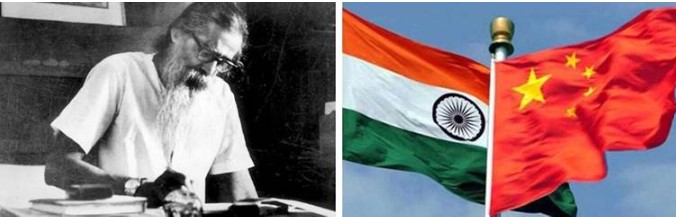
More than a decade before Chinese troops crossed India’s northern frontier, a warning was issued: Clearly, publicly, and repeatedly. It did not come from the corridors of government or the intelligence establishment, but from a figure observing events beyond the lens of immediate diplomacy. This article traces how that warning emerged, why it was dismissed, and what followed when it proved prescient.
In October 1962, as news broke that Chinese troops had crossed into the Indian territory, a quiet question began circulating in Delhi: How did one man see this coming when the state did not? The answer lay not in secret intelligence or privileged access but in a warning issued more than a decade earlier, and ignored.
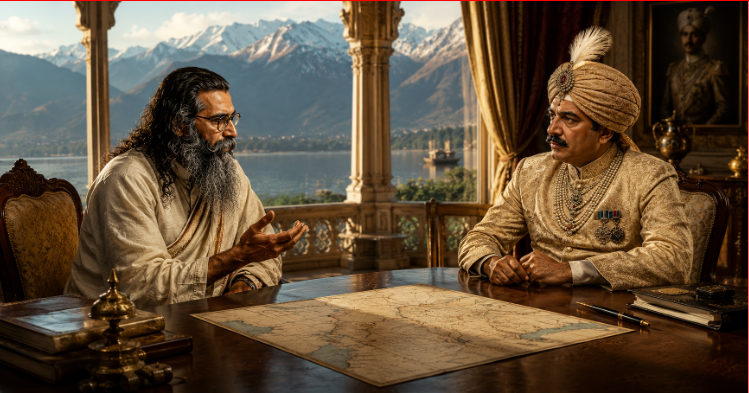
The story begins in the early 1950s. In 1950, China moved its army into Tibet, formally ending Tibetan autonomy. While the event was largely viewed in India as a regional conflict, Guruji read it differently. In 1951, during a public interaction in Shivamogga, Karnataka, he stated that China’s actions in Tibet revealed an expansionist mindset and that India should not assume lasting goodwill from the new Communist regime. If Tibet could be absorbed despite assurances, he argued India should not believe its own borders were immune.
After 10 years, by October 1962, Guruji was on a tour of Rajasthan. On October 16, speaking in Chittorgarh, he warned that a Chinese attack was imminent. Two days later, on October 18, he said the same in Alwar. The warning attracted little attention. Then on October 20, Chinese forces launched a coordinated assault across the Himalayan frontier. Within days, the assumptions that had guided Indian policy for years collapsed.
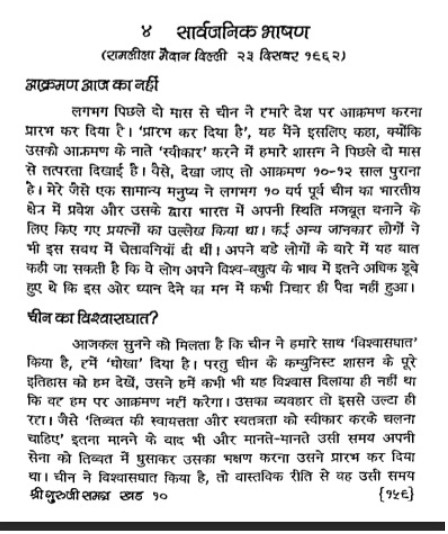
Newspaper clipping from Matrubhumi
After the attack, Golwalkar reached Delhi. Senior figures visited him privately, asking directly: How had he known? His reply was simple. He had not relied on inside information, he said, but on observation.
“A common man like me has noticed China’s invasion of Indian territory and its attempts to strengthen its position in India about ten years ago. Many other knowledgeable people had also given warnings about this issue. In recent days, we have been hearing that China has ‘betrayed’ us or ‘deceived’ us. But if we look at the entire history of the Chinese communist regime, it has never promised that it would not attack us. Its behaviour has been the opposite every time.”
In an article in the monthly magazine Kalyana, Sri Meerajjar wrote that Chinese posts were seen scattered around Kailash and Mansarovar and that pilgrims were allowed to enter only after being checked. Sri Guruji had observed all this closely. And the words he said in his speech prove that he had a premonition of the Chinese invasion.
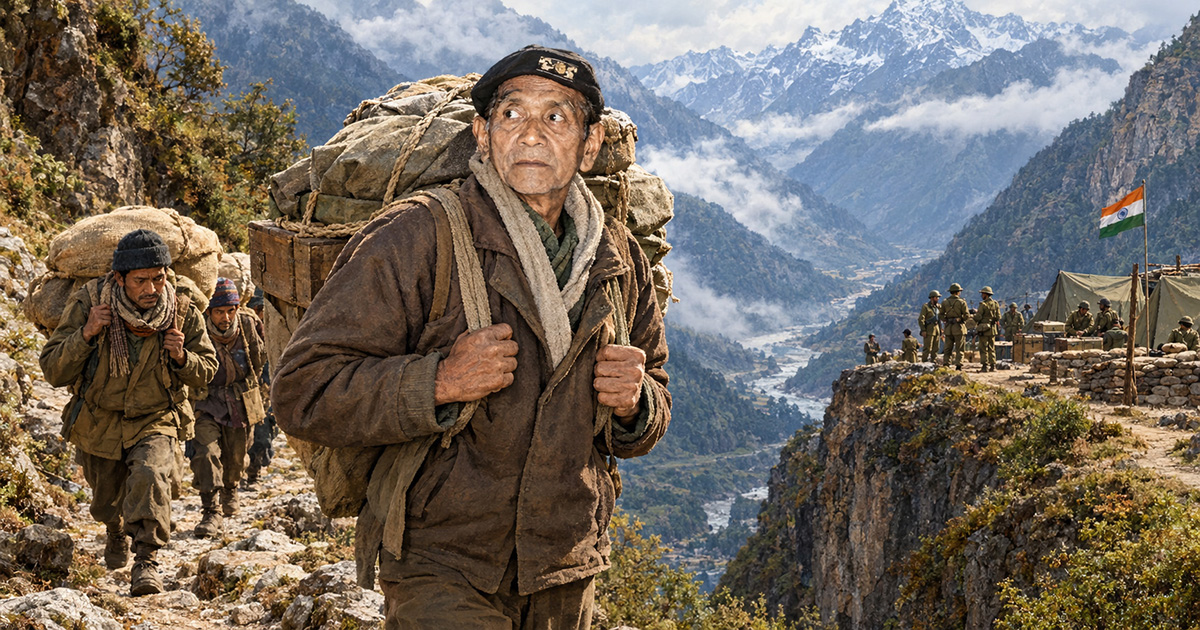
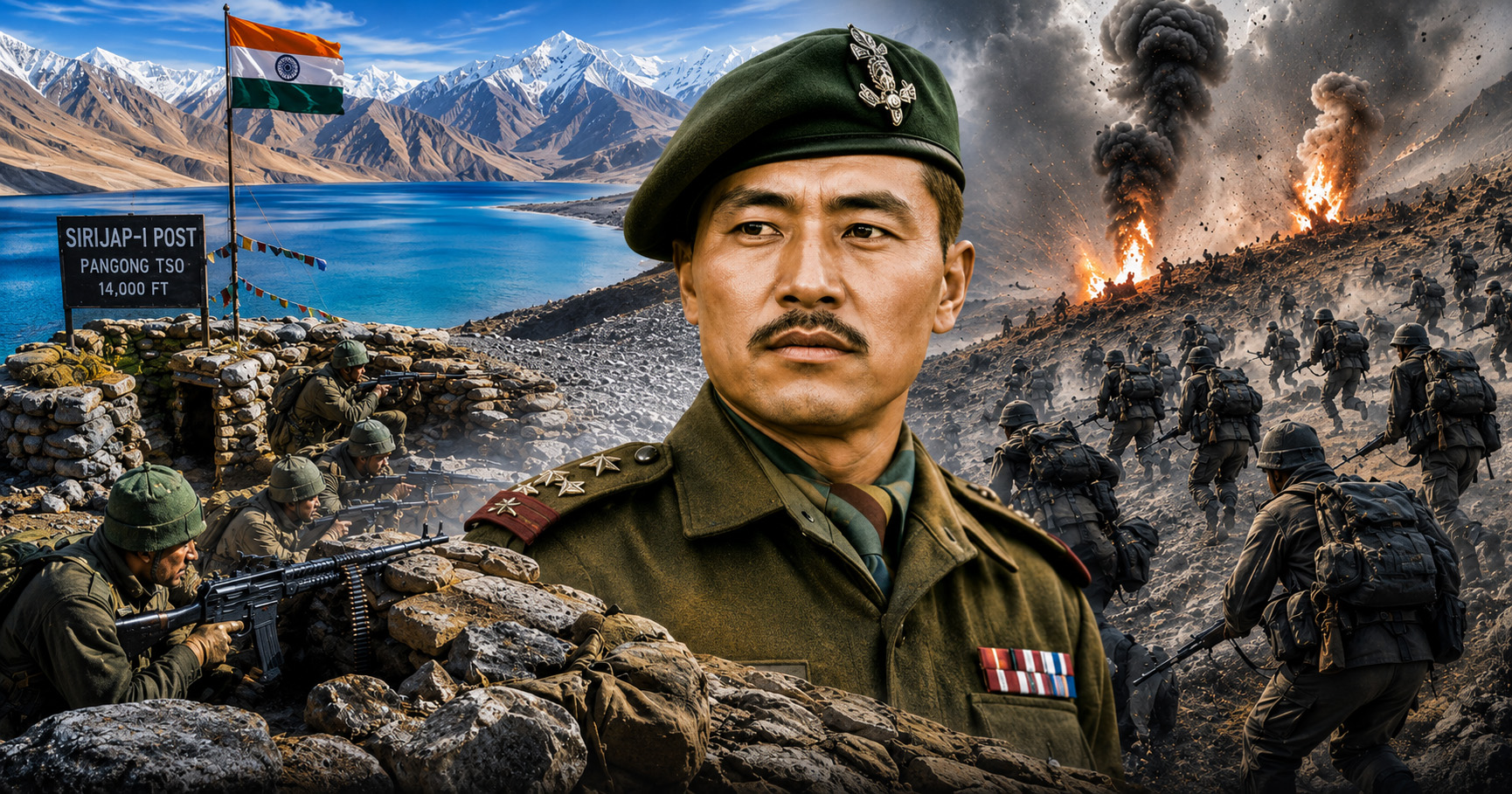
When the conflict finally erupted in October 1962, Indian soldiers were pushed into battle with inadequate preparation, poor logistics, and confused command structures. The war ended not only with the loss of nearly 38,000 square kilometres of territory, but also with profound blow to national morale. Hundreds of soldiers and civilians lost their lives.
What was damaged was not just geography, but confidence.
On October 30 1962, amid the crisis, Golwalkar wrote to Prime Minister Jawahar Lal Nehru, assuring him that the Sangh would cooperate fully with all measures taken by the government to free the country from fear in that difficult hour.
The assurance was not rhetorical. Across the country, RSS volunteers mobilised, assisting with logistics, blood donation, relief work, and communications, often operating in conditions of personal risk. The government acknowledged this contribution. On 26 January 1963, RSS volunteers were invited to participate in the Republic Day parade, a gesture that carried symbolic recognition of their contribution during the conflict.
Today, as India continues to negotiate its relationship with China under very different global conditions, that episode retains its relevance. Not as an exercise in blame, but as a reminder that intentions matter less than capabilities, and that states are judged not by slogans they chant but by preparations they make.
It is fitting, then, that this reflection falls on Magha Bahula Ekadashi, the birth anniversary of Shri Guruji Golwalkar. His legacy is not that he opposed a particular policy, but that he insisted, unfashionably and persistently, on viewing power as it is, not as one might wish it to be. We witness, as history has a way of vindicating realism long after idealism has exhausted its vocabulary.
.png)

.jpg)