The First General Election 1952: When Nehru Got the Hindu Mahasabha’s Winning Candidate Defeated in the Lok Sabha Election
In the Rampur Lok Sabha seat in Uttar Pradesh, there was a close contest between the Congress candidate, Maulana Abul Kalam Azad, and the Hindu Mahasabha candidate, Vishan Chandra Seth.

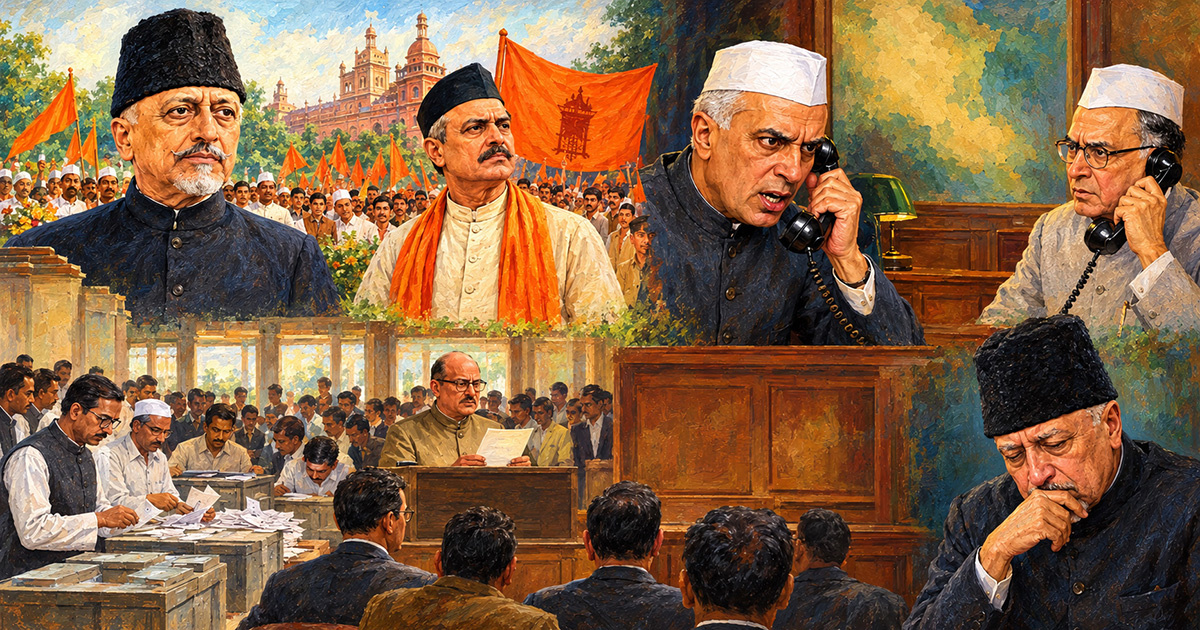
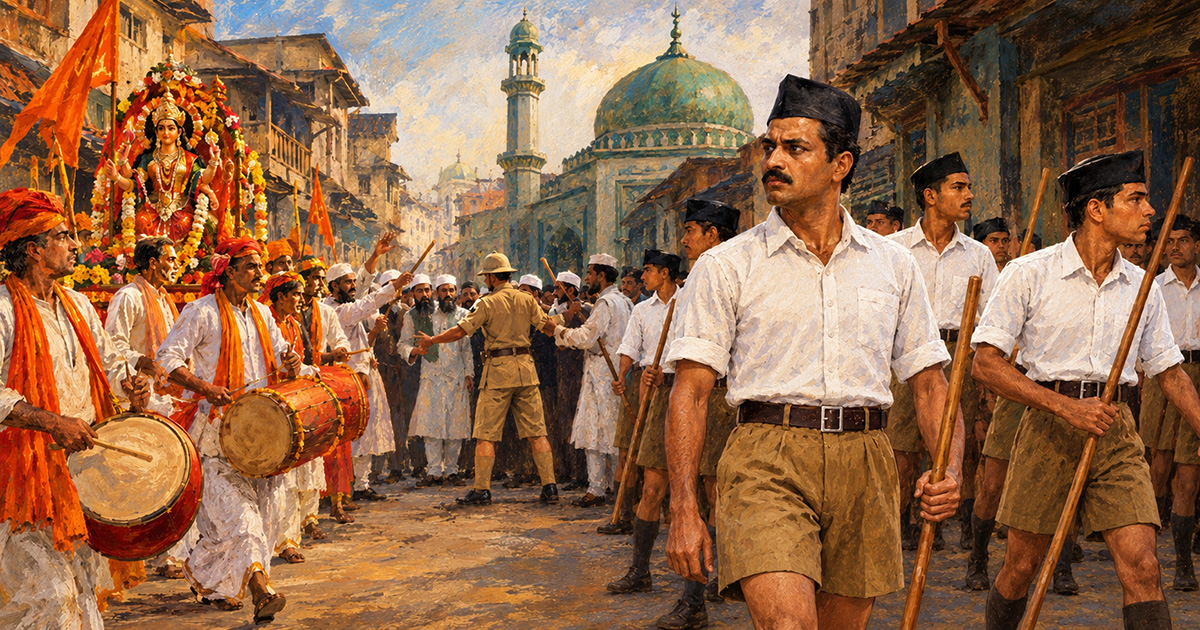
The First General Elections of 1952 | This image is AI-generated
The first general election of independent India, held in 1951–1952, was nearing its final stage. Across the country, ballot boxes were being opened, and the votes received by the candidates were being counted. It was the first time that the path to power in Delhi was being decided by the votes of the people. One such constituency was the Rampur Lok Sabha seat in Uttar Pradesh. Here too, the counting of votes was underway. There was a close contest between the Congress candidate, Maulana Abul Kalam Azad, and the Hindu Mahasabha candidate, Vishan Chandra Seth. Workers from both sides were keeping a close watch on every single ballot paper. Finally, the counting was completed. The District Magistrate announced the name of the winning candidate. Supporters began taking out a victory procession on the streets. But shortly afterwards, a phone call from Delhi to Lucknow completely turned the story of the election upside down, making the story of the first election result of the Rampur Lok Sabha seat extremely intriguing.
Maulana Abul Kalam Azad was among the prominent leaders of the Congress. He had served as the president of the Congress and was also a close associate of then Prime Minister Jawaharlal Nehru. Because of this, in the first general election, the Congress fielded him as its candidate from the Rampur Lok Sabha seat in Uttar Pradesh. On the other hand, the Hindu Mahasabha fielded the Hindu nationalist leader Vishan Chandra Seth, making the electoral contest even more interesting. Vishan Chandra Seth was a well-known and popular figure among Hindus. At the local level, it was not easy for Maulana Abul Kalam Azad to compete against Seth. During the anti-Hindu riots that took place in the country during Partition, Seth had fought for Hindu interests. Because of this, his popularity among Hindus was at its peak.
Seth campaigned on the strength of this popularity. People welcomed him enthusiastically. After this, voting took place. A few days later, the counting of votes began. During the counting, Vishan Chandra Seth took the lead over Maulana Abul Kalam Azad and eventually won by around 10,000 votes. The then District Magistrate Ganga Singh Churamani (from 1 December 1949 to 7 December 1952) also announced his victory. But when the news of Maulana Abul Kalam Azad’s defeat reached Delhi via Lucknow, Jawaharlal Nehru was furious. He could not believe that a Hindu nationalist leader had defeated his close associate, Maulana, in the election. Just months earlier, while speaking about India’s first general election, Nehru had himself declared: “We shall accept the result of this election, whoever wins or loses. That is the essence of democracy.” Yet, according to the account of the events that followed, the result from Rampur was about to be challenged from the highest levels of government. Upon hearing the news of Maulana Abul Kalam’s defeat, an enraged Nehru called the then Chief Minister of Uttar Pradesh, Govind Ballabh Pant.
Over the phone, he told CM Pant to ensure that Azad won the election at all costs. He was even threatened with losing his position as Chief Minister if he failed to do so. After this, CM Govind Ballabh Pant instructed his Director of Information, Shambhunath Tandon, to call the District Magistrate of Rampur. When Tandon called the then DM and Returning Officer, Ganga Singh Churamani, he was told that he had already announced Vishan Chandra Seth’s victory. How was it now possible to make Maulana win? But Chief Minister Pant gave the DM strict instructions, saying that whatever it took, Maulana Abul Kalam had to win the election. There were strict orders from Delhi. Following this, the District Magistrate decided to conduct a recount in order to make Maulana win.
The DM had Vishan Chandra Seth, who was celebrating his victory with his supporters, summoned through the Kotwal and told him that the votes would be counted again. Since Seth understood Nehru’s move, he opposed the decision. But the DM was compelled to follow the orders that had come from Delhi. Ignoring Seth’s objection, he ordered the recount to begin. During the recount, thousands of ballot papers cast in favour of Seth were added to Maulana Azad’s votes. At that time, there was no tradition of stamping the ballot paper. The candidate’s election symbol was marked on the ballot box, and the voter put his ballot paper into the box corresponding to the candidate. Because of this process, manipulating the votes became easier.
In the end, the election result was changed, and Maulana Abul Kalam Azad was declared the winner. The joy of Vishan Chandra Seth and his supporters, who had been celebrating their victory, was turned into disappointment by Nehru’s phone call from Delhi. In the end, despite having won, Seth had to face defeat.
The entire incident was mentioned by former Uttar Pradesh Director of Information Shambhunath Tandon in one of his articles. The article was included in the commemorative volume Hindutva Ke Purodha, published in memory of Vishan Chand Seth. The book was released on 18 November 2005. Shambhunath Tandon wrote the article under the title “Bhaiye Vishan Chand Ne Maulana Azad Ko Dhool Chatai Thi, Bharat Ke Itihas Ki Anjaan Ghatna” (“Brother Vishan Chand had defeated Maulana Azad decisively: An unknown incident in the history of India”).