Hari Singh Nalwa and the Battle of Jamrud: 700 Sikhs Against 50,000 Afghans
It was here, in the autumn of 1836, that workers under the command of Sardar Hari Singh Nalwa raised a fort in just fifty-five days. They called it Fatehgarh.

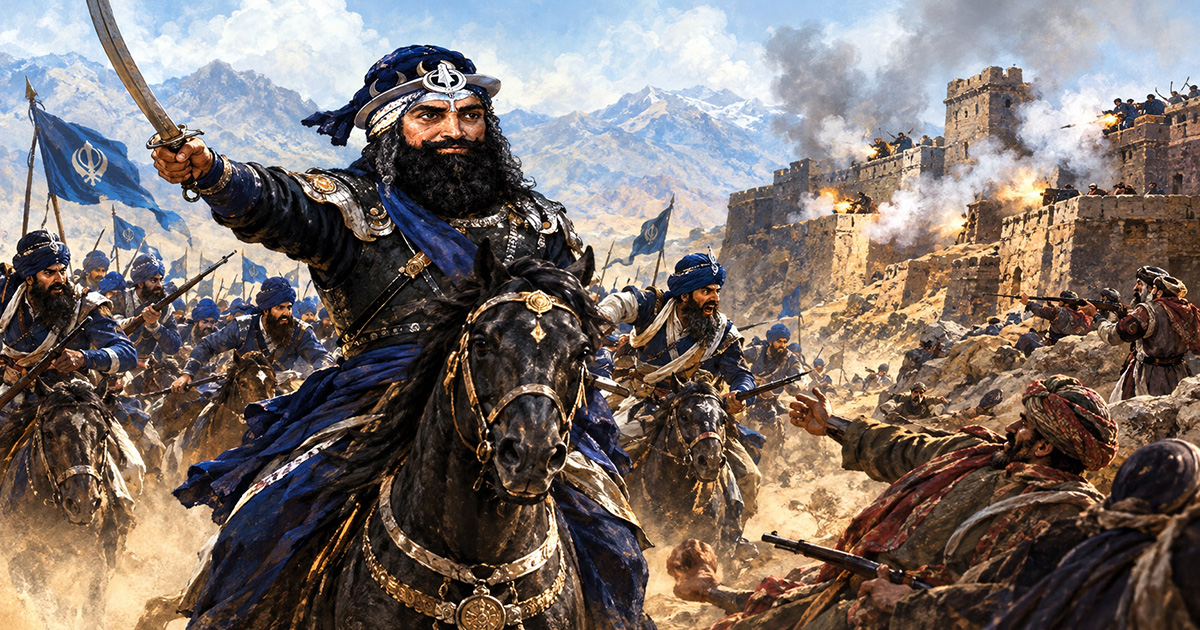
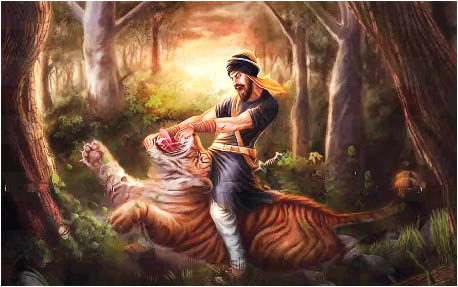
Sardar Hari Singh Nalwa | This image is AI-generated
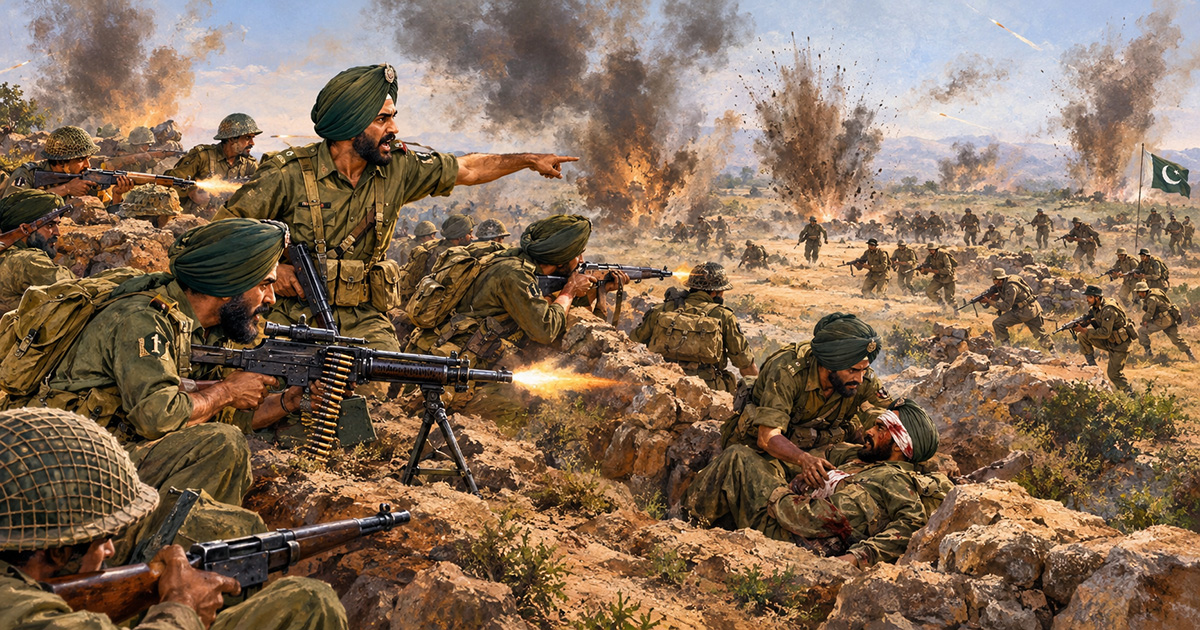
This is the story of 700 SIkh Soldiers against 50000 Jihadi Afghan Soldiers in the year 1834. The Sikh soldiers were trying to regain control of the Fatehgarh Fort, which was surrounded on all sides.
Roughly seventeen kilometres from Peshawar, where the Khyber Pass cuts through the mountains separating Afghanistan from India, lies the small outpost of Jamrud. For centuries, this narrow corridor had been the main gateway through which raiders and armies from Central Asia poured into the Indian plains — and whoever held Jamrud held the key to the frontier.
It was here, in the autumn of 1836, that workers under the command of Sardar Hari Singh Nalwa raised a fort in just fifty-five days. They called it Fatehgarh. Its position was no accident. This was the very ground raiders from Afghanistan had used for generations to enter India. Whoever held Jamrud held the key to the Khyber.
Nalwa knew this better than most. As commander of Peshawar for the Sikh Empire under Maharaja Ranjit Singh, he had spent years securing this volatile edge of the kingdom, pushing the frontier further west than any Sikh general before him. But by the spring of 1837, he was a sick man, laid up in Peshawar, recovering some seventeen kilometres from the fort he had built. Many of his soldiers, meanwhile, had been called away east to Lahore to attend the wedding of the young Maharaja Nau Nihal Singh.
Amir Dost Mohammad Khan of Afghanistan, watching from across the frontier, saw his opening.
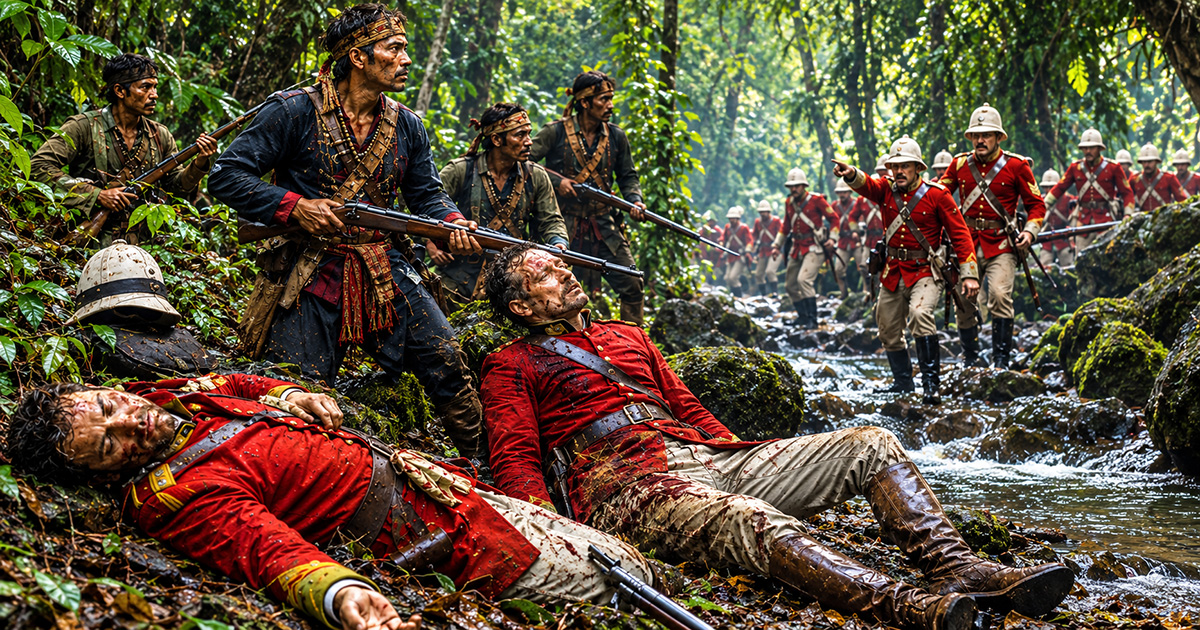
On the 27th of April, an Afghan force numbering in the tens of thousands marched down through the pass toward Jamrud. By the next morning, their artillery had begun pounding the walls of Fatehgarh. Inside, only 700 Sikh soldiers stood between the fort and the pass beyond it. They were outnumbered by a staggering margin — by some accounts, seventy to one. Still, they refused to surrender.
The siege dragged on. Cannon fire cracked the fort's walls day after day. Then the Afghan forces did something more dangerous than any bombardment: they seized the fort's water supply. Inside, thirst began to do what artillery could not.
A soldier named Mahan Singh, desperate, managed to get word out to Nalwa in Peshawar.
Nalwa did not wait to recover. Ill as he was, he gathered ten thousand men and rode west for Jamrud, arriving on the morning of the 30th of April.
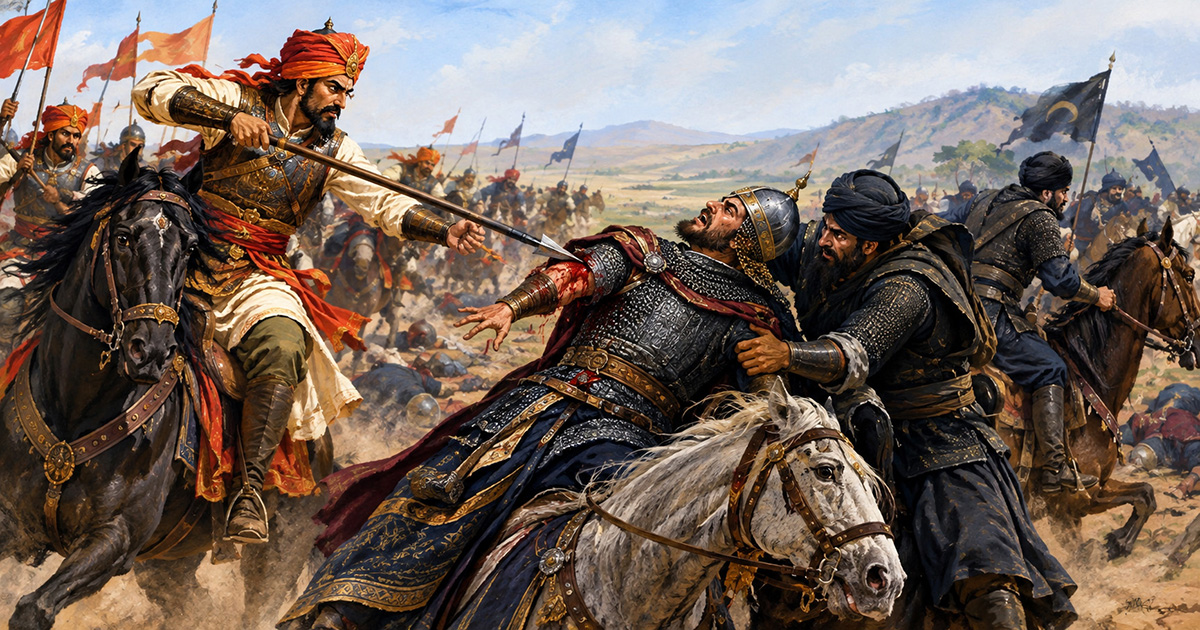
He wasted no time on caution. He split his force into three columns — one under his own command, the other two under Sardar Nidhan Singh and Amar Singh — and sent them in from both flanks while the garrison inside the fort renewed its own bombardment. The effect was immediate and violent. Nalwa's contingent tore into the besieging army with such force that the Afghan lines began to buckle, then break. Several of their commanders — Sardar Mohammad Khan, Nawab Jabbar Khan, Akbar Khan, Fazal Khan, and Mohammad Azam Khan among them — were wounded and fled the field. More than half their army retreated. Fourteen abandoned cannons were left behind as trophies of the rout.
It should have ended there, a clean victory. But Sardar Nidhan Singh, sensing the enemy's collapse, pressed the pursuit with 1,500 men further into the mouth of the Khyber Pass itself. Nalwa, worried the chase was running into dangerous, unfamiliar ground, rode out personally to call his men back.
It was a fatal decision.
Afghan fighters, still hidden in the rocks near the pass, ambushed the party. Nalwa's own bodyguard, Ajab Singh Randhawa, was killed in the first strike. As Nalwa moved toward the attackers, gunmen concealed inside a cave opened fire. Two bullets found him — one in the chest, one in the abdomen.
He did not fall. Wounded and bleeding, Nalwa kept fighting until the remaining attackers broke and fled. Only then, gravely injured, did he turn his horse back east toward the fort at Jamrud.
The soldiers who saw him ride in, covered in blood, were shaken. Nalwa himself understood what they could not yet accept — that his wounds were mortal, and there would be no recovery. But even as his own life slipped away, his mind stayed fixed on the frontier he had spent years defending. He gave one final order: his death was to be kept secret from the enemy until reinforcements from Maharaja Ranjit Singh arrived at Jamrud. He knew that if the Afghan forces learned their most feared adversary was gone, they might regroup and strike back down through the pass while the fort was still vulnerable.
That night, Hari Singh Nalwa died at Jamrud — the frontier he had built with his own hands still standing, still held, exactly as he had intended it to be.
Note: The information given in this story has been taken from the book, "Hari Singh Nalwa" (pages 146–163), authored by Surinder Singh Johar.