Battle of Richhmar Gali 1948: How Lance Naik Karam Singh’s Men Defended the Ridge Against Eight Pakistani Attacks
On October 13, 1948, Pakistani troops attacked Richhmar Gali as part of their plan to recapture Tithwal from India.

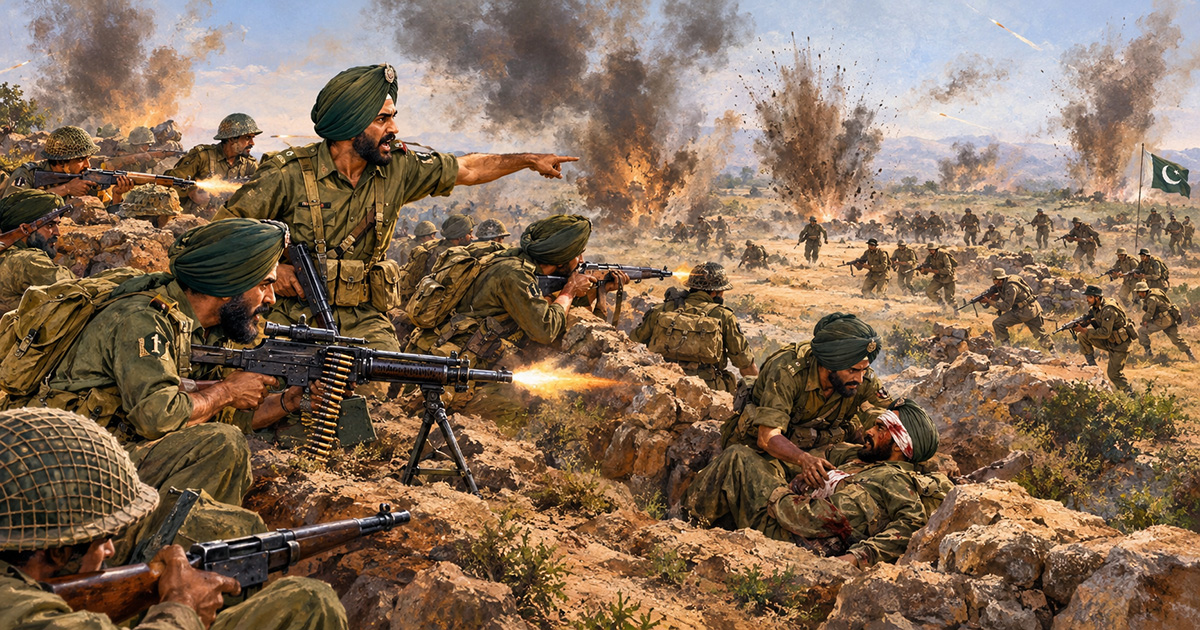
Battle of Richchmar Gali | This image is AI-generated
In Jammu and Kashmir’s Richhmar Gali at an altitude of nearly 8,100 feet, the morning of October 13, 1948, began with brutal cold and an uneasy silence. On that day, Pakistani troops attacked Richhmar Gali as part of their plan to recapture Tithwal from India. Pakistan planned to bypass the Indian positions around Tithwal, capture Richhmar Gali, and move towards the strategically important passes beyond it. But it wasn’t an easy task, because standing before them was a small yet courageous group of soldiers of the 1st Battalion of the Sikh Regiment (1 Sikh). Among them was Lance Naik Karam Singh, who was commanding a forward outpost.
Though Richhmar Gali appeared almost insignificant on the map, whoever controlled this ridge could exert control over important routes through the mountains and threaten the supply lines leading into the Kashmir Valley. Hence, it was of utmost importance for India to safeguard it.
Richmmar Gali in Jammu & Kashmir | Image Source: Facebook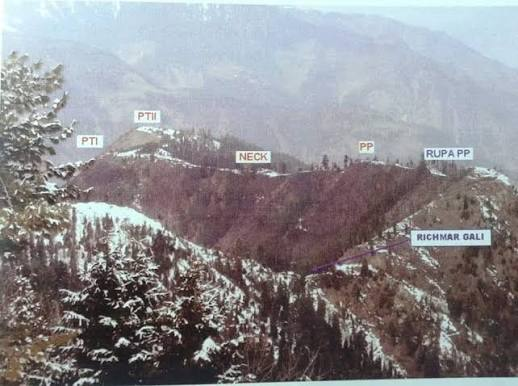
At around 9:30 a.m., the attack began. The Pakistani troops fired mortars and artillery, and shells rained down on the ridge. The bunkers shook, trenches collapsed, disrupting the communication lines. The bombardment was so intense that several of the bunkers in the area were damaged. This left the soldiers of 1 Sikh increasingly isolated from the rest of their unit stationed at the battalion base in the Tithwal sector.
Soon, the Pakistani troops began advancing, supported by heavy fire. The Indian soldiers waited until the attackers came within effective range before opening up with their Bren guns and rifles. They pushed back the first assault, but the Pakistani side kept up with their assaults, one after the other. Each time the attackers tried to break through the defensive line, the soldiers of 1 Sikh, led by Karam Singh at the front, forced them back. Not only that, he kept moving from position to position, encouraging his men, directing their fire, and helping wounded soldiers even as enemy shells continued to fall. At one point, when the ammunition with the frontline defenders began running short, he withdrew towards the main company position, with the rest of the team. He himself was wounded, but instead of accepting evacuation, he helped bring two injured comrades to safety.
With every assault, the situation kept becoming desperate. On the enemy side, numbers were in the majority. Whereas on India’s side, the communication lines were down, ammunition was running low, and the defenders were surrounded by enemy fire. Yet Karam Singh refused to let panic take over. When necessary, he picked up grenades and used them against the advancing troops.
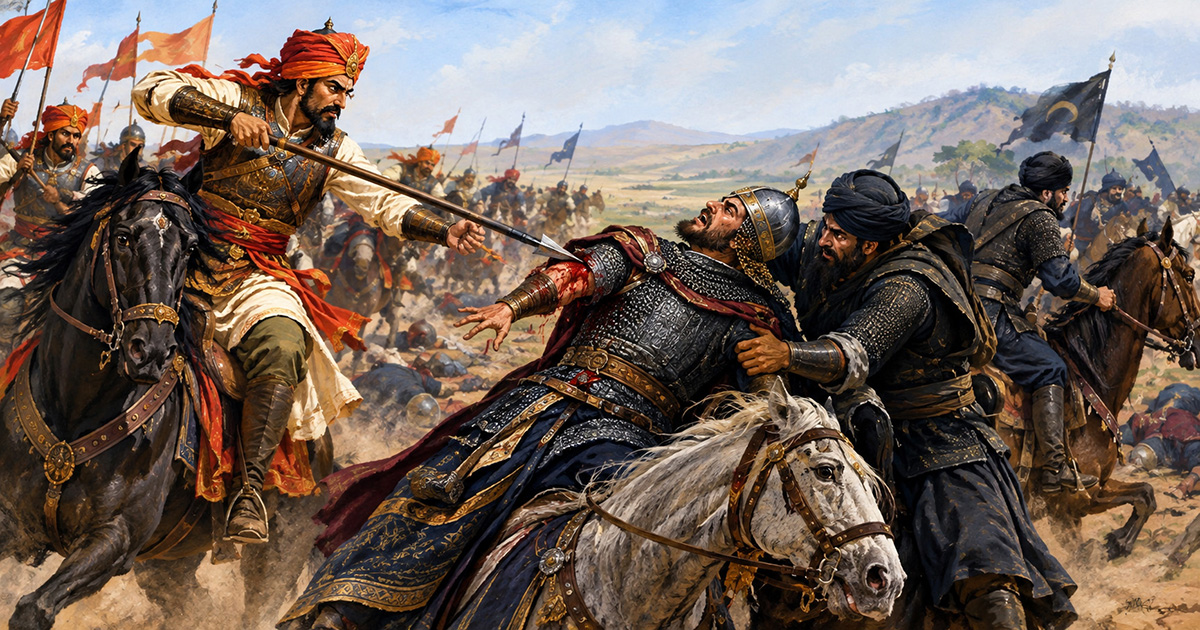
Then came the fifth attack. This time, the attackers managed to get dangerously close to the Indian troops. Two enemy soldiers came so close that firing at them risked hitting Karam Singh's own men. However, at the same time, there was no time to hesitate. So, Karam Singh took a courageous decision: he jumped out of his trench and engaged the two attackers with his bayonet, killing them in close combat. His action broke the momentum of the assault and inspired the men around him.
But the battle was far from over. Two more attacks followed. The men of 1 Sikh, exhausted and battered by hours of shelling, continued to hold their ground. Karam Singh, despite being wounded, remained with them. The eighth and the final assault came during the night of October 13. The Indian soldiers, outnumbered and exhausted, but determined, pushed back each one of them. By the dawn of October 14, it became clear that the Indian position remained intact. Not a single bunker had been captured. The Indian defenders had lost 15 men, while Pakistani casualties stood at around 300 killed and wounded.
Lance Naik Karam Singh became first living recipient of Param Vir Chakra | Image Source: India Today
By holding Richhmar Gali, the Indian forces, despite being outnumbered, did not let Pakistan outflank the Tithwal defences and preserved the vital northern approaches into the Kashmir Valley. And at the centre of that defence was Lance Naik Karam Singh. His courage at Richhmar Gali earned him India's highest wartime gallantry award, the Param Vir Chakra. The award was formally announced in 1950. Karam Singh was the first living recipient of the war decoration. After all, the man who had refused to leave his men on that freezing mountain ridge had turned a seemingly impossible defence into a victory.