How Durgavati Devi Helped Bhagat Singh Escape Lahore Amid British Scrutiny?
The wife of revolutionary Bhagwati Charan Vohra, Durga Bhabhi, took responsibility for helping Bhagat Singh and Rajguru escape Lahore safely while evading the eyes of the police.

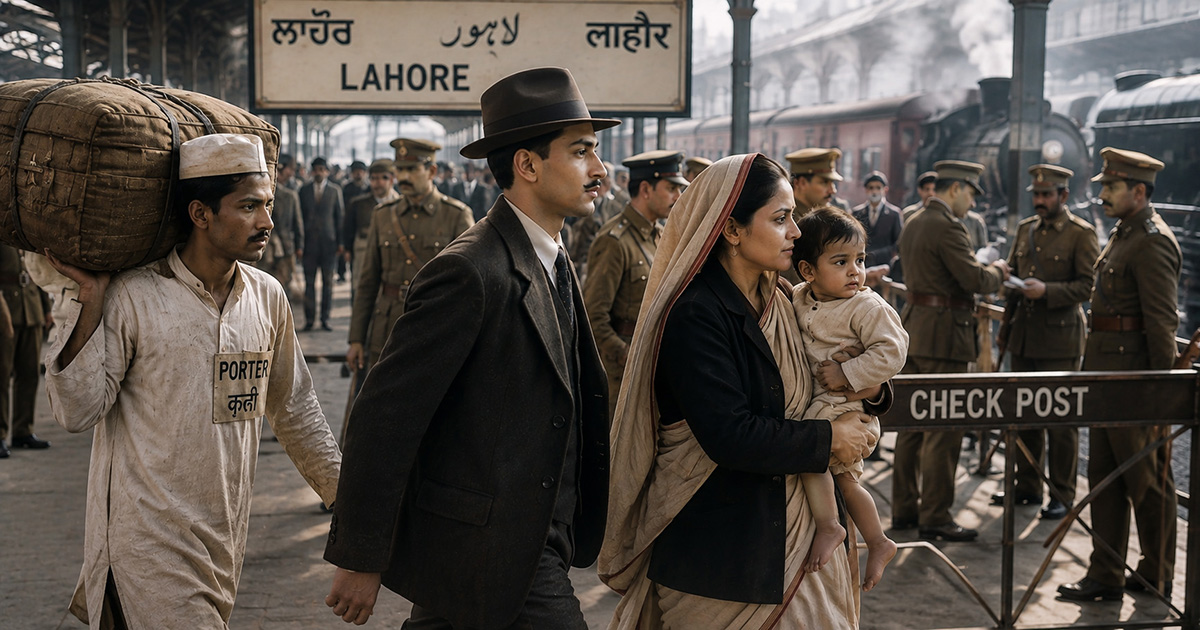
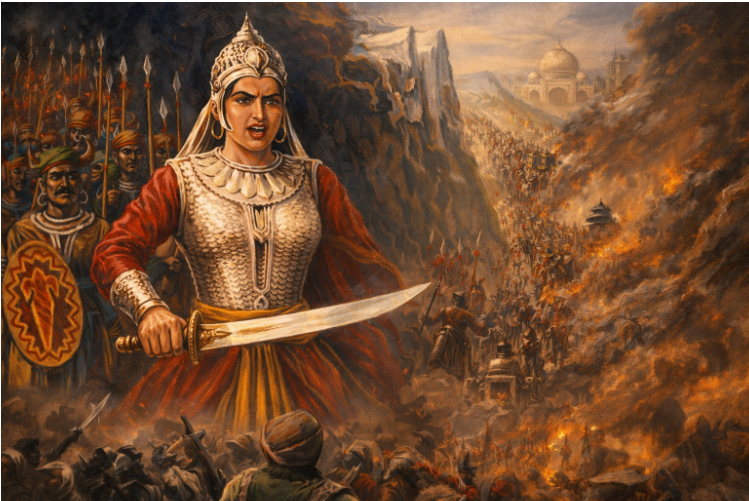
Durgavati Devi and Bhagat Singh evade the British disguised as wife and husband | This image is AI-generated
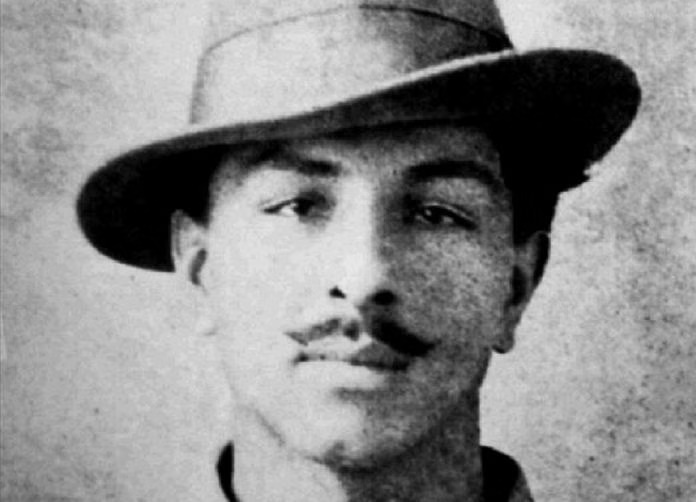
December 17, 1928 proved to be a major turning point in the history of Lahore's revolutionary movement. Members of the Hindustan Socialist Republican Association (HSRA), Bhagat Singh and Shivaram Rajguru, shot British police officer John P. Saunders in retaliation for the death of Lala Lajpat Rai. Their actual target was James Scott, but Saunders was killed instead. Immediately after the assassination, the British police imposed a strict blockade across Lahore. Hundreds of police personnel, intelligence agents, and checkpoints were deployed. They were particularly searching for Bhagat Singh, the young revolutionary who was known for his bearded and turbaned Sikh appearance. Tension gripped the city, and his arrest seemed almost certain. It was during this crisis that Durgavati Devi, a brave woman member of the HSRA, Durgavati Devi, also lovingly known as Durgavat Bhabhi within revolutionary circles, displayed an extraordinary example of courage.
The wife of revolutionary Bhagwati Charan Vohra, Durga Bhabhi took responsibility for helping Bhagat Singh and Rajguru escape Lahore safely while evading the eyes of the police. This was not merely an act of courage but also a carefully planned strategy resembling a spy story, in which a young mother broke social conventions and presented the revolutionary as her husband in order to save him.
Two days after the assassination of John P. Saunders, on December 19, 1928, Sukhdev Thapar arrived at Durgavati Devi's home in Lahore. Bhagat Singh and Rajguru were also with him. The situation was extremely serious. The police were conducting raids throughout the city, keeping a close watch on railway stations, roads, and possible hideouts. The HSRA members had very little time and limited resources. Durga Bhabhi was only around 21 years old at the time and was at home with her three-year-old son, Sachin. Her husband, Bhagwati Charan Vohra, had gone to the Calcutta Congress session.
Sukhdev directly asked Durga Bhabhi for help. It was essential to get Bhagat Singh and Rajguru out of Lahore; otherwise, their arrest was almost certain. Without any hesitation or questions, Durga Bhabhi decided to help them. She may already have understood what had happened, but she did not ask for details. Instead, she immediately began helping with the escape plan. The police were searching for Bhagat Singh as a Sikh man with a beard, uncut hair, and a turban. Therefore, the first step was to change his appearance. That very night, Bhagat Singh shaved his beard, cut his hair short, and dressed in Western-style clothes.
The plan was that Durgavati Devi would pose as Bhagat Singh's wife, while her young son Sachin would sit in Bhagat Singh's arms, creating the appearance of a middle-class or Anglo-Indian family. Shivaram Rajguru would pose as their servant and carry the luggage. The plan went against the social conventions of that time. A respectable married woman was going to travel with another man while pretending to be his wife. But in the face of the revolutionary cause, these obstacles seemed insignificant. Durga Bhabhi willingly accepted the risk.
Early in the morning of December 20, the three—Bhagat Singh, Durga Bhabhi, and Rajguru—left the house. With the child in her arms, Durga Bhabhi behaved like an ordinary housewife. They reached the Lahore railway station, where there was a heavy police presence. Passengers were being searched at checkpoints, and suspicious individuals were being stopped. At the station, they bought three tickets to Kanpur: two first-class tickets for Durga Bhabhi and Bhagat Singh and a third-class ticket for Rajguru. Both men were carrying loaded revolvers so that they could defend themselves in case anything went wrong.
Durga Bhabhi maintained a calm and confident demeanour. They behaved like a respectable young married couple, giving the police no reason for suspicion. The presence of the child made the family appearance even more convincing.
The train departed for Kanpur via Bathinda. They remained alert throughout the journey, but no incident occurred. After reaching Kanpur, they changed trains and travelled towards Lucknow. This change was necessary because the CID kept a particularly close watch on trains travelling directly to Howrah. In Lucknow, Rajguru parted ways with them and headed towards Banaras. Bhagat Singh, Durga Bhabhi, and the child continued on to Howrah, Calcutta, where they met other revolutionaries and discussed their next course of action. After staying in Calcutta for a few days, Durgavati Devi returned to Lahore with her child. Through this entire operation, she not only helped Bhagat Singh escape but also paved the way for the HSRA to continue its revolutionary activities.
This incident demonstrates that women in India's freedom struggle were not merely supporters but also strategists and active participants. Durga Bhabhi challenged social pressures, personal risks—including the risks involved in travelling with her young child—and intense police surveillance. Her actions gave Bhagat Singh additional time to continue his revolutionary activities, which would go on to shake the entire country. The courage of Durga Bhabhi continues to remind us of the countless unsung women who sacrificed everything for India's freedom without seeking recognition or fame.
.jpg)