When Rani Durgavati Chose Death Instead of Surrendering to the Mughals
Rani Durgavati, a ruler known for her undefeated record, stood firm with only 5,000 loyal warriors at her side.

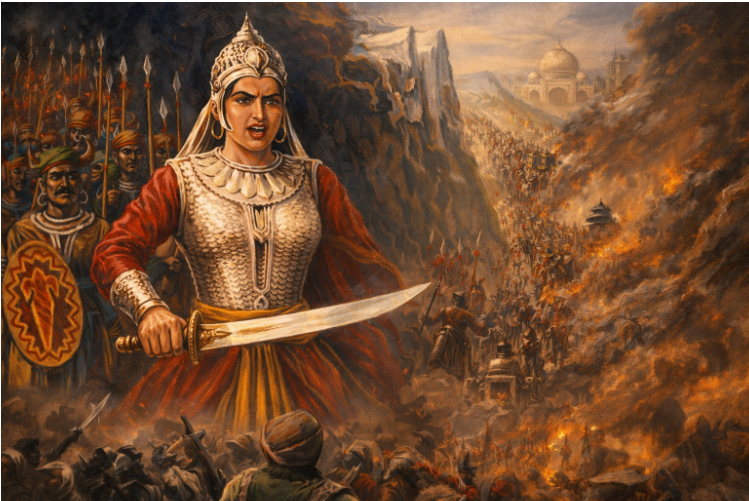
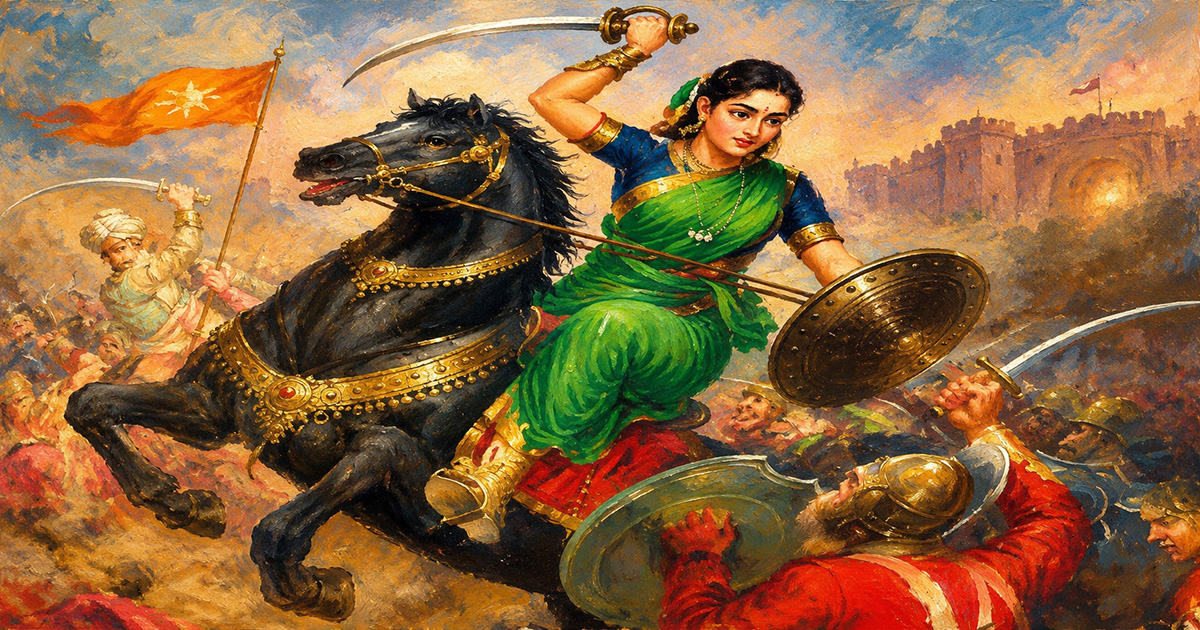
Rani Durgavati | This image is AI-generated
On June 24, 1564, in the narrow, rocky ravine of Narrai Nallah near Jabalpur, history was rewritten in blood and resolve. There, Rani Durgavati, the warrior queen of Gondwana, made a decision that would echo through the ages: She chose to die rather than live as a prisoner of the Mughals. Wounded, surrounded on all sides by the enemy, she refused to bend her spine. Instead, with a last breath, she wrote her own fate in the ink of courage.
In 1564, Mughal emperor Akbar had turned his gaze toward the fertile kingdom of Gondwana—its forests, its elephants, and its fearless queen. Acting on his orders, the powerful general Asaf Khan marched into the region with 50,000 soldiers, heavy artillery, and the full might of the Mughal Empire.
In response, Rani Durgavati, a ruler known for her undefeated record, stood firm with only 5,000 loyal warriors at her side. In her sixteen years of rule, she had won 51 battles and lost none. She had driven Baz Bahadur out of Malwa, halted the Afghan marauders of Bengal, and ruled her people with justice. Yet now, the Mughal juggernaut had surrounded her kingdom.
On the first day of the Battle of Narrai, the queen executed a masterstroke. She lured the invading army into the narrow valley, then unleashed a devastating ambush from all sides. The Mughal columns reeled under the impact. The Rani’s faujdar (commander), Arjun Das, fell fighting valiantly on the battlefield, and the queen herself took command from the front lines. The first day ended with heavy Mughal losses and the flicker of victory in the queen’s eyes.
But on the second day—June 24, 1564—the tide turned. Asaf Khan brought forward heavy cannons and reinforced his assault. The Mughal forces pressed harder, the noise of battle grew louder, and the Rani’s smaller army began to falter.
Then came the moment that altered history. Two arrows struck the queen—one near her ear, the other deep into her neck. Blood poured from her wounds, the pain was unbearable, and the Mughal troops closed in from every direction. The Rani knew defeat was inevitable.
She called out to her trusted minister, Adhar Singh, and said in a calm but resolute voice, “Kill me. Cut off my head with your sword. I will not live as a prisoner of the Mughals. To live in dishonour is to betray my self‑respect.”
Adhar Singh wept. He refused to obey. “The hand that once held your gifts can never strike such a blow,” he replied. “I will carry you away from this battlefield. Your life is precious to us all.”
Rani's face hardened with anger. “May God never let me be defeated even in name and honour!” she cried.
Refusing to flee, she drew her dagger from her belt. With the dignity of a queen and the resolve of a warrior, she plunged the blade into herself, choosing death over captivity. A fountain of blood burst forth, the crowd fell silent, and Rani's body slipped gently to the ground.
Asaf Khan stood stunned. The Mughals had won the battle, but lost the war in spirit. The queen’s final act stripped the conqueror of his triumph. The dream of taking Rani Durgavati alive as a trophy in the Mughal court was shattered instantly.
Even Akbar, the great emperor who claimed so many victories, could not stand against the force of the Rani’s resolve. In that moment, the conqueror was conquered by the courage of the slain.
After the battle, Gondwana fell under Mughal control. Yet the story of Rani Durgavati refused to die with her. Born on 5 October 1524 in Kalinjar (modern‑day Banda, Uttar Pradesh), the queen had married Dalpat Shah, the son of the Gond king of Garha‑Katanga, at the age of eighteen. Her life became a symbol of pride, sacrifice, and unyielding resistance.
Even today, in the villages of Madhya Pradesh, in the museums of Jabalpur, and at Rani Durgavati Vishwavidyalaya (Rani Durgavati University), her Balidan Diwas—Day of Sacrifice—is observed on 24 June. The people of the region still light a flame of self‑respect in her memory, a fire that, centuries later, burns as brightly as the day it was lit. Rani Durgavati did not merely die that day—she became immortal.
.jpg)