1932: When India’s Cricket Team Rebelled Before Its First-Ever Test Match | The Untold Story of India's First Cricket Tour
India was about to play its first-ever international Test match, yet the team was on the verge of breaking up one night before the game.

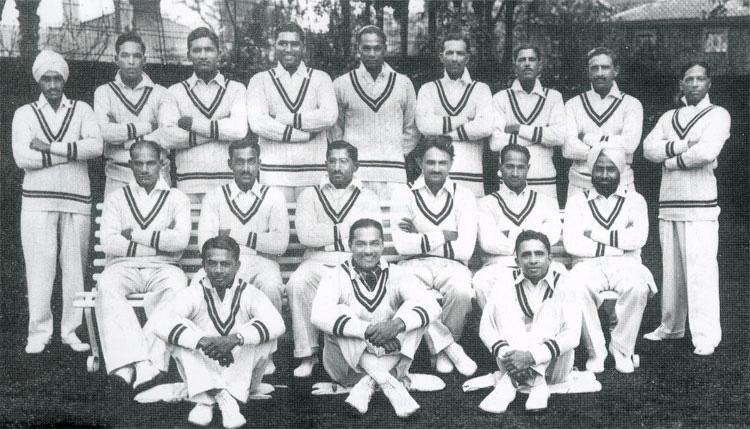
First Indian Cricket Team | Image Source: X
India was about to play its first-ever international Test match, yet the team was on the verge of breaking up one night before the game. Players revolted against their own captain. Why did the squad almost collapse on the eve of this historic contest? Let us understand how the influence of princes, outdated traditions, and feudal thinking had trapped Indian cricket, and how this very oppression tried to crush the spirit of a true player and the ethos of sport.
The Birth of India’s Test Status
In 1932, India was granted Test‑match status, and the same year, it was announced that an Indian team would tour England from April to October. The tour was to include 26 first‑class matches, one of which would be the first official Test for the country. The Board of Control for Cricket in India (BCCI) did not have the funds to send the team, so the rulers of Patiala, Maharaja Bhupinder Singh, and Vijayanagaram financed the expedition.
Because the tour was long, the two maharajas decided not to accompany the squad. If either had gone, the tour’s leadership would automatically have fallen to him, as the custom of the time was that the captain had to be a member of the royal family. A player from outside the royal houses, no matter how talented, could not be given the Test captaincy. In their absence, the captaincy was given to Maharaja Rana Natawar Singhji Bhawasinghji of Porbandar, while the ruler of Limbdi was made vice‑captain, neither of whom was a strong cricketer.
The Night Before the Test: A Mutiny in the Camp
When the team reached London, practice games quickly revealed the stakes. The Maharaja of Porbandar realized that he had been handed the captaincy of a historic and defining moment for Indian cricket. Displaying rare wisdom, he decided, one day before the Test, to step aside from the game and hand over the responsibility to the best all‑rounder in the side: Colonel C.K. Nayudu. At that time, C.K. Nayudu (born 1895, Nagpur) was already famous as a brilliant all‑rounder and aggressive batsman in Indian cricket. He made his first‑class debut in 1916. In 1923, the Maharaja of Holkar summoned him to Indore and gave him the rank of Captain (later Colonel) in the army.
This noble decision sparked a rebellion. Several players were furious that someone from outside the royal circles would lead the team. These men, raised in the shadow of a dependent princely order, could not accept as captain anyone who was not a king, maharaja, nawab, or noble. The night before 25 June 1932—the day India was to play its first Test at Lord’s—the camp saw a full‑blown revolt.
Telegram to Patiala: The Rebellion
The rebel players sent a telegram to the Maharaja of Patiala in the middle of the night, rejecting Nayudu’s captaincy. The ruler was furious; he knew just how historic this moment was. In a stern reply, he warned the dissenters that Nayudu would remain captain, and anyone who opposed him would never play for India again. The power of the crown silenced the mutiny. The next morning, C.K. Nayudu led the team onto the Lord’s turf. England won the match by 158 runs, but India’s bowlers and batsmen impressed the world with their courage and flair.
The Beginning of a New Era
The 1932 tour was not just about a victory or defeat; it marked the beginning of India’s transformation in international cricket. Under the weight of royal traditions, the game had often been treated as a pastime for the elite. But players like C.K. Nayudu—men of merit rather than birth—began to drag it toward a new era shaped by talent and leadership. Even with the BCCI’s limited resources, the team carried the message of an Indian spirit onto the world stage.
That 1932 tour laid the foundation on which modern Indian cricket stands. Today’s triumphs are the continuation of the same story—of struggle, courage, and the will to change.
It should be noted that before 1900, the game of cricket had begun to slowly gain popularity in India. In 1884, a team from Sri Lanka played a match in Kolkata, which was India’s first exposure to an international cricket match. Meanwhile, to represent Indian cricket officially, the Board of Control for Cricket in India (BCCI) was formally established in December 1928.