Poems from a Book Became the Trumpet of Revolution: When Babarao Savarkar's Poetry Collection Rattled the British Government
This book mirrored the ideology of the secret revolutionary organization Abhinav Bharat, of which Babarao and his younger brother Vinayak Damodar Savarkar (Veer Savarkar) were key pillars.

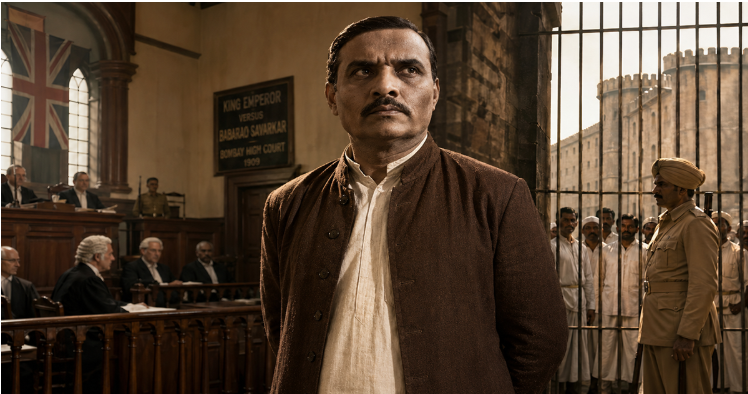
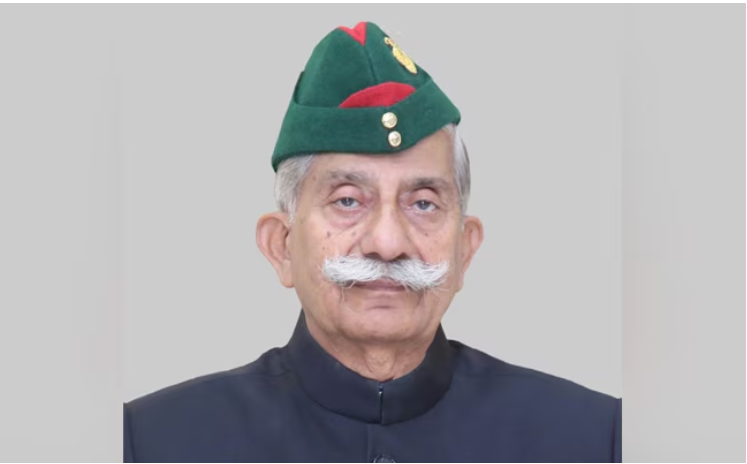
G.D. Savarkar | This image is AI-generated
In the final months of 1907, a small book was secretly circulating hand-to-hand through the lanes of Nashik. Titled Laghu Abhinav Bharat Mala, it was no ordinary poetry collection. Comprising 18 poems penned and published by Ganesh Damodar Savarkar (Babarao Savarkar), the book’s aim was to ignite a spark of resistance against the British in the common man’s heart and mind. Nearly 3,000 copies were printed at Solapur's Swarajya Press in December 1907 and officially released from Nashik on March 18, 1908, with the motive of uprooting British imperialism from India.
This book mirrored the ideology of the secret revolutionary organization Abhinav Bharat, of which Babarao and his younger brother Vinayak Damodar Savarkar (Veer Savarkar) were key pillars. Alongside guns and bombs, they weaponized words. Laghu Abhinav Bharat Mala was one such weapon, where books appeared to be mythical and historical by invoking Lord Ganesh, Lord Krishna, and Lord Shiva; but in reality, they were covertly launched scathing attacks on British rule.
A few examples of such poetry are mentioned here. The poem 5 of the book has references of Krishna slaying "foreign demons.” However, in reality, the poetry urged the Indians to fight with a sword against the British. Similarly, in the 7th poem, Baburao Savarkar urged the readers to "wield the sword, slay the demons of subjugation," insisting that the citizens pick up swords against the British regime, and not beg for freedom. The ninth poem raises a blunt question—"Who gained freedom without war?" This poetry was an attempt to ignite resistance against the British Raj by stating that fighting the British is necessary if Swaraj is the goal. The same is the case with the 17th poetry (verses 4th to 7th), where British rulers have been described as “demons” and have called for a war against them.
When the British rulers discovered Babarao Savarkar's secret activities, they grew alarmed and ordered his arrest. On May 30, 1909, Nashik police arrested him over the book. He was tried, and on 8 June 1909, the Nashik Sessions Court sentenced him to two years' rigorous imprisonment under Section 124A (sedition), plus life transportation and confiscation of all property under Section 121. Babarao appealed the Sessions Judge's verdict to the Bombay High Court, which pinpointed 4 out of 18 poems (Nos. 5, 7, 9, and 17) as core evidence—unlike the lower court, which admitted the entire book unchallenged. Upholding the Sessions Court, the High Court sent Babarao Savarkar to Cellular Jail (Andaman).
Born on June 13, 1879, in Bhagur village, Nashik, Maharashtra, Ganesh Savarkar ignited patriotism and resistance against British atrocities through writings like this collection. He passed away on March 16, 1945, in Sangli, Maharashtra. Babarao's saga shows literature can be revolution's sharpest weapon. His words forged a sword that terrified the British from head to toe. It teaches: Amid peak oppression, a true patriot won't silence his voice, even if the cost is lifelong exile.