When Piru Singh Shekhawat Destroyed the Enemy on the Tithwal Ridge with the Cry of “Raja Ramchandra Ki Jai”
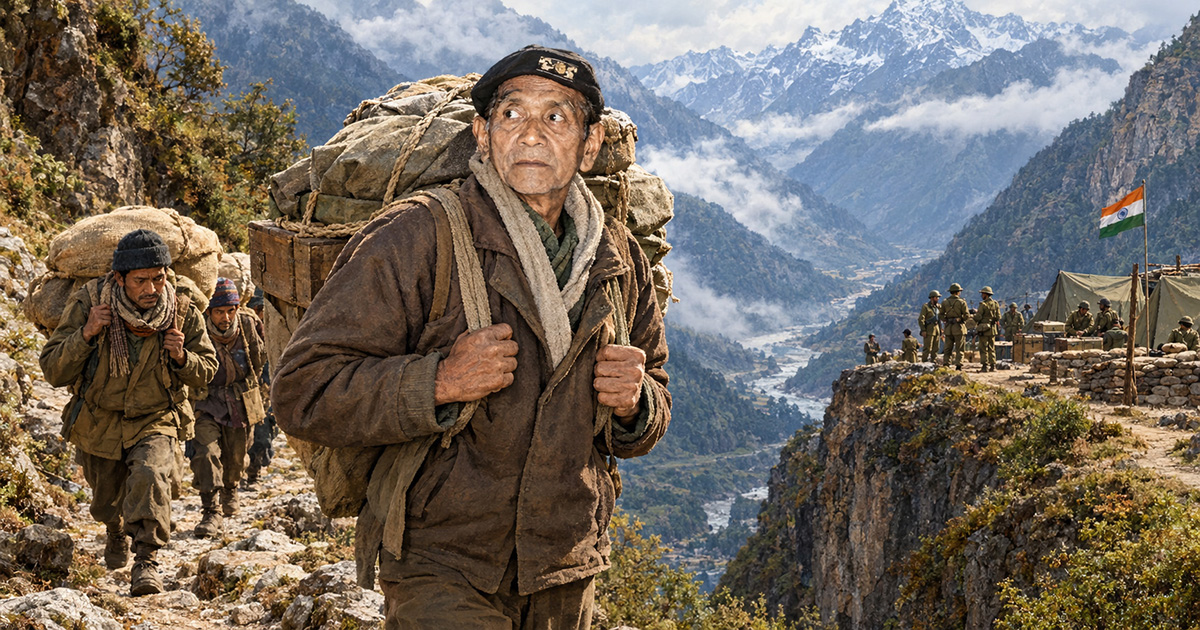
The dark night of July 18, 1948… The hills of Tithwal were filled with the smell of gunpowder. Enemy machine guns from the heights were raining fire, while Indian soldiers climbed the ridge fighting death at every step.

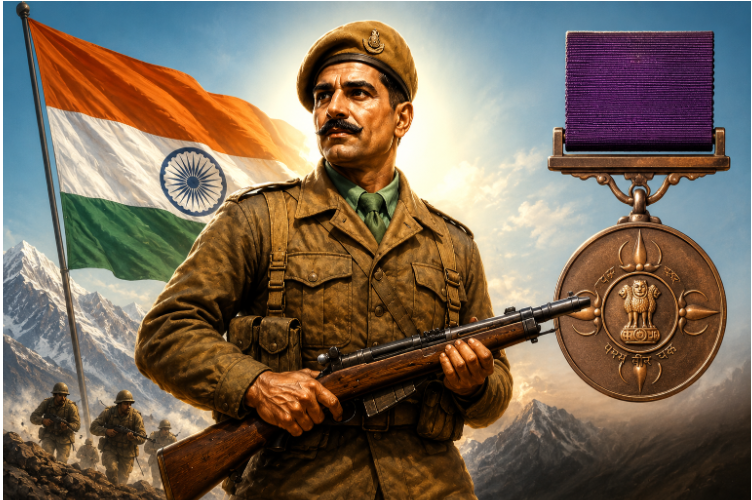
Piru Singh Shekhawat | This image is AI-generated
The dark night of July 18, 1948… The hills of Tithwal were filled with the smell of gunpowder. Enemy machine guns from the heights were raining fire, while Indian soldiers climbed the ridge fighting death at every step. Then, amid bullets and explosions, a thunderous war cry echoed across the battlefield, “Raja Ramchandra Ki Jai!”
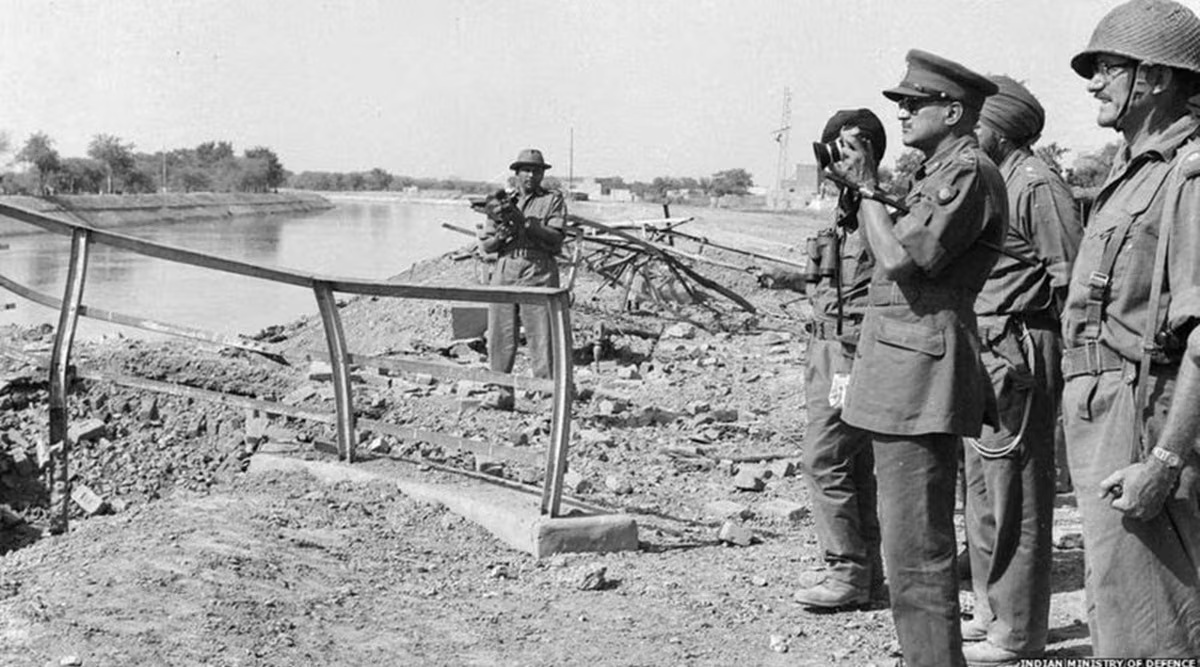
That voice belonged to Piru Singh Shekhawat, the soldier who single-handedly destroyed an entire enemy post and sacrificed his life, but did not allow India’s honour to bow on the Tithwal Ridge. India had become independent in 1947, but soon after, the Indo-Pakistan War began. Pakistan launched an attack on Jammu and Kashmir with the help of tribal raiders and soldiers. By July 1948, the fighting had reached the Tithwal sector. Pakistani forces were repeatedly attacking posts around the Kishanganga River. On July 8, the enemy captured a strategic high position called “Ring Contour.” From there, they could monitor every movement of the Indian Army. If the post remained in enemy hands, advancing further would have become nearly impossible for Indian forces.
Considering the seriousness of the situation, the Indian Army sent 6 Rajputana Rifles from Uri to Tithwal to reinforce the 163 Brigade and recapture the strategic post. On July 11, 1948, the Indian Army launched an assault. Heavy shelling continued for days, but the enemy was entrenched in strong bunkers on the heights. Reconnaissance reports made it clear that the post had to be captured at any cost.
For the mission, two companies of 6 Rajputana Rifles — ‘C’ and ‘D’ Company — were assigned. ‘D’ Company received the task of capturing the first objective, and among its section commanders was Piru Singh. At around 1 AM on July 18, 1948, the final assault began. The route to the enemy post was extremely dangerous — a narrow track barely one metre wide, with deep ravines on both sides. From above, Pakistani soldiers fired machine guns, mortars, and grenades continuously. It seemed as if death itself sat atop the hill.
Within just thirty minutes, 51 Indian soldiers had been killed or wounded. ‘D’ Company was nearly shattered. But Piru Singh did not stop. He realized that the greatest destruction was being caused by the enemy’s medium machine-gun post, which was preventing Indian soldiers from advancing. Suddenly, Piru Singh rose and charged alone toward the enemy position.
Grenades exploded around him. Shrapnel tore through his clothes and body. Blood streamed continuously from his wounds. Yet with every step, his battle cry grew louder, “Raja Ramchandra Ki Jai!” His roar echoed through the mountains. Piru Singh reached the first machine-gun post. Using his Sten gun and dagger, he launched a fierce attack that completely stunned the enemy soldiers. Within minutes, he captured the post and silenced the deadly machine gun forever.
But when he looked back, he saw that all his comrades were either dead or critically wounded. He was now fighting alone on the ridge. Still, Piru Singh did not stop. Ahead of him stood another Pakistani machine-gun bunker. He charged toward it alone. Suddenly, an enemy grenade exploded directly in front of his face, severely injuring him. Blood from his wounds blurred his vision, and by then, the last bullet in his Sten gun had already been fired.
But Piru Singh was not a man who surrendered. To avoid the next attack, he jumped into a crater and began throwing grenades toward the Pakistani post despite his fading vision. He then leapt into another trench and killed two Pakistani soldiers with his dagger. As he was about to emerge from the trench, a bullet struck him in the head. But moments earlier, he had already hurled a grenade at the enemy machine-gun post. A bullet came from one side, and his grenade flew from the other. Both struck at the same moment.
Piru Singh was martyred, but the supposedly invincible Pakistani post was destroyed forever. On July 18, 1948, Piru Singh Shekhawat laid down his life, but before his death, he had eliminated the enemy’s most dangerous position. His extraordinary bravery changed the course of the battle. Indian soldiers advanced and hoisted the Tricolour on the Tithwal Ridge.

The area encircled in red is where Piru Singh fought the battle | Image Source: Aaj Tak
Piru Singh Shekhawat had not merely captured a post that night. He proved that an Indian soldier can fight till his last breath, but will never allow the motherland’s honour to bow. For his unparalleled courage, supreme sacrifice, and fearless assault on the enemy, he was posthumously awarded the Param Vir Chakra. His mother, Jadav Kanwar, received the honour. Piru Singh Shekhawat became Rajasthan’s first Param Vir Chakra awardee.
Born on May 20, 1918, in Rampura Beri village of Jhunjhunu district in Rajasthan, Piru Singh was fearless and determined from childhood. Raised on the land of warriors, he carried a passion for battle and patriotism from an early age. He later joined the 6 Rajputana Rifles and rose to the rank of Company Havildar Major through his bravery. He had also served on the Japanese front during World War II. But history had reserved his greatest battlefield for him — the Tithwal sector of Kashmir.
.jpg)