The Most Dangerous and Forgotten Revolt of Northeast India: When Tirot Sing Openly Challenged the British with His Sword
Tirot Sing was a ruler who always placed the welfare of his people above everything else.

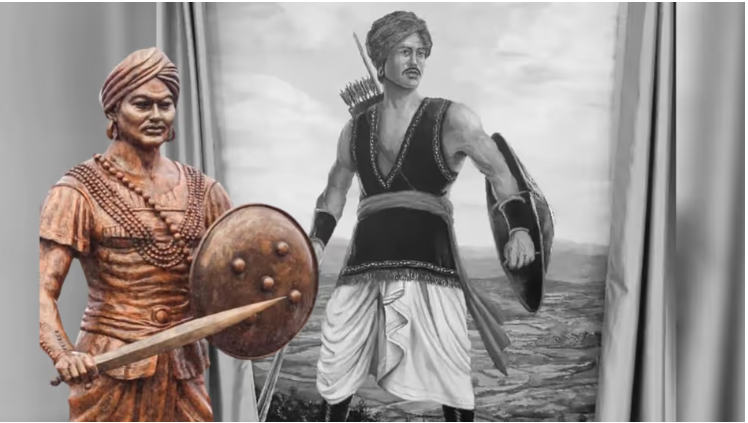
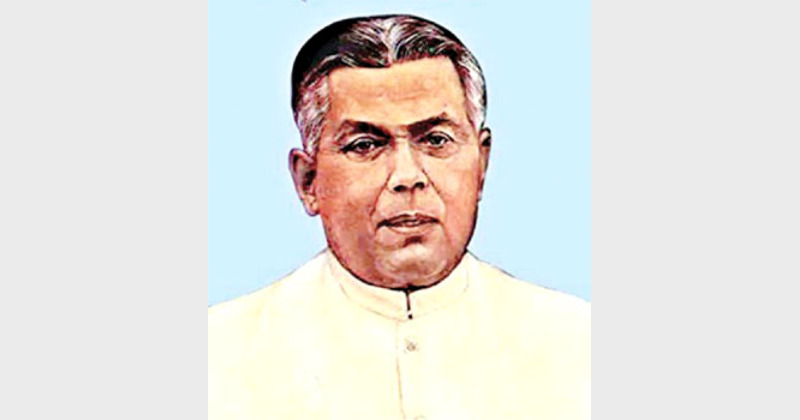
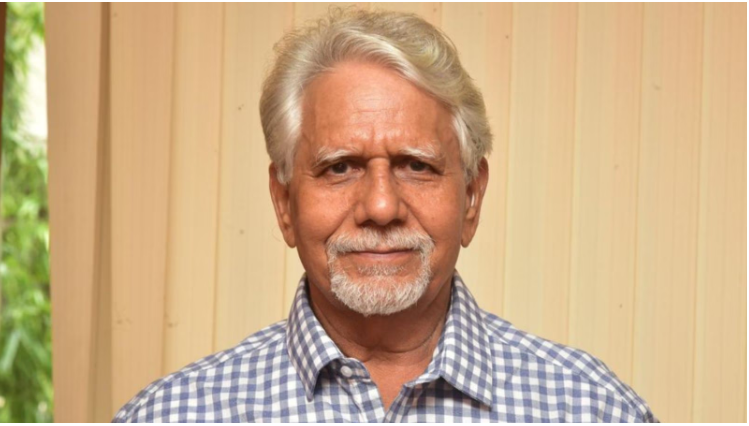
Tirot Singh | Image Source: India Today
In the early years of the 19th century, when the British were gradually expanding their control over India’s northeastern regions, a fearless warrior emerged from the hills of Meghalaya and dared to openly challenge the colonial empire. That warrior was Tirot Sing. The great ruler of the Khasi Hills not only fought to protect his land but also sacrificed his life for the freedom and dignity of his people.
The story begins with the Treaty of Yandabo, on February 24, 1826, when the British started extending their influence across Assam and the northeastern frontier. British officer David Scott planned to build a road connecting Guwahati to Sylhet through the Khasi Hills. For this, he sought permission from Tirot Sing, the chief of Nongkhlaw in present-day Meghalaya.
Tirot Sing was a ruler who always placed the welfare of his people above everything else. He believed the road would improve trade and transportation for his subjects and, therefore, granted permission. But the British intentions went far beyond road construction. Their real aim was to establish permanent control over the region.
When Tirot Sing realized that the British were planning to seize the land and freedom of the Khasi people, the fire of resistance rose within him. He understood that this was not merely about building a road — it was an attack on the independence of the Khasi Hills.
Tirot Sing’s greatest act of courage was that instead of being intimidated by British power, he chose to confront it directly. In April 1829, he called a royal council and ordered the British to leave Nongkhlaw. When they refused, he declared war. On April 4, 1829, under Tirot Sing’s leadership, Khasi warriors launched a fierce guerrilla campaign and killed British officers Lieutenant Bedingfield and Burlton. The incident came as a massive shock to the British administration.
The tribal warriors of the hills proved that they were willing to go to any extent to defend their homeland. Tirot Sing’s resistance soon became one of the fiercest anti-British uprisings in Northeast India. The British possessed modern guns, cannons, and trained soldiers, while the Khasi warriors fought with traditional weapons such as bows, arrows, and swords. Yet Tirot Sing refused to surrender. He adopted guerrilla warfare tactics and turned the hills and forests into his greatest allies.
For the British, fighting in the Khasi Hills became extremely difficult. At every turn, they faced resistance from Tirot Sing and his followers. Tirot Sing firmly believed that even with limited resources, a burning desire for freedom could challenge the mightiest empire.
Over time, many Khasi chiefs surrendered to the British, but Tirot Sing remained determined to drive the colonial rulers out of his homeland. Even after many leaders abandoned the struggle, he continued his resistance from the forests and hills until 1833. Such was his growing influence that British officers became too afraid to travel alone and began moving only in groups.
Desperate to capture him, the British finally resorted to deception. On January 13, 1833, British officer Inglis invited Tirot Sing for negotiations. According to Khasi tradition, he even swore an oath by placing salt on the edge of a sword, promising that Tirot Sing would not be arrested. But when Tirot Sing arrived at the field of Lum Mylliem for talks, the British betrayed him. He was captured through treachery and imprisoned. The British first brought him to Guwahati and later shifted him to Dhaka. There, he was subjected to severe torture and harsh imprisonment. Yet he never accepted British domination.
When torture failed to break him, the British offered him a compromise: He could return to his kingdom if he agreed to live under British authority. Tirot Sing rejected the offer without hesitation. He declared, “It is better to die free than live as a slave king.” After enduring years of suffering in British captivity, Tirot Sing died on July 17, 1835. Even death could not erase his courage.
Till his final breath, he proved that a true patriot never bows before injustice. His struggle reminds us that freedom is achieved not only through weapons but through sacrifice, determination, and an unbreakable spirit. Even today, the hills of Meghalaya remember Tirot Sing with immense pride and respect. Every year on 17 July, “Tirot Sing Day” is observed in his memory, and he continues to be honored as one of India’s great freedom fighters.