Mumbai Blast Investigation (2006): How Did K. P. Raghuvanshi and His Team Uncover the Entire Conspiracy?
On July 11, 2006, between 6:24 PM and 6:35 PM, a series of coordinated explosions ripped through seven Mumbai local trains.

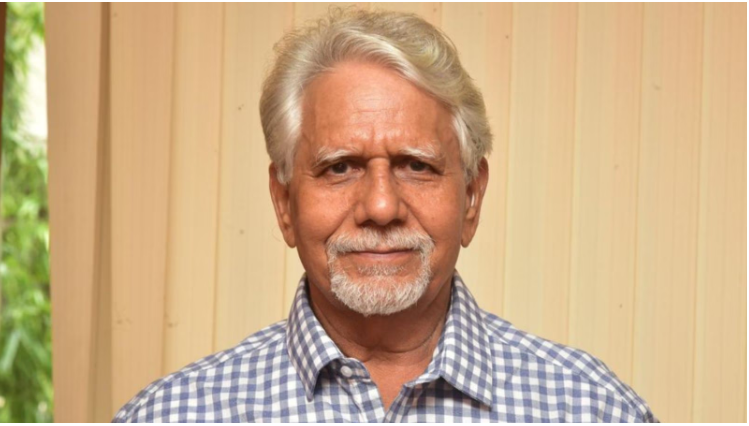
Former Maharashtra ATS chief K. P. Raghuvanshi | Image source: The Indian Express
The rainy evening of July 11, 2006, is still remembered as one of the darkest chapters in Mumbai’s history. Like every ordinary weekday, millions of people were travelling in Mumbai’s local trains that evening. Tired faces were returning home from work, unaware that within the next eleven minutes, the city would be drenched in blood and screams.
Between 6:24 PM and 6:35 PM, a series of coordinated explosions ripped through seven Mumbai local trains. Black bags placed inside first-class compartments suddenly turned into instruments of death. Rain-soaked railway platforms were littered with bodies, train coaches had been torn apart, and the entire city was in shock. Amid that atmosphere of terror emerged one man who resolved that every face behind the attack would be exposed. That man was K. P. Raghuvanshi, then chief of the Maharashtra Anti-Terrorism Squad.

2006 Mumbai Blasts | Image Source: NDTV
A Case Almost Buried by Rain
The seven back-to-back explosions left investigative agencies stunned. The greatest challenge was that the heavy monsoon rain had almost washed away every crucial piece of evidence. Thousands of people had already gathered at the blast sites. Blood mixed with rainwater flowed across platforms, while charred fragments of trains lay scattered everywhere. Mumbai Police Commissioner A. N. Roy later described it as an investigation that was almost “blinded” from the beginning.
But in that darkness, K.P. Raghuvanshi began searching for clues. The terrorists had meticulously planned the attack and left behind almost no direct evidence. Yet Raghuvanshi’s mission was clear — justice for the families of 189 victims and the 824 injured.
The very next day, Raghuvanshi convened a high-level meeting at the ATS headquarters. Seven separate teams were formed to investigate the seven blast sites. Two additional technical teams were assigned exclusively to phone records, forensic evidence, and intelligence analysis. Despite several early arrests, investigators still lacked a breakthrough that could directly connect the masterminds to the attack. But Raghuvanshi refused to give up.
During the first months of the investigation, he reportedly slept barely four hours a day. His goal was not merely to arrest suspects, but to dismantle the entire terror network that had breached India’s security system.
The Pressure Cooker Clue
Eventually, the relentless efforts of Raghuvanshi and his team began yielding results. The first major breakthrough came from the Jogeshwari blast site. Amid the debris, ATS officers recovered a broken handle of a pressure cooker. Nearby, they also found burnt aluminum fragments. To many, these appeared insignificant. But Raghuvanshi immediately realized these fragments could unlock the entire conspiracy.
Further investigation revealed that the “Kanchan pressure cookers” used in the blasts had been purchased from shops in Mumbai’s Santacruz area. Forensic analysis of the fragments made the case even more alarming. Investigators discovered that the bombs did not contain only RDX. They also included a deadly mixture of ammonium nitrate and fuel oil, significantly increasing the power of the explosions. Raghuvanshi instantly understood that this was not the work of a local gang. It bore the signature of a trained terror network operating with cross-border support.
The Phone Call That Changed Everything
Raghuvanshi then intensified scrutiny of suspicious local communications. On July 18, 2006, the ATS intercepted a phone call between Mumtaz Chaudhary from Navi Mumbai and Kamal Ahmed Ansari, who was located near the Bihar-Nepal border. The call records immediately caught Raghuvanshi’s attention. Intelligence agencies already had Kamal Ansari’s name on record, and there were suspicions that he had received terror training in Pakistan.
That was the turning point. Raghuvanshi immediately dispatched ATS teams to Bihar. Kamal Ansari was arrested. Around the same time, Khalid Aziz Sheikh was also arrested in Madhubani. Investigators discovered that members of the terror network regularly held meetings at Aziz Sheikh’s shoe shop. During these arrests, Raghuvanshi also began tracking suspicious foreign money transfers into local bank accounts.
The investigation revealed that a local man named Mohammad Faisal Rehman Sheikh had received more than ₹60 lakh from Saudi Arabia over the previous two years.
ATS soon arrested Rehman Sheikh from his residence. During searches, officials recovered 26,000 Saudi Riyals from his home, deepening suspicions further. Raghuvanshi’s investigation eventually identified Rehman Sheikh as a key operative linked to the Pakistan-based terror organization Lashkar-e-Taiba. This discovery became a major breakthrough for the ATS. Based on these findings, ATS arrested a total of 13 accused individuals.
Scientific Investigation and the Pakistan Link
KP Raghuvanshi did not want the case to end with mere arrests. He employed some of the most advanced investigative techniques available at the time, including narcoanalysis, call data analysis, and cotton swab forensic testing. Narco-analysis tests conducted in Bengaluru reportedly led one accused, Tanveer Ansari, to confess: “Some guests had come from Pakistan.”
By then, Raghuvanshi had become convinced that the attacks were planned by Pakistan-based terrorists linked to Lashkar-e-Taiba. Further investigation revealed that the attackers had been trained in Pakistan before entering India through the Nepal border. Local sleeper cells in Mumbai sheltered them. RDX explosives were allegedly smuggled into India through Kandla Port. The bombs were assembled by packing approximately two kilograms of RDX and 3.5 kilograms of ammonium nitrate into pressure cookers, creating devastating explosive devices.
These bombs were then taken to a flat located at Perry Cross Lane in Bandra, allegedly linked to Mohammad Faisal Rehman Sheikh. On the evening of July 11, the pressure cooker bombs were finally planted aboard trains departing from Churchgate station.
The Final Revelation
After nearly two and a half months of relentless investigation, KP Raghuvanshi completed the case on September 29, 2006. That same day, alongside Mumbai Police Commissioner A. N. Roy, he addressed a press conference watched across the nation. Raghuvanshi publicly stated that the attack had been carried out by Lashkar-e-Taiba in collaboration with the Indian terror outfit, Students Islamic Movement of India (SIMI).
He presented the details uncovered during the investigation to the country. But his real battle was still ahead — proving the case inside the courtroom. Raghuvanshi strongly defended the ATS findings in court and submitted a massive 10,000-page chargesheet. Based on the evidence presented, a special MCOCA court delivered its verdict in September 2015. Five convicts were sentenced to death, while seven others received life imprisonment.
Raghuvanshi’s years of effort had finally produced results. However, the case remains under consideration before the Supreme Court of India today.