“Nothing Will Happen to Your Genghis Khan”: How Major M. Saravanan Led the Reclamation of Jubar Heights
The Jubar Ridge, including Point 4268, was among the most strategically important features in the Batalik sector as it overlooked vital approaches leading toward the Kargil-Leh axis.

Major M. Saravanan | Image Source: Jammu Kashmir Now
Just when much of India was beginning to grasp the scale of the Kargil conflict in May 1999, the mountains of Batalik in Ladakh had already turned into a battlefield. However, it was much harsher, quieter, and far more unforgiving, unlike the ridges of Dras and Tiger Hill. Batalik consisted of jagged rock faces, knife-edge ridges, and snow-covered cliffs rising between 14,000 and 16,800 feet, where even breathing became difficult. But, besides the topography, another dangerous factor was that India’s every movement could be observed from above by Pakistani positions hidden along the heights of the Jubar complex. Amid this deadly landscape, one Indian officer refused to retreat despite being wounded and heavily outnumbered: Major M. Saravanan of 1 Bihar Regiment—a 27-year-old company commander who would become one of the first officer casualties of the Kargil War and one of the defining faces of the battle for Jubar Heights.
Vir Chakra Major M. Saravanan | Image Source: Honorpoint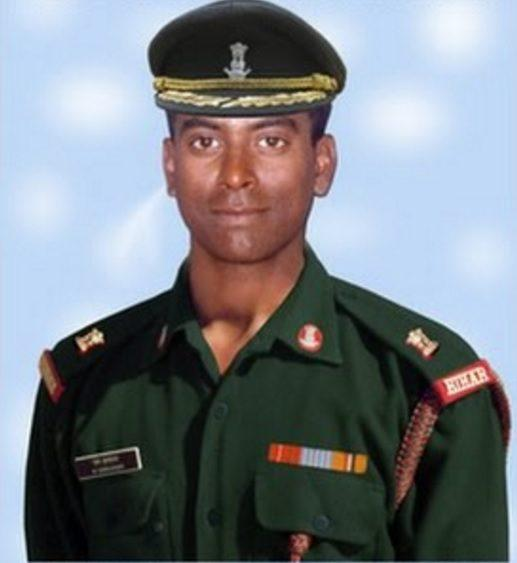
The Unknown Significance of the Jubar Heights
By May 29, 1999, Indian troops had already realised that the intrusions in Kargil were a carefully planned military operation supported by the Pakistan Army. Here, the enemy had occupied positions overlooking the valley below and threatened the strategic Srinagar-Leh highway—the crucial lifeline connecting Ladakh and Siachen to the rest of India. To tackle the same, the Indian Army had launched ‘Operation Vijay’ on May 3, 1999, of which the battle of Jubar Heights in Batalik was a significant one.
The Jubar Ridge, including Point 4268, was among the most strategically important features in the Batalik sector as it overlooked vital approaches leading toward the Kargil-Leh axis. Pakistani troops occupying these heights enjoyed a complete tactical advantage, monitoring Indian troop movements, thus threatening the supply lines of Indian deployments in Ladakh and Siachen. What made Jubar even more dangerous was its topography. The ridge system was broken into sharp rocky spurs and narrow ledges that offered almost no concealment to the Indian troops. Any assaulting force had to climb slopes while enemy soldiers fired downward from prepared positions.
Batalik sector in Ladakh | Image Source: Varghis Khan 
For India, reclaiming Jubar Heights was not merely about getting back its territory. It is strategic for India, acting as a gateway to the Indian troops’ larger operations in Batalik. Like Tiger Hill in Dras, Jubar could serve as a launchpad for future offensives. As long as Pakistani troops controlled these heights, Indian operations in the surrounding sectors remained vulnerable. The battle for Jubar, therefore, became one of the earliest and most important battles of Operation Vijay.
Deployment of 1 Bihar Regiment in Batalik
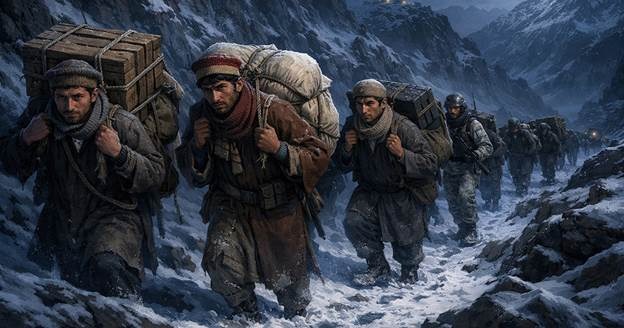
1 Bihar Regiment, under the command of Colonel O.P. Yadav, was moved from Assam to the high-altitude battlefields of Ladakh as the Kargil conflict intensified. The troops arrived in conditions vastly different from the plains and forests of Assam. Batalik had thin mountain air, freezing temperatures, and this extreme altitude demanded acclimatisation. However, the urgency of the situation allowed little time for preparation. It is owing to this very reason that the first two attacks by the Indian troops in Jubar against the enemy had failed. The soldiers had almost no time to acclimatise to the rarefied air and brutal terrain. Climbing steep ridges while carrying combat loads became physically exhausting within minutes.
Bihar Regiment | Image Source: Bhaskar 
The battle exposed the scale of the challenge before the Indian Army. Pakistani troops were deeply entrenched, armed with automatic weapons and supported by artillery fire directed from dominating positions. It was in the aftermath of these two failed assaults that Major M. Saravanan emerged at the centre of the battle. Major M. Saravanan, commander of Charlie Company of 1 Bihar, was only 27 years old during the Kargil War. Before leaving for the front, he had written to his mother saying that he had long waited for such an opportunity and that he would return home with a “Vir Chakra.” Among his men, he carried the code name “Genghis Khan.”
Major M. Saravanan Takes Control for the Third Assault
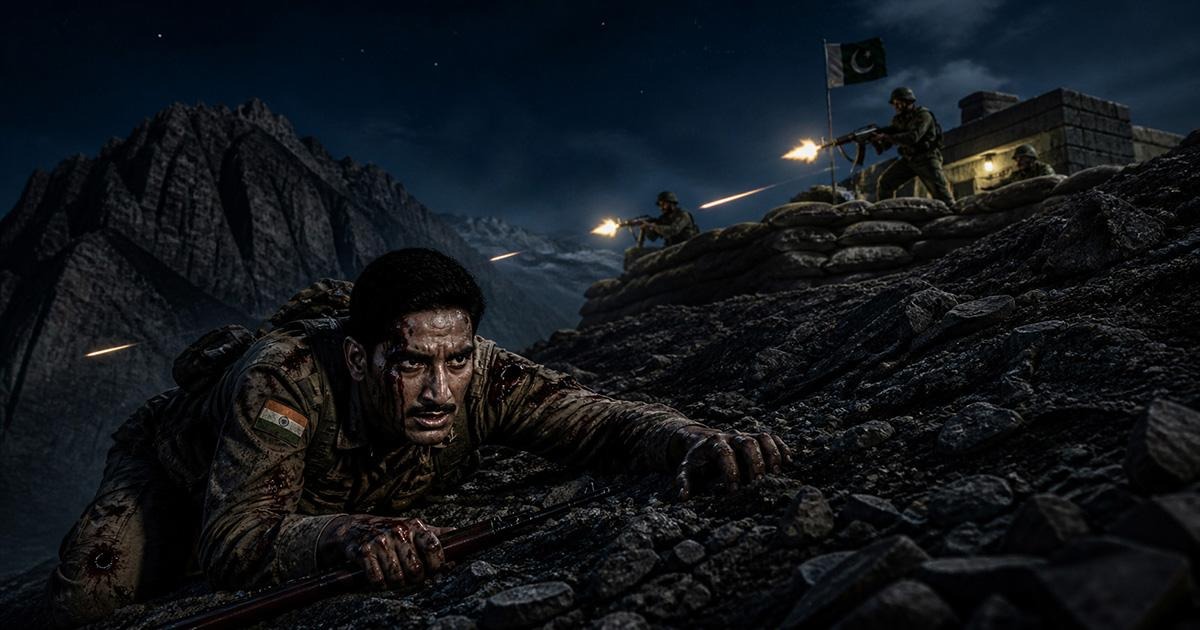
On the night of May 28, 1999, Charlie Company, led by Major Saravanan, began a difficult four-hour approach towards Point 4268 in the darkness. Burdened with weapons, ammunition, and rocket launchers, the soldiers climbed toward enemy positions while still struggling to adapt to the altitude. At 4:00 AM on May 29, the assault began. Pakistani troops immediately opened heavy artillery fire on the advancing Indian soldiers. The steep slopes offered no cover, and Charlie Company soon found itself pinned down. At this moment, Major Saravanan took a significant decision, moving forward with a rocket launcher under direct enemy fire. He fired into the bunker, killing two Pakistani soldiers. This single strike proved tactically crucial, allowing Indian troops to push further uphill.
But then came a heavy blow. As Major Saravanan and team advanced, the Major was struck by shell shrapnel in the stomach. Despite his injuries, he refused evacuation and continued advancing. Casualties among Indian troops mounted rapidly, prompting his commanding officer to order a withdrawal over the radio. “Genghis Khan, fall back.” But Saravanan refused. “Not today, sir, we are very close to the objective,” he replied, adding, “Nothing will happen to your Genghis Khan.”
With that, ignoring his wounds, he crawled and charged forward through a hail of bullets toward the enemy positions. In close combat, he killed two more enemy soldiers and became the first Indian officer to reach the enemy trench line atop Point 4268. But at approximately 6:30 AM, he was struck by a bullet in the head and fell into a ravine below the ridge. Major Saravanan had been martyred, yet he achieved something of enormous significance. During the battle, he recovered documents from one of the enemy bunkers, including the paybook of a regular Pakistani Army soldier. This document was one of the earliest concrete proofs of the direct involvement of the Pakistani Army in the Kargil conflict, exposing Pakistan’s lie that the intruders were “irregular militants.”
The Battle After Saravanan’s Death
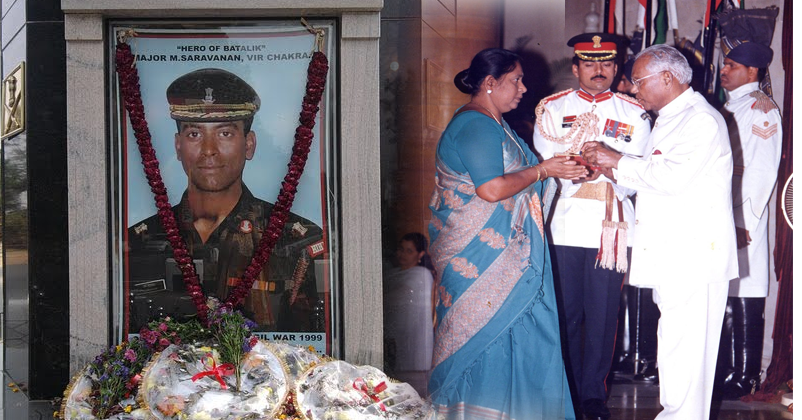
After Major Saravanan’s fall, the 1 Bihar regiment vowed to capture Point 4268. They regrouped for a prolonged battle to reclaim the Jubar complex. Under Brigadier Devinder Singh, they coordinated fresh offensives while artillery batteries equipped with 155 mm and 105 mm guns pounded enemy positions. MiG aircraft also carried out strikes to weaken Pakistani defences. After weeks of fierce fighting, Indian troops launched renewed attacks during the night of July 6–7, 1999. By around 3:30 AM on July 7, Point 4268 and Jubar Hill were finally reclaimed. The entire Jubar Ridge was cleared by July 8, securing Batalik’s northern flank. Only after the heights were fully secured could a search team recover Major Saravanan’s body from the ravine after 37 days. His body was finally brought home, wrapped in the Tricolour, and thousands gathered to pay homage. The coffin was placed before his mother, Smt. Amrithavalli Mariyappan, to whom he had once promised he would return with a Vir Chakra. He did.
Major Saravanan was awarded Vir Chakra posthumously; it was accepted by his mother | Image Source: Major Saravanan Memorial Trust
Today, the battles of Tiger Hill and Tololing dominate public memory of Kargil, but the struggle for Jubar Heights remains one of the war’s most brutal and strategically important engagements. And at the heart of that battle stood Major M. Saravanan — the officer who refused to fall back on the frozen heights of Batalik.