Kargil War 1999: The Untold Story of Ladakhi Porters Who Powered India’s Victory

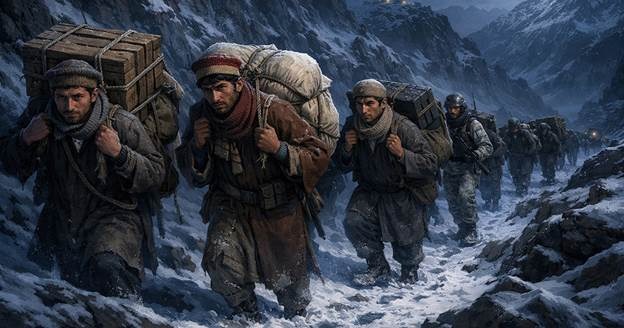
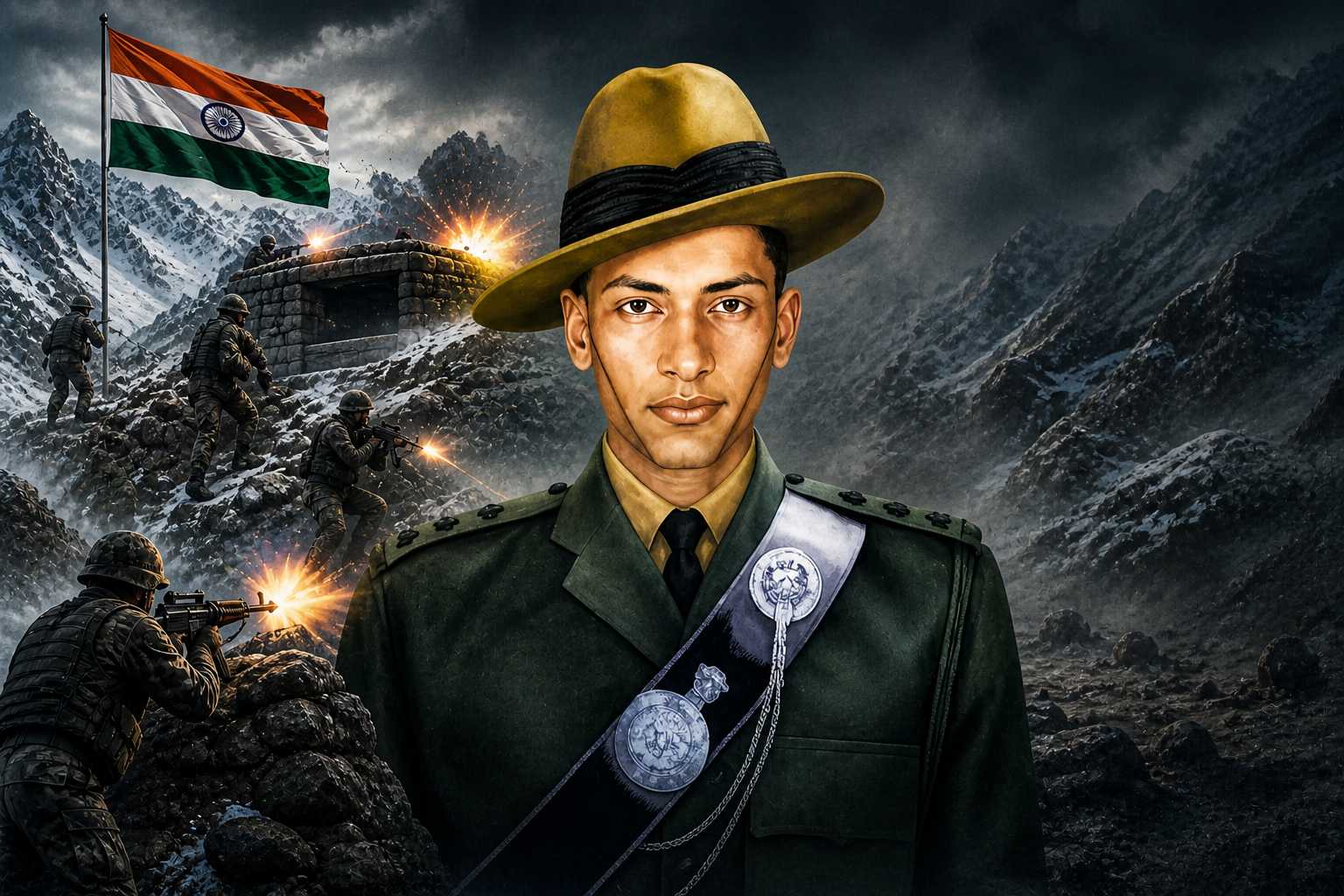
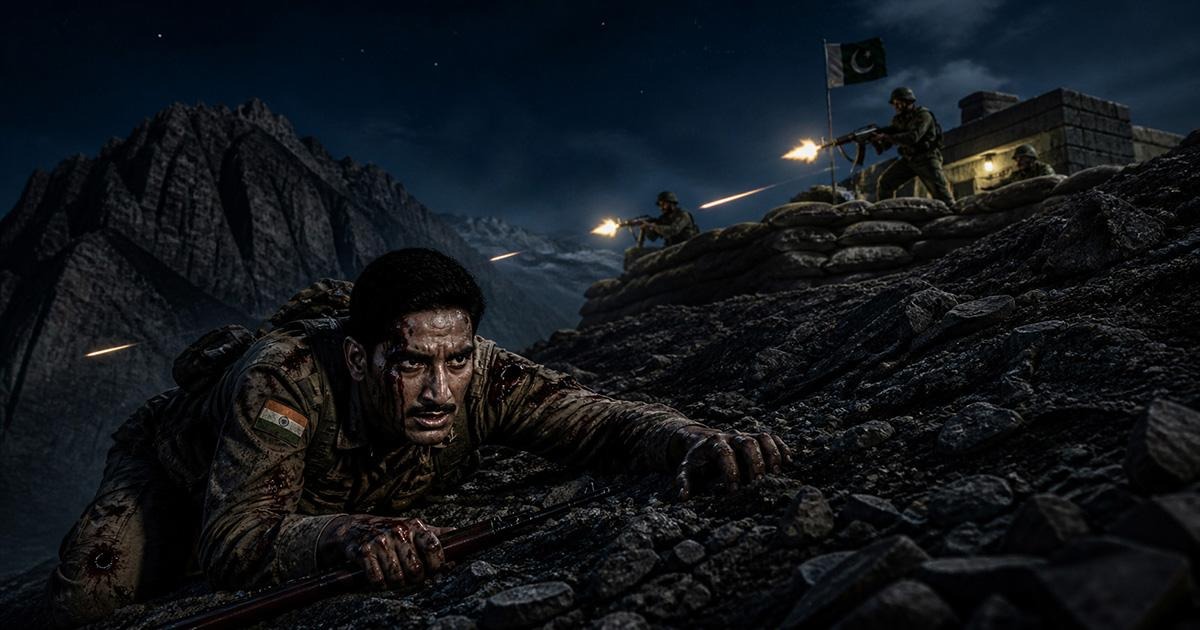
This image is AI-generated
It began on May 3, 1999. When we think of the Kargil war, certain names and entities dominate the narrative—regiments, battalions, and decorated officers. We have often heard about the soldiers who gave their lives for the motherland, but have we heard about the Ladakhi porters who played a crucial, often life-saving role in the war? Who carried ammunition, mortar rounds, food, water, and rations to dangerous terrains to support the soldiers?
The first week of June 1999 was the critical phase of the war. This dangerous phase entailed Pakistani troops occupying a chain of heights above the Dras-Kargil highway with a clear view of National Highway 1A, the road connecting Srinagar to Leh. This made the Indian Army's position vulnerable to attack. Every convoy that was moving towards Ladakh could be observed and targeted. Among these heights, Tololing stood out.
Tololing is connected with Point 5140 via another hill feature called Hump, forming a complex. The ridge is located between two nalas, the Bimbat nala and the Tololing nala. Owing to its position, Pakistan was at an advantage, dominating the valley below. The defenders sitting on the top held fortified bunkers above 15,000 feet. Any attacking force would have to climb for hours under observation and fire, but before soldiers could climb the mountain, something else had to reach those unforgiving heights first, i.e., supplies. Each assault company needed: Thousands of rounds of ammunition, mortar shells, food rations, and drinking water.
Helicopters could not land on the steep terrain owing to extreme altitude and continuous fire from the enemy, and narrow landing zones. This meant that the supplies had to be carried on foot across vertical mountain routes. Even mules struggle on the final slopes.
This is where the porters come in. According to the military data and records, the Army ordered the raising of six Porter companies to support operations in the mountains, after Pakistani troops infiltrated and captured. Sometimes, porters were also recruited for the immediate construction of roads.
The young boys who played a major role as porters during the 1999 Kargil War | Image Source: Facebook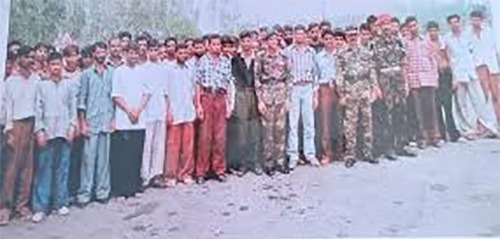
Ladakhi Boys and a Mother Who Sent Her Son to War
6 June 1999, Leh
“Bharatiya sena ko apna samaan ladai mein le jaane ke liye volunteers chahiye. Aage aaiye, madad kariye. Deshko aapki zarurat hai.” [The Indian Army needs porters to carry loads to the front. Please come forward to help; the country needs you.]
It was the voice of Mrs T. Angmo Shuno, station director, All India Radio (AIR), Leh and Kargil. The announcement was done on the request of Col. Vinay Dutta, because the Indian Army did not have enough porters to carry food, ammunition, and other necessities to the battle front. Mrs Angmo soon felt that she would have to contribute more. She set an example by asking her youngest son to become a part of the latest initiative. Her son, Stazin Jaydun (Ricky), was in school at the time. Later, Angmo said that how could she ask others to send their sons to battle front, if I couldn’t send my own. This was how she had convinced her son, too.
Around 200 young men volunteered in just 4 days. Two platoons of 100 each were formed, and Army trucks took these volunteers to Biama, a small village between Dah and Hanu, and eight hour drive from Leh. Mrs Angmo’s son recalled how all the volunteers were in ages from 18 to 35; all were fit, healthy, and most importantly, accustomed to the high altitude terrain and mountain weather.
In the village of Biama, tomato cultivators were asked to give space for tents to be erected and camps to be set on the farms just below the road for these porters to reside temporarily. By the end of the week, the number of porters grew from 200 to 600.
For two months, the Ladakhi boys stayed in Biama, aiding an infantry battalion. The Army units that were moving up to fight in the Batalik-Yaldor-Chorbat La sector sent requests for the young porter boys to be sent up. While other porters could only carry a 10 kg weight, these young Ladakhi boys could carry as much as 30 kgs easily. All of them were paid daily wages, but Ricky said that most of the boys were there to serve the Army.
Porters also helped in evacuating the dead and injured soldiers. Ricky recalled that all of these young boys understood the bigger picture; they knew that the Indian soldiers were paying a heavy price in the war and that they just wanted to do their bit. The village was under the enemy’s shelling zone. The porters, who were hardly trained for such circumstances, would take shelter in a nearby water tanker whenever the enemy shelling started.
Beyond Ladakh: The Tanda Tiger Force
Meanwhile, on another front, another set of challenges was being faced. A memoir by retired officer and estate developer KP Singh cites Lt Gen Y M Bammi's book, "Kargil 1999, Impregnable Conquered", where he mentions porters were civilians, yet showed immense grit during the war. Under the chapter 'Raising of Tanda Tiger Force', he described how the porters were instrumental in the Kargil win.
Manpower was sought from Jammu and the Kashmir region. Nearly 300 volunteers gathered. They reported to Udhampur on June 6, 1999. These volunteers further helped in the additional recruitment of porters. Nearly 3000 Dogra volunteers from the Jammu region were mobilised. These volunteers were recruited to move supplies up the mountains. Most of the volunteers were enrolled at Tanda village. Initially, no promises were made. No terms or conditions of the job, pay, or allowances were set, nor were the volunteers asked. However, later on, the volunteers were given proper acknowledgement and monetary benefits.
Ammunition boxes were carried up the slopes. Water cans were hauled to forward staging areas. Without these loads, the soldiers preparing for the assault would have had nothing to fight with once they reached the ridge. In a war fought at extreme altitude, logistics often mattered as much as courage. Each trip took nearly seven hours uphill. The altitude made breathing difficult; the weight made the climb brutal. One porter could usually manage only a single trip per day. Yet the supply runs continued night after night. Unfortunately, 7 of the porters never returned.
The battle of Tololing top is remembered as a turning point in the war. Once the peak was recaptured, the momentum of the campaign began to shift. The story of the battle often begins with artillery fire and ends with an infantry assault. In reality, it had started hours earlier, before the soldiers climbed the ridge, another climb had already taken place in darkness- quiet, slow, and largely unnoticed. Of the three thousand volunteers, it was carried out by civilians whose names rarely appear in war memorials. They did not capture the peak. But they helped carry the battle to its pinnacle.