When He Offered His Hand to the Ganga... Know Final Astonishing Battle of 81-Year-Old Veer Kunwar Singh

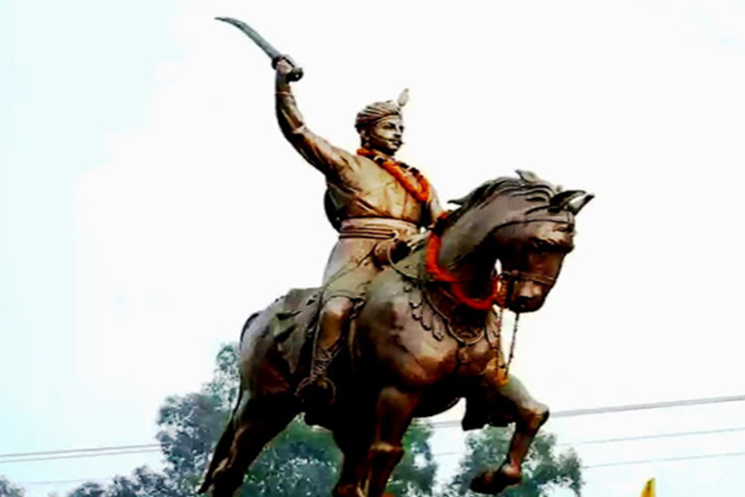
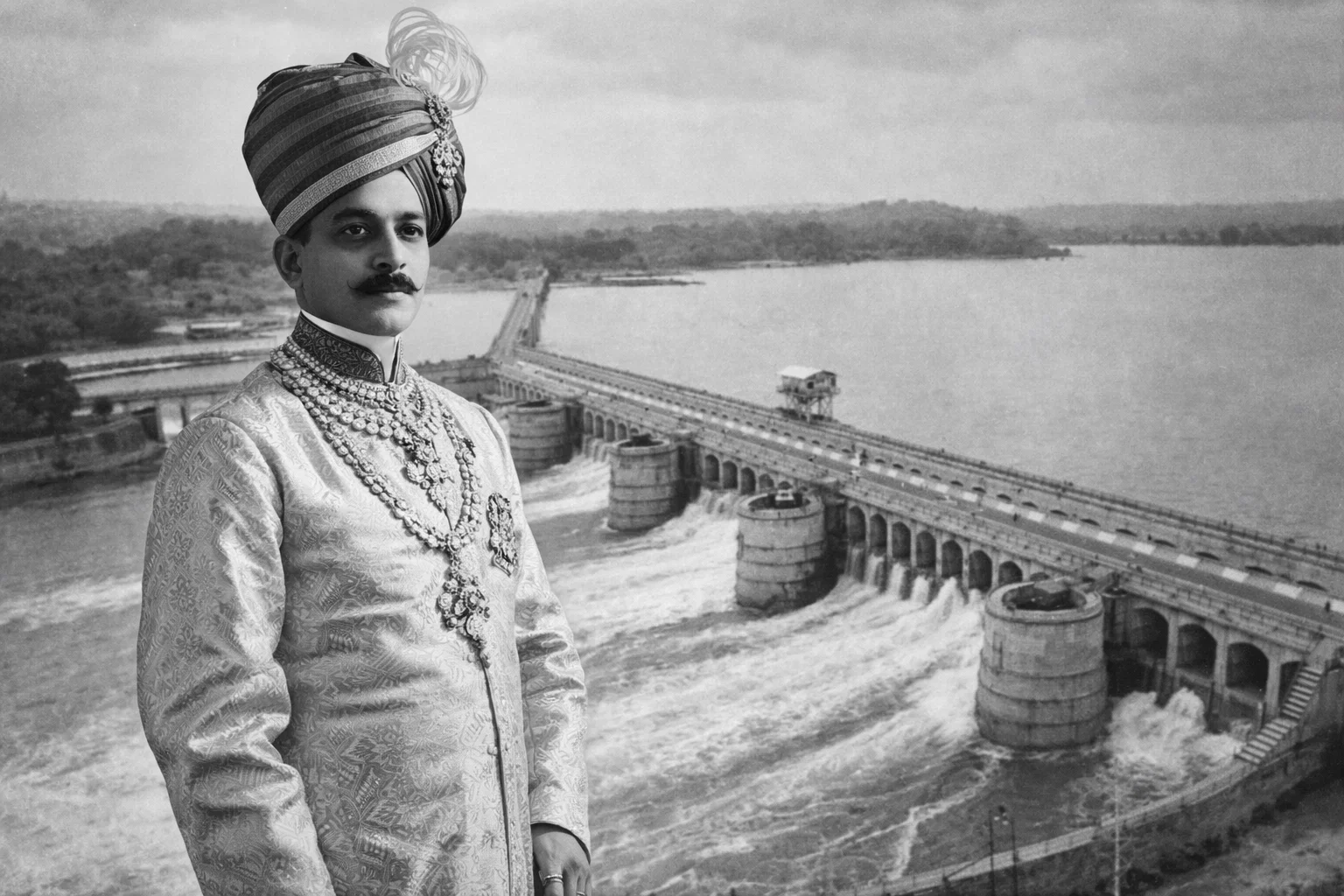
Veer Kunwar Singh | Image Source: Information & Public Relations, Bihar
This is the story of the great freedom fighter Babu Kunwar Singh (1777–1858), the zamindar of Jagdishpur in Bihar and a heroic commander in the First War of Independence in 1857. Even at the age of 80, he led a guerrilla war against British rule and fought for freedom until his last breath.
April 1858—the waves of the Ganga were in full spate. Returning victorious from Azamgarh, Babu Veer Kunwar Singh's army reached Shivrajpur Ghat in Ballia, evading British detachments pursuing them under Brigadier Douglas. On the night of April 22, the 81-year-old Kunwar Singh was crossing the Ganga with his soldiers when a British sniper's bullet suddenly struck. The bullet hit his left hand directly. Blood began to flow profusely. The pain was unbearable, but a smile played on Kunwar Singh's face. What happened next is astonishing in history. He raised his sword, severed his wounded left hand below the elbow with his right hand, and offered the severed hand at the feet of Mother Ganga. The blood-soaked hand merged into the waves of the Ganga. The army was stunned. Kunwar Singh bandaged the wound and ordered a march toward Jagdishpur.
The morning of April 23, 1858. The plains of Jagdishpur. A strong detachment of Captain Le Grand's 35th Foot Regiment—with modern rifles, cannons, and cavalry—advanced from Ara to attack Jagdishpur. The British were confident that the 81-year-old wounded man could not hold out. But they did not know that Kunwar Singh's guerrilla strategy was far from over.
Kunwar Singh divided his soldiers and cavalry into three groups: The first to ambush from the forests, the second to attack from the front, and the third to encircle from the rear. Mounted on horseback, wielding a sword with one hand, he positioned himself in the center of his army. Blood was still oozing from the wound, but his courage burned with the same old fervor.
The battle began. Amid the roar of British cannons, Kunwar Singh's warriors emerged from the forests like cheetahs. Kunwar Singh spurred his horse forward, leading with his sword. British soldiers fell one by one. Captain Le Grand was astonished. He had never imagined a wounded elderly Rajput could fight with such cunning. Kunwar Singh's army severed the British supply lines, surrounded their cavalry, and showered arrows and swords on the infantry.
By afternoon, the British army was scattered. Captain Le Grand's regiment was completely defeated. The British soldiers fled. Kunwar Singh entered the Jagdishpur fort with his warriors. He lowered the fluttering Union Jack and hoisted his flag of freedom. All of Jagdishpur echoed with cheers. Even at 81, his lion had returned victorious to his birthplace. In this moment of victory, Kunwar Singh's body began to fail him. Blessing his warriors, he said he had fulfilled his duty and urged them to keep the flame of freedom alive. Three days later, on April 26, 1858, he attained martyrdom in Jagdishpur.
This final battle symbolizes the greatest bravery in Kunwar Singh's life. Even after losing one hand, he not only defeated the enemy but also hoisted the flag of freedom over his motherland once more. His valor inspired all of Bihar. His younger brother Amar Singh continued the struggle after his death.
Kunwar Singh's other battles were no less heroic. After the Danapur revolt in July 1857, he captured Ara. On 29 July, he ambushed and badly defeated Captain Dunbar's force of 415 soldiers by the Son River, with only 50 British surviving. In August 1857, he retreated to the forests after fighting Major Vincent Eyre's army, abandoning Jagdishpur. In March 1858, he captured Azamgarh and forced Colonel Milman to retreat at Atraulia on 22 March.
In all these battles, his guerrilla tactics, leadership, and indomitable courage consistently baffled the British army. He proved that age is no barrier when the heart burns with the flame of freedom. Born in 1777, Babu Veer Kunwar Singh's final victory is an immortal saga of courage and sacrifice. Even with a wounded body and one hand lost, he defeated the British army, proving that a true warrior rises above age and pain. His name remains an eternal flame of Bharat Mata's freedom.