Panchayati Raj to Nari Shakti Vandan Adhiniyam: A 30-Year Journey of Women's Empowerment

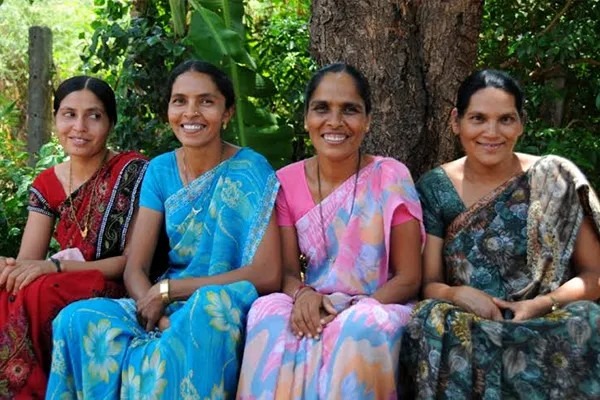
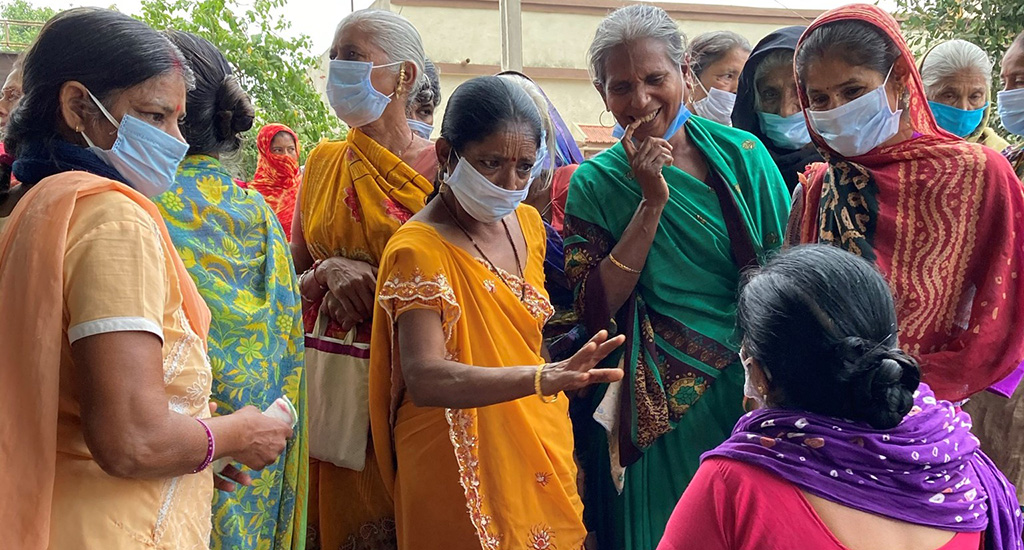
Meena Ben, second from right | Image Source: The Better India
As India marks National Panchayati Raj Day, stories like Meena Ben’s remind us how grassroots democracy opened new doors for women in leadership.
On a quiet morning in Vyara village in Gujarat, a small group of villagers gathered near the Panchayat office, discussing the upcoming election. Among the candidates was a name that surprised many: Meena Ben. In a village where women rarely spoke in public meetings, the idea of a woman contesting for the post of Sarpanch seemed almost unthinkable.
Whispers quickly turned into open opposition. Some villagers laughed at the idea, while others insisted that leadership was not a woman’s role. Even within her own community, Meena Ben faced doubts and resistance. With little financial support and constant criticism during the campaign, the path ahead looked daunting. Yet she refused to step back.
Her courage was made possible by a historic reform that had taken place years earlier. In 1992, the 73rd Constitutional Amendment gave constitutional status to Panchayati Raj Institutions and reserved 33 percent of seats for women in local governance. For the first time, countless rural women across India received the opportunity to participate in decision-making.
Using this opportunity, Meena Ben stepped into the electoral arena and eventually became the first woman Sarpanch of Vyara village. Her victory challenged long-standing beliefs about women's leadership. What made the moment even more remarkable was that the Panchayat formed under her leadership consisted entirely of women members. She focused on solving everyday problems that villagers had faced for years. One of her first initiatives was constructing a paved road connecting the village to nearby towns. What might seem like a small development project had a huge impact. Pregnant women could now reach hospitals more easily during emergencies, and villagers could travel outside the village without difficulty.
With women leading the Panchayat, the atmosphere of local governance also changed. Village women began speaking openly about health issues and personal concerns without hesitation. During her tenure, more than 30 families received proper housing, and government welfare schemes started reaching people more efficiently. Slowly, the same villagers who had once doubted her leadership began to see the transformation taking place around them.
Stories like Meena Ben’s reflect the broader change that began with the Panchayati Raj reforms. Over the years, women’s participation in local governance has continued to grow. Today, many states have increased reservation for women in Panchayati Raj Institutions to 50 percent under Article 243(D). Now, nearly three decades after the 73rd Amendment, another significant step has emerged in the form of the Nari Shakti Vandan Adhiniyam (128th Constitutional Amendment), which seeks to expand women’s representation in legislative bodies and strengthen their role in national politics.
The impact of these reforms is visible across the country. According to 2024 government data, India has more than 2.6 lakh Gram Panchayats functioning across three tiers of local governance. Together, they have around 31 lakh elected representatives, and nearly 46 percent of them, around 14 to 15 lakh, are women.
On National Panchayati Raj Day, Meena Ben’s story stands as a reminder that when women are given a place in governance, they do more than participate; they transform their communities.