Subhash Chandra Bose Didn’t Lose Power; He Walked Away From It
And the distinction matters more than most nationalist narratives are willing to admit.

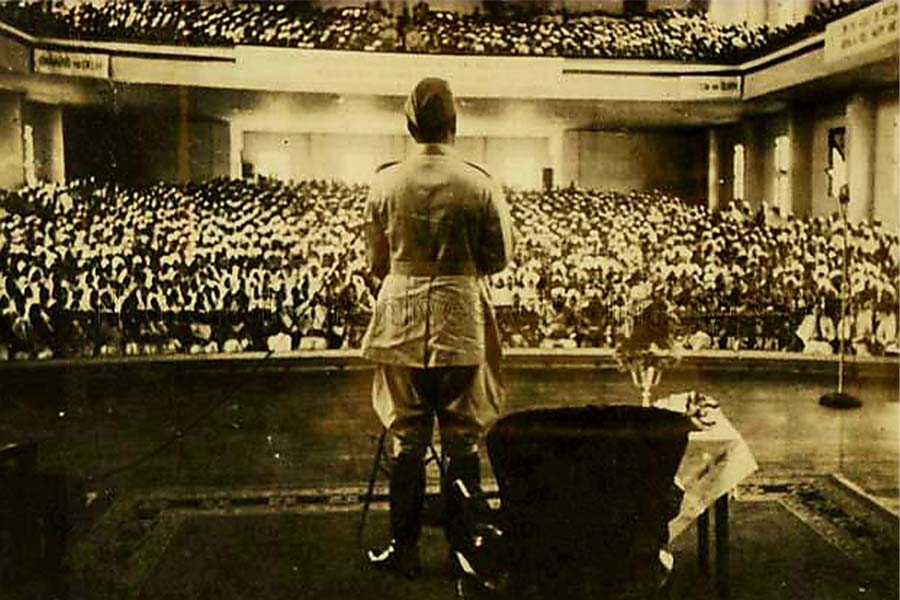
Netaji Subhash Chandra Bose | Image Credit: Telegraph India
We all know that Subhash Chandra Bose was an active member of the Congress. But did you know that he was so popular within the party, that big leagues like M.K. Gandhi and Pt. Jawaharlal Nehru were insecure and intimidated? Well, this piece will explore this part of the history, where we tell you how independence was in the background for these leaders, but underlying it was the hunger for power, which was the driving force for their struggle.
So the story goes on like this: Subhash Chandra Bose had been elected President in 1938 at Haripura and secured a second term in early 1939 by defeating Gandhi-backed Pattabhi Sitaramaya by a large margin. Bose was shining bright in the Indian political sphere in the mid 1930s. He had an unflinching resolve to eradicate colonial rule despite years of imprisonment and exile. Meanwhile, his popularity went across lands. Bose defeating a candidate openly backed by M.K. Gandhi was a big moment; it showed that people could go beyond the leader’s choice, too, and that Subhash Chandra Bose had a strong backing within the Congress framework.
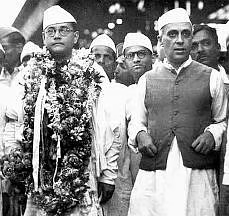
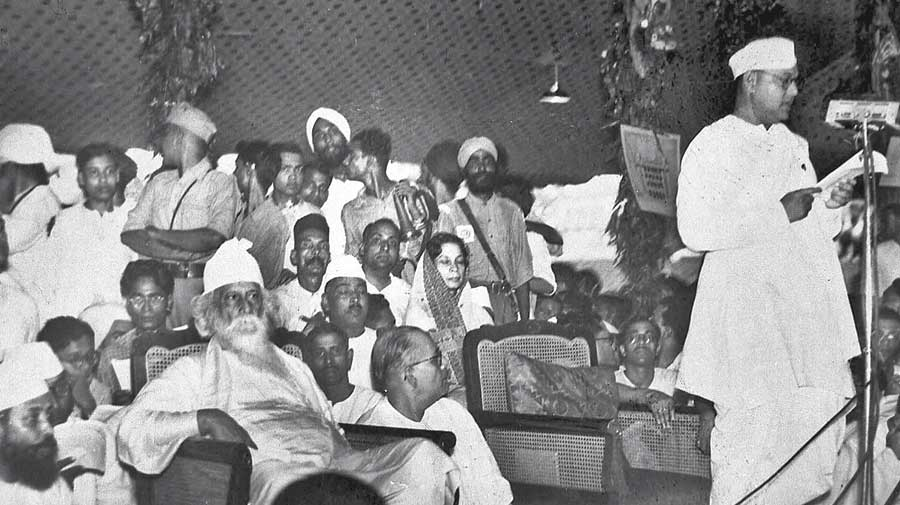
Subhas Chandra Bose’s presidential address in 1938 as Congress President | Image Source: National Herald
But this victory did not mean that the future would be a cake walk. The election result did not translate into real power. Right after the election, Gandhi made it clear that he was unhappy. Multiple sources quote him saying, “Sitaramaiya’s defeat was his own defeat.” This statement set the tone. All senior Congress leaders, including Vallabhai Patel, Rajendra Prasad, Pt. Nehru, and JB Kripalani stood firmly with Gandhi. These figures were not small. They controlled key decisions within the party.
Bose tried to find a middle ground. In line with the speech he had given in Haripura, he wanted to form a working Committee (decision-making body of Congress) that included both his supporters and Gandhi’s people, but a conflict arose. Gandhi refused to suggest names. At the same time, his loyalists refused to serve under Bose or accept his decisions. So Bose was struck: He was the President, but he couldn’t form his own team. This might not seem like a grave issue, but without a working Committee, the President could not run Congress. Every major decision needed that body. In simple terms, Bose had won the title through elections in his own right, but he had no real control.

Jamnalal Bajaj, Gopaldas Desai, Mahatma Gandhi & Subhas Chandra Bose, 1938 (left to right) | Image Source: X/@INCIndia
For weeks, he tried to find a compromise; there were meetings, discussions, and attempts to break the deadlock. Nothing worked. The Gandhian group did not bend. They did not step back or allow Bose to function freely. Bose also held multiple rounds of discussions with top Congress leaders like Vallabhai Patel, Rajendra Prasad, JB Kriplani, and Maulana Azad. Ultimately, he resigned on April 29, 1939, at the Congress meeting in Calcutta.
He clearly stated he could not form a Working Committee and therefore could not function as President. This showed something more raw and uncomfortable about the Congress leadership of the time. When we flip through the pages of history, leaders are often seen through the lenses of sacrifice, discipline, and service to the nation.

Nehru passes the presidential medal to Bose at the Congress township in Haripura | Image Source: Telegraph India
These are real in one sense, but we often forget that they were real human beings with their own interests, loyalties, and egos. They could not welcome people who challenged their ideas and authority. Bose was not removed because he was anti-national; he was removed because he took strong decisions that the top leadership did not want. This was not idealism; this was politics. After Bose stepped down, Rajendra Prasad took over as President. The new leadership was according to Gandhi’s choice.
Meanwhile, Bose did not bend. He reorganised. Within a few days, on May 3, 1939, Bose announced the formation of the Forward Bloc. He aimed to gather all the left-leaning and more radical groups under one platform. He did not give up; he chose a different system.
Meanwhile, Congress removed Bose for three years, citing indiscipline. Another angle to this incident was Rabindranath Tagore’s letter to Bose in the aftermath. Tagore called Bose the “Desh Nayak” because his actions showed dignity, not drama. Tagore appreciated Bose’s calmness. This indicated that outside Congress leadership, many people saw Bose as being treated unfairly. When we look back into history, sacrifice is often measured in different terms. Though it started as a personal sacrifice, it exposed something far less rare but true: A structural exposure. It is easy to conjure a moral rhetoric to witness this piece of history, but only a few will see the internal power struggle, competing ambitions, and strategic exclusions.