Tatya Tope Attained Martyrdom in Battle; But British Said He Was Hanged! Discover What Really Happened?

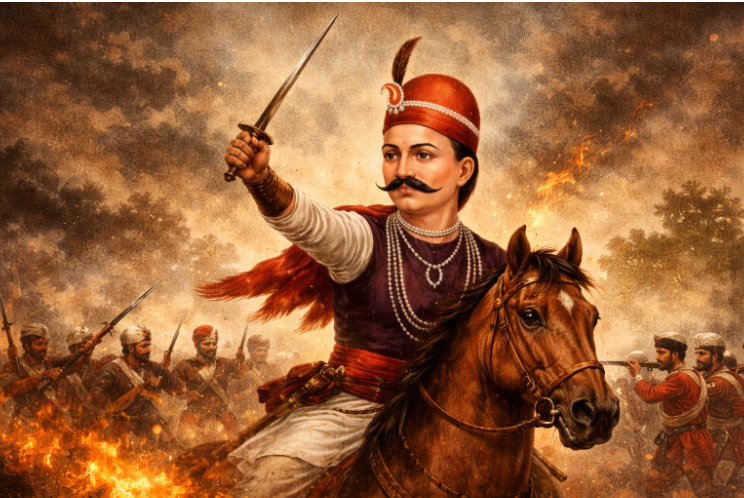
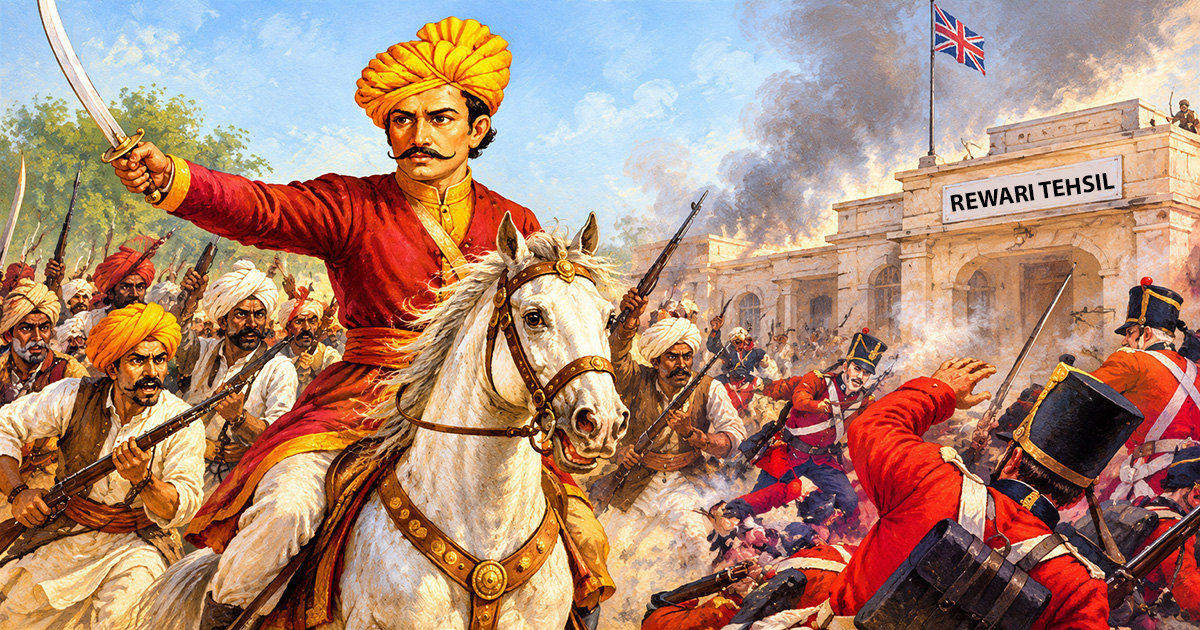
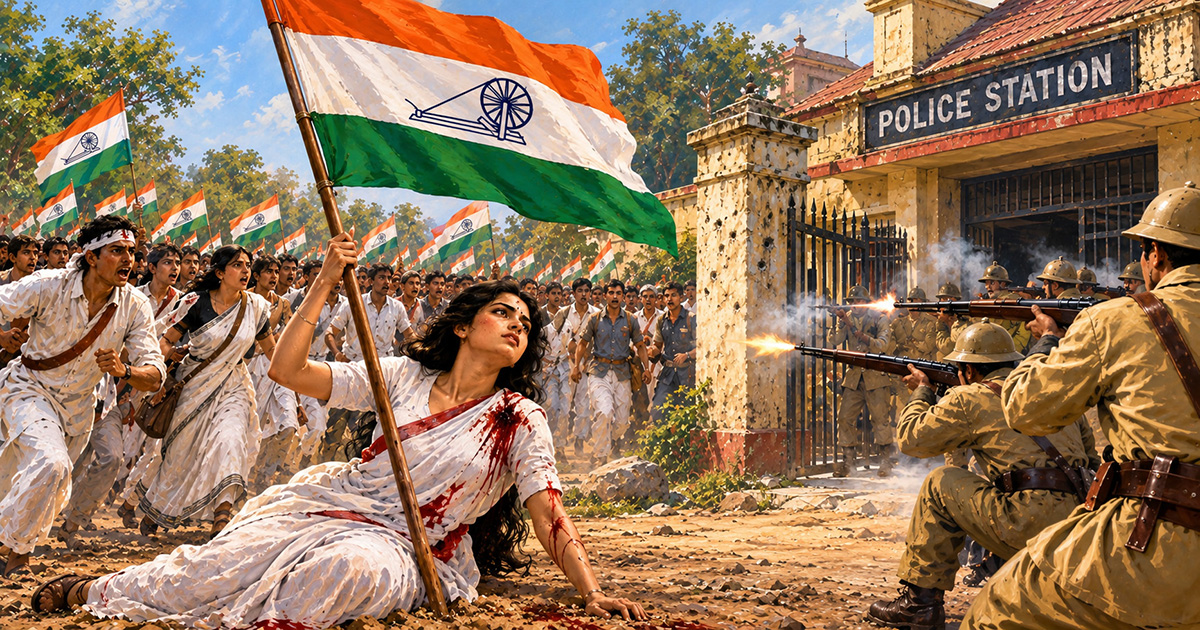
Tatya Tope, the most skilled and fearless guerrilla warrior of 1857 Revolt | The image is AI-generated
Have you ever imagined that in the history books we've studied, an entire event could be fabricated? This story is exactly that. Tatya Tope, the most skilled and fearless guerrilla warrior of the First War of Independence in 1857, actually attained martyrdom on the battlefield. Yet, the British Empire spread a lie worldwide that he was hanged. This deception was so profound that even today, school textbooks and mainstream history repeat this false narrative. So, let's uncover what truly happened, how the death of a great hero was concealed, and how this meticulously planned British lie has persisted for centuries?
Tatya Tope's full name was Ramchandra Pandurang Yewlekar. He was born on February 16, 1814, in Pune, Maharashtra. His father, Pandurang Yewlekar, managed the household affairs of Peshwa Baji Rao II. When Peshwa Baji Rao was forced by British diplomacy to relinquish the throne in Pune and settle near Kanpur in Bithoor, Uttar Pradesh, Pandurang came along with Tatya to Bithoor. Tope's education took place alongside Peshwa's adopted sons and Moropant Tambay's daughter Manubai (who became Rani Lakshmibai of Jhansi). As Tatya Tope grew older, the Peshwa appointed him as his military advisor.
Thereafter, during the 1857 revolt, he became the most trusted commander of Nana Saheb, the adopted son of Maratha Peshwa Baji Rao II. With his intelligence, swift decision-making, and guerrilla warfare tactics, he completely rattled the British. In alliance with Nana Saheb in Kanpur, he gave the British Army a fierce fight; then he collaborated with Rani Lakshmibai in Kalpi and Jhansi. His campaign continued all the way to Gwalior, where he kept pushing the British back, mounted on horseback day and night. His hallmark was to encircle the enemy, strike suddenly, and then vanish into forests or hills.
Mainstream history, crafted by the British, weaves an entirely different and false narrative. On April 7, 1859, Raja Man Singh of Narwar allegedly betrayed him and had him captured while asleep. In Shivpuri (then Sipri), a British military court sentenced him to death on April 15, and he was hanged on April 18, 1859. British records, court documents, and witness statements detail all this. The British drama was meticulously orchestrated. They knew a leader like Tatya alive would keep the flame of revolt burning. So, to shatter the morale of the freedom-fighting soldiers, they propagated the false story of his hanging.
But the real truth is the complete opposite. Descendant Parag Tope (a software engineer in America) has proven in his book "Tatya Tope’s Operation Red Lotus," based on new documents, British letters, and witness statements, that Tatya was never captured. His actual death occurred on January 1, 1859, in the battle of Chhipa Barod (between the Guna and Kota regions). At 6:30 AM, British artillery officer Major Paget gave an eyewitness account that Tatya, mounted on horseback, was struck by cannon fire and attained martyrdom. His fellow soldiers secretly performed the last rites on his body and concealed the news to prevent the morale of the freedom fighters from plummeting. Vinayak Rao of Bithoor (Tatya's grandson) reiterated this claim in Patrika in 2018: "The British never caught him; he died from cannon fire, and they spread the false news of hanging." To cover up this failure, the British hanged someone else and falsely announced that Tatya had been executed.
The All India History Research Initiative (ABISY) supported the descendants' theory in 2015 that he actually died on January 1, 1859, in a battle near Guna. Raja Man Singh did not truly betray him; under British pressure, he had someone else captured. Parag Tope's book, “Tatya Tope’s Operation Red Lotus,” proves all this based on British documents. These pieces of evidence show that the British deliberately staged the entire hanging drama.
This entire story carries profound meaning: It is not just the tale of one warrior's death, but the greatest example of how colonial powers distorted history. After crushing the 1857 uprising, the British Empire spread such lies to break Indian morale. But truth cannot be hidden. Generations of family research, efforts by nationalist historians, and new documents are now challenging that lie. Tatya Tope's martyrdom teaches us that courage, sacrifice, and patriotism never fade, no matter how much the enemy propagates. The 1857 struggle remains relevant today; it reminds us to read real history, ask questions, scrutinize evidence, and protect the truth. Only then can future generations know the true stories of those heroes who laid down everything for India's freedom.