Lalru Massacre 1987: When Separatists Fired Bullets, But Failed to Break India’s Unity
This is the complete story of that horrifying night when separatist terrorists separated Hindu passengers from others and riddled them with bullets.

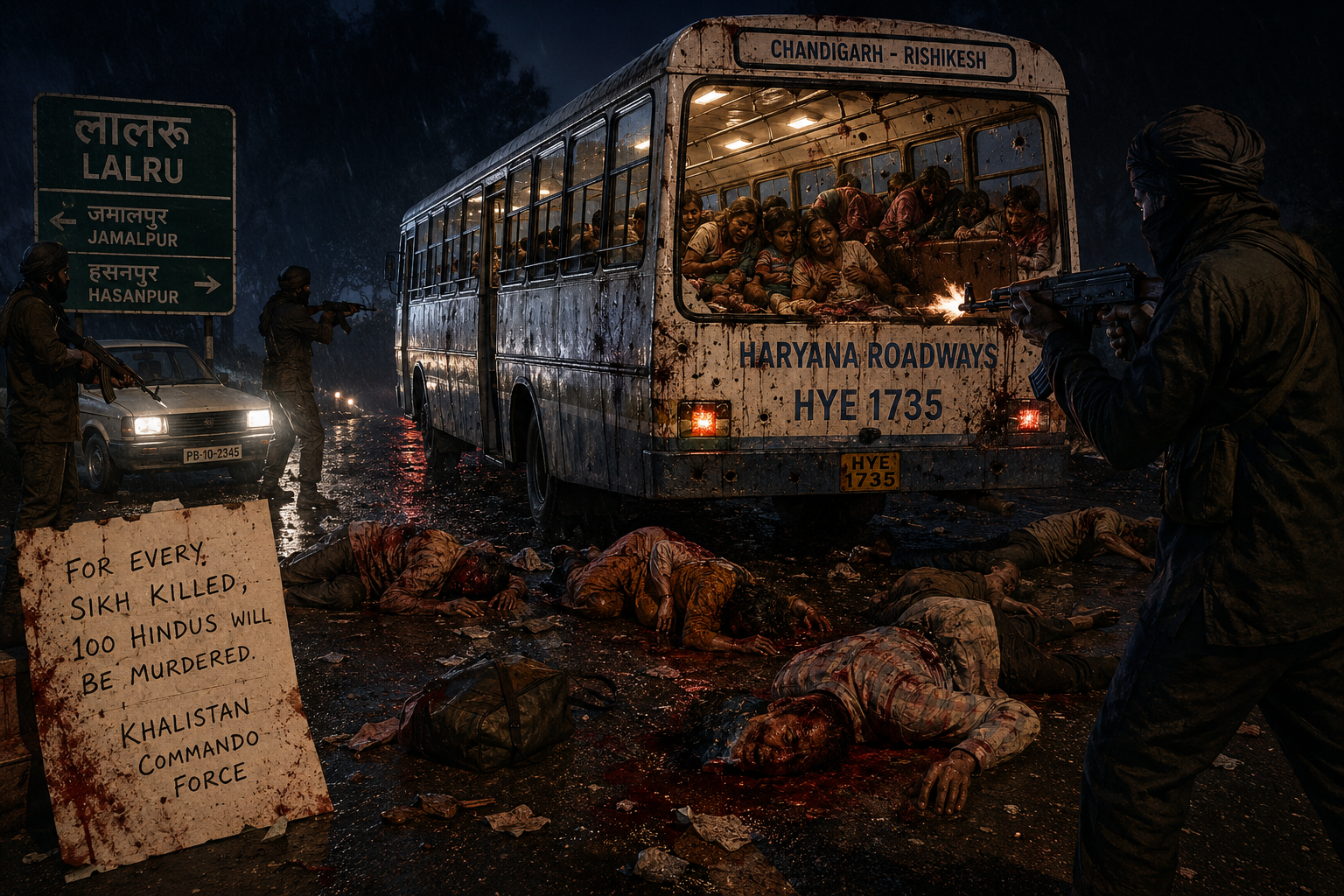
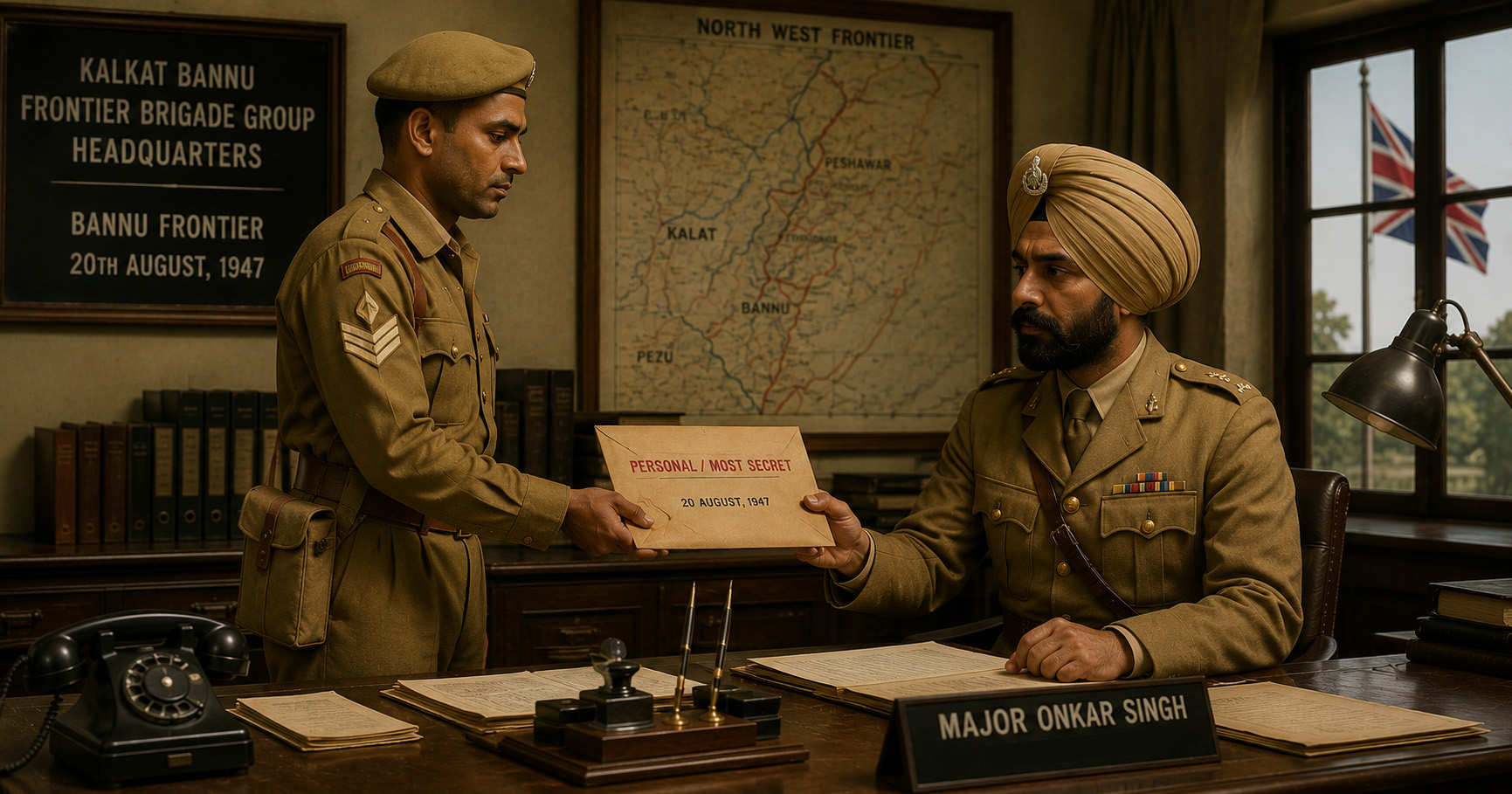
Lalru Massacre | This image is AI-generated
The night of July 6, 1987, remains etched among the darkest chapters of history, when separatists turned a Chandigarh–Rishikesh bus into a river of innocent Hindu blood. Behind this brutality was a single sinister objective — to completely destroy Hindu-Sikh unity. It was part of a calculated conspiracy to turn Hindus against Sikhs and ignite a violent wave of separatism across Punjab, helping advance their dream of Khalistan. Even today, the agonizing screams of those innocent victims seem to echo through the winds of Punjab.
The Lalru Bus Massacre: Through the Eyes of the Driver Who Survived
During the 1980s, Punjab was witnessing the rise of a dangerous ideology — the dream of creating a separate nation. It was a period when the Hindu-Sikh brotherhood was being drenched in blood. Punjab was living under the shadow of separatism and terrorism.
This is the complete story of that horrifying night when separatist terrorists separated Hindu passengers from others and riddled them with bullets. Through this account emerges the testimony of the only surviving bus driver — the man who was driving the very bus in which 38 innocent Hindus were brutally murdered. He was spared only because he was Sikh.
That dark night, Haryana Roadways bus number HYE 1735 was carrying ordinary passengers. Around 75 to 79 people were aboard — most of them Hindus, including women, children, and pilgrims travelling for the sacred journey to Rudraprayag and Rishikesh.
As the bus crossed the area near Lalru in Patiala district, between the villages of Jamalpur and Hasanpur, the clock struck exactly 10 PM. Suddenly, a white Fiat car swerved in front of the bus and blocked its path. Four armed young men quickly stepped out of the vehicle. They carried deadly weapons, including Sten guns and AK-47 rifles.
According to the bus driver: “One of them immediately pointed a gun at my head and growled, 'Turn the bus around and drive toward the open area ahead!’” “My hands were trembling, but I had no choice.”
The bus continued moving for nearly eight kilometers under the terrorists’ control. At first, they claimed they only wanted to rob the passengers. Terrified travellers handed over all their jewellery, money, and valuables, hoping their lives would at least be spared. But then everything changed.
The terrorists ordered all Hindu passengers to gather in the middle of the bus. The driver later recalled watching the horror unfold in his rear-view mirror — children crying, women clinging to one another in fear, while the terrorists mocked and taunted the passengers.
They shouted: “When Sikh youths were being killed, you people laughed, didn’t you? Now look at yourselves trembling like cowards!”
Amid the terror, one courageous woman, Kalavati, managed to jump out of the bus with her three small children and escaped with her life. And then hell began. The bus was surrounded from both sides. All four terrorists opened indiscriminate fire.
Bullets rained through the bus. Screams, cries, gunfire, and blood filled the air. The surviving driver later said he could never forget that horrifying scene inside the bus. Within barely five minutes, the entire vehicle had turned into a chamber of death. Thirty-eight innocent Hindus were killed — including 11 women and 4 children. Another 33 passengers were injured. Blood flowed across the floor of the bus.
The driver survived only because he was Sikh: “I stood there helpless while the massacre unfolded before my eyes,” he later recalled.
During the attack, one of the terrorists accidentally died from gunfire. He was later identified as Gurmeet Singh alias Tony. The remaining terrorists placed his body inside the Fiat car, crossed the Ghaggar River, and attempted to burn the vehicle. However, heavy rain forced them to flee.
Before escaping, the terrorists left behind a chilling note: “For every Sikh killed, 100 Hindus will be murdered.” The massacre had been carried out by the Khalistan Commando Force. The surviving driver was the first to alert the police that night. An injured passenger, Abdul Ghafoor, also gave a detailed statement.
Shockingly, exactly 24 hours later, on 7 July, terrorists attacked two more buses near Fatehabad in Haryana and killed another 34 Hindus. Even years later, the driver reportedly said that whenever he closed his eyes, the screams, the blood, and the terrified faces of innocent passengers continued to haunt him. “I saw with my own eyes how innocent people were butchered in the name of religion.”
Even in the 21st century, India has not completely escaped the poison of such hatred. Many observers have pointed to later attacks on civilians as reminders that the methods and patterns of terror continue to evolve but never entirely disappear. The night of Lalru is not merely the story of 38 deaths. It remains a living reminder of the fire of separatist extremism that once engulfed Punjab, a fire whose echoes spread far beyond India’s borders and whose scars still remain in public memory today.