Brigadier B.D. Mishra’s Untold Saga of Bravery: How He Eliminated a Plane Hijacker in Just 12 Seconds and Saved 141 Lives
The hijacker suddenly pulled out two 9mm pistols hidden inside his plaster cast and demanded that the aircraft be flown to Kabul.

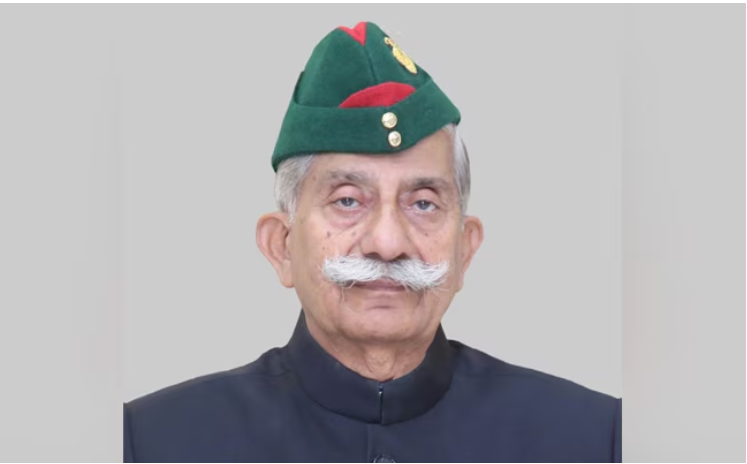
Brigadier B. D. Mishra | Image Source: NDTV
The night of April 24, 1993, remains one of the darkest chapters in India’s security history. On the runway of Amritsar Airport stood an Indian Airlines Boeing 737 carrying 141 terrified passengers whose lives hung by a thread. The aircraft had been hijacked by a terrorist linked to the Pakistani terror outfit Hizbul Mujahideen. His finger rested on the trigger, and his threats were clear — if his demands were not met, he would blow up the entire aircraft with everyone inside. As the nation watched in fear, every passing minute increased the danger. Amid this tense atmosphere emerged a military officer whose strategy created history in just 12 seconds. That officer was B. D. Mishra, commander of the NSG Counter Hijack Force, who led Operation Ashwamedh and saved 141 innocent lives.
On April 24, 1993, at 1:57 PM, an Indian Airlines Boeing 737 took off from Delhi for Srinagar. Among the passengers sat a man posing as a disabled traveler named H.M. Rizvi, with his leg in plaster. In reality, he was Hizbul Mujahideen terrorist Mohammad Yousuf.
Just thirty minutes after takeoff, the calm atmosphere turned into chaos. The hijacker suddenly pulled out two 9mm pistols hidden inside his plaster cast and demanded that the aircraft be flown to Kabul. He also claimed to possess explosives. Pakistan’s Lahore Air Traffic Control refused permission for the plane to enter Pakistani airspace, forcing the aircraft to circle briefly before returning to India. Eventually, at 3:20 PM, the plane landed in Amritsar.
The hijacker held the passengers and crew hostage and demanded refueling so he could continue to Kabul. The situation became even more dangerous when he fired shots inside the aircraft as a warning. Local police officials tried negotiating with him but failed.
The Government of India then launched Operation Ashwamedh to rescue the passengers, placing Brigadier B.D. Mishra in command. At the time, he was leading the NSG’s Counter Hijack Task Force. Brigadier Mishra quickly realized that this was not merely a military operation — it was a second-by-second battle between life and death. His first objective was to prevent the terrorist from becoming alert, and the second was to ensure that not even a single passenger was harmed.
He devised his strategy with extraordinary patience and precision. Mishra understood that if dawn broke before action was taken, the hijacker would spot the movement of commandos and might start shooting passengers. Therefore, he turned the darkness of the night into his greatest weapon. At Brigadier Mishra’s direction, Punjab Police chief K. P. S. Gill continuously engaged the hijacker over radio communication to distract him with negotiations. Meanwhile, Mishra carefully briefed NSG commandos on every entry point of the aircraft. Secret messages were also passed to the air hostesses through gestures, and they displayed remarkable courage by unlocking the aircraft doors’ wheel locks.
The entire operation was executed so discreetly that the hijacker remained completely unaware. At exactly 1 AM on April 25, Brigadier Mishra gave the final command. Sixty NSG Black Cat commandos stormed the aircraft simultaneously from seven different directions. The greatest strength of the operation was the element of surprise. The hijacker had no time to react. The moment he attempted to fire, the commandos pounced on him. Controlled shots from silenced pistols neutralized the terrorist in just 12 seconds.
Thanks to Brigadier Mishra’s flawless strategy, the operation ended without a single passenger suffering even a scratch. The greatest success of Operation Ashwamedh was not merely the elimination of the hijacker, but the safe rescue of all 141 passengers. It was a victory of patience, psychological pressure, careful planning, and perfectly timed action.
Brigadier Mishra knew that even the smallest mistake could cost hundreds of lives. Every step was therefore taken with extreme caution. His team was trained not just to shoot, but to prioritize passenger safety above everything else. That is why Operation Ashwamedh is still regarded as one of the world’s most successful counter-hijack missions.
Birth and Personal Life
B. D. Mishra was born on July 20, 1939, in Kathauta village of Bhadohi district in Uttar Pradesh. He was commissioned into the Madras Regiment of the Indian Army on December 11, 1961. After serving in the Army for 34 years, he retired on July 31, 1995.
Recognizing his exceptional leadership and administrative abilities, the Government of India appointed him Governor of Arunachal Pradesh on October 3, 2017.