The Hero of Nathu La: When Captain Prithvi Singh Dagar Became a Nightmare for the Chinese Army and Turned the Battle Around
This is the story of how a routine military operation turned into war within moments — and how a young Indian officer, bleeding yet unbroken, fought back.

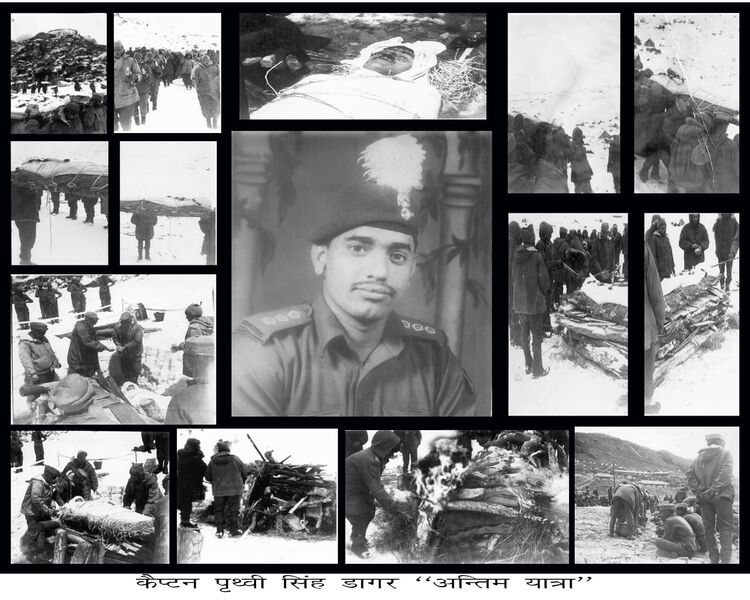
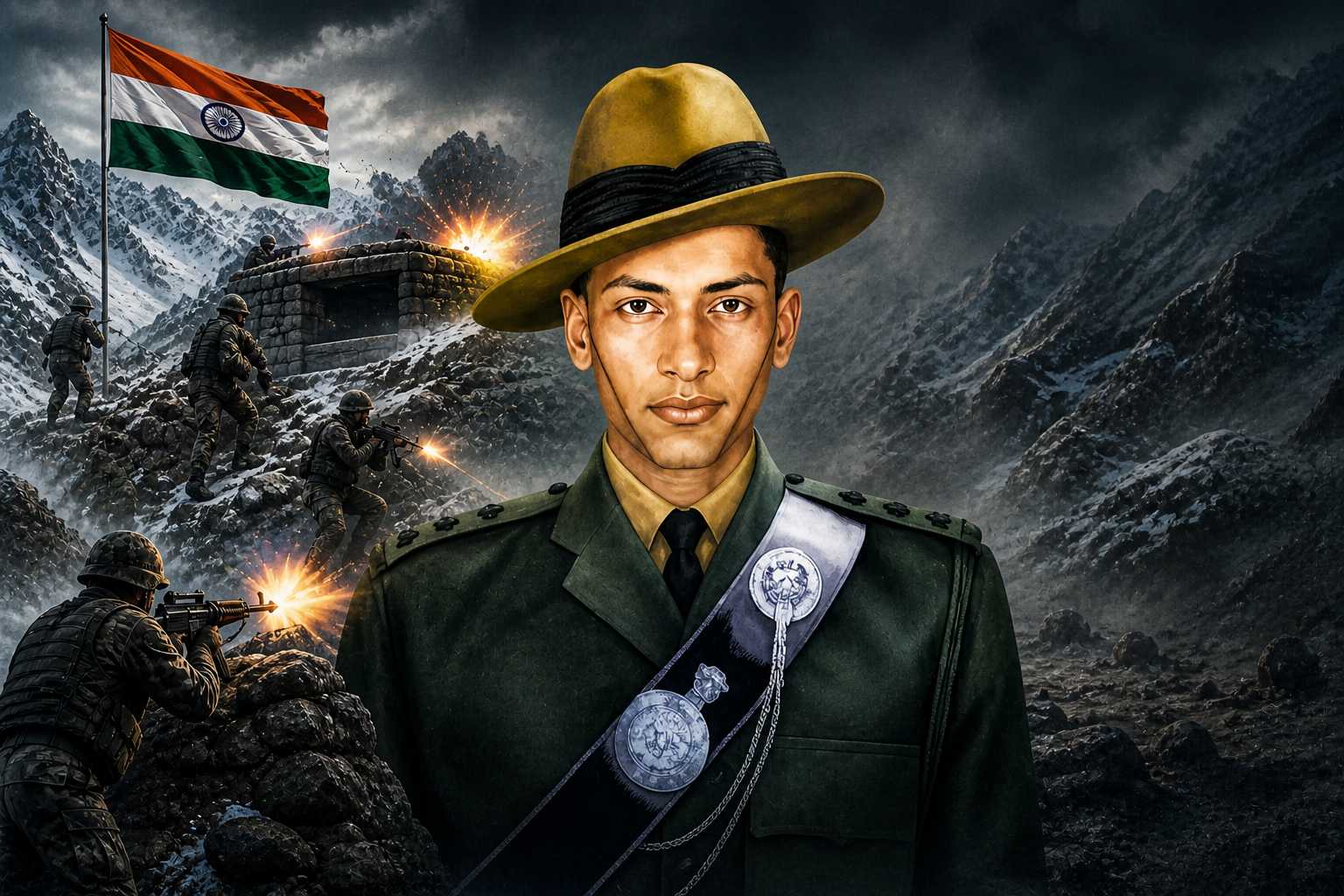
Capt. Prithvi Singh Dagar | Image Source: Honorpoint
On September 11, 1967, an ordinary day at the India-China border suddenly transformed into a battlefield at the Nathu La Pass in eastern Sikkim, situated at an altitude of 4,310 meters. While Indian soldiers were laying barbed wire fencing along the border, Chinese troops suddenly opened intense fire upon them. In the middle of this chaos stood 25-year-old Captain Prithvi Singh Dagar, who, despite being seriously wounded, launched a direct counterattack against the enemy.
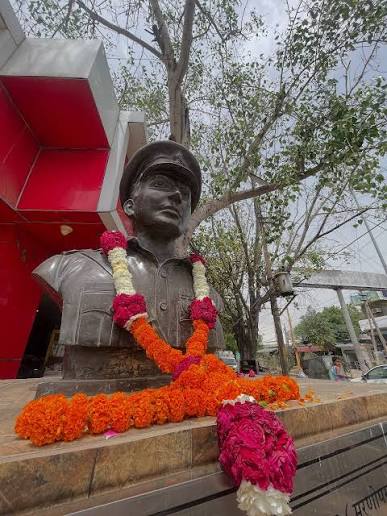
Captain Prithvi Singh Dagar | Image Source: Instagram
This is the story of how a routine military operation turned into war within moments — and how a young Indian officer, bleeding yet unbroken, fought back with extraordinary courage and saved the lives of many of his comrades.
In 1967, Captain Prithvi Singh Dagar was posted at the strategic heights of Nathu La Pass. At the time, tensions along the India-China border were steadily rising. After the humiliation of the 1962 war, the Indian Army was determined to establish a stronger and more assertive position along the frontier.
Captain Dagar was appointed Officer-in-Charge of a wire-laying party. His task was to supervise the installation of a barbed-wire fence in the South Shoulder area so that a clearly defined boundary could separate Indian and Chinese troops and prevent frequent face-offs and minor clashes.
The Chinese soldiers strongly opposed the fencing activity. Tensions had been escalating since August 1967, and a minor clash had already taken place on September 7. Despite this, the Indian command decided to continue the operation. On the morning of September 11, 1967, Captain Dagar and his men resumed their work. Engineers and soldiers were laying the fencing in completely open terrain. Initially, Chinese troops attempted physical intimidation and scuffles, but Captain Dagar and his soldiers stood firm. The work continued despite the growing hostility. The tension in the air was unmistakable. Troops from both sides stood barely 20–30 meters apart. Then, suddenly, a whistle was heard from the Chinese side. Within moments, heavy firing erupted from the North shoulder. Chinese machine guns and artillery opened up relentlessly. The Indian soldiers, exposed in the open without any cover, became direct targets of the deadly barrage. India immediately responded.
But in the very first minutes of the attack, several Indian soldiers were already killed or wounded. Captain Dagar himself was hit in the arm by a bullet. Blood began pouring from the wound, and the pain was unbearable. Yet he refused to retreat. Instead, he led the counterfire.
Fighting alongside his men, Captain Dagar launched a fierce assault on the Chinese troops. According to accounts of the battle, he personally led attacks that inflicted devastating losses on the enemy. During the intense combat, he was struck by multiple bullets, but he continued fighting with unmatched bravery until he attained martyrdom on the battlefield.
In this fierce clash, a handful of Indian soldiers reportedly eliminated nearly 300 Chinese troops, delivering a crushing response to the enemy. At just 25 years of age, Captain Prithvi Singh Dagar made the ultimate sacrifice for the nation. That same battle witnessed extraordinary acts of courage from several other Indian soldiers as well, who fought fearlessly and gave a fitting reply to the Chinese aggression. Even today, Captain Dagar’s name echoes through the heights of Nathu La. A memorial gateway named “Dagar Gate” stands there in his honor, and his photograph continues to bear witness to his immortal sacrifice.
Dagar Gate at Nathu La | Image Source: Honorpoint
For his exceptional leadership and supreme sacrifice, he was posthumously awarded the Vir Chakra. It is worth noting that the Nathu La Pass was closed after the 1962 India-China War and was reopened for border trade only 44 years later, on July 6, 2006.