Kargil War: Even After Being Shot Multiple Times, He Destroyed Four Bunkers: Captain Manoj Pandey’s Final Battle at Khalubar Ridge
Just behind Khalubar Ridge, toward the north-west, lay the Muntho Dhalo area in Pakistan-occupied Jammu and Kashmir (PoJK), where the Pakistani Army had established its primary logistics base and a helipad.

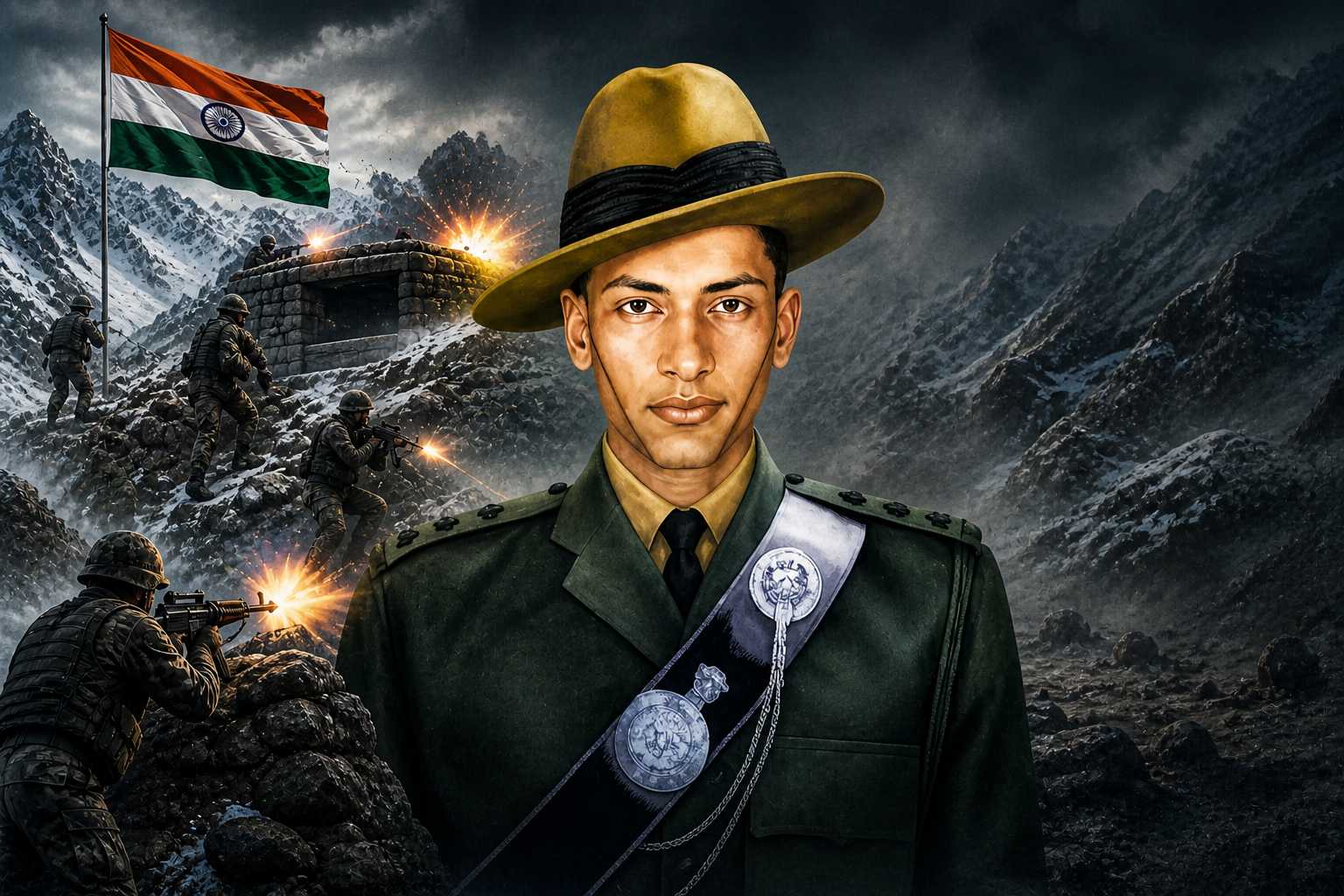
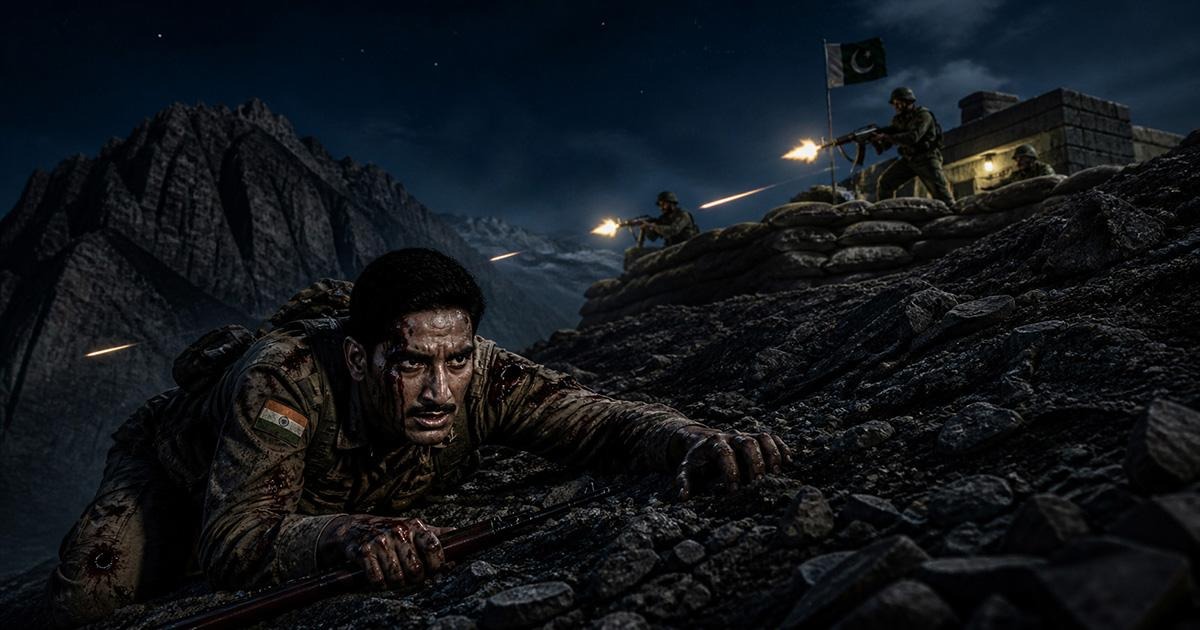
Capt. Manoj Pandey | This image is AI-generated
At an altitude of nearly 16,000 feet, on a freezing night amid relentless enemy fire, a 24-year-old captain was advancing from bunker to bunker, destroying them one after another despite multiple bullets piercing his body. This is the extraordinary story of Captain Manoj Kumar Pandey — a tale of unmatched courage that changed the course of the Batalik sector during the Kargil War. Let us revisit what unfolded during the fierce Battle of Khalubar Ridge and how the sacrifice of a young officer tilted the war decisively in India’s favor.
One of the most crucial battles of the Kargil War was fought in the Batalik sector. Among all the strategic positions in the region, Khalubar Ridge held exceptional importance. The enemy had captured it and turned it into one of their strongest and most critical bases.
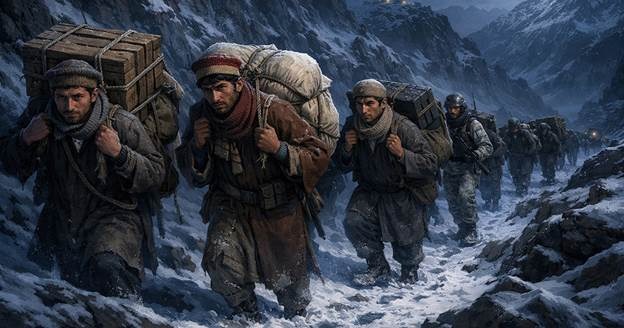
The reason for its importance was geographical as well as military. Just behind Khalubar Ridge, toward the north-west, lay the Muntho Dhalo area in Pakistan-occupied Jammu and Kashmir (PoJK), where the Pakistani Army had established its primary logistics base and a helipad. The direct aerial distance between Khalubar Ridge and Muntho Dhalo was approximately 8 to 10 kilometers. Through this helipad, enemy troops were receiving a continuous supply of weapons, ammunition, reinforcements, and essential logistics.
It became absolutely clear that breaking Pakistan’s operational backbone required capturing Khalubar Ridge. Another major objective of the Indian Army was to ensure that the enemy could not dominate the Leh–Batalik–Kargil road. Had Khalubar remained under Pakistani control, they would have been able to monitor the entire supply route and launch artillery attacks on it. This road was critically important for the movement of troops, weapons, and supplies across the Kargil–Leh sector. The enemy’s continued presence there posed a serious strategic threat to India’s military operations in the region.
The task of recapturing the ridge was assigned to the 1st Battalion, 11 Gorkha Rifles. Captain Manoj Kumar Pandey was leading the battalion’s No. 5 Platoon. Pandey’s platoon executed a daring maneuver by bypassing the peaks of Khalubar and attacking from the rear — a move that shattered Pakistani defenses. Yet even after completing this difficult phase, the Gorkhas’ real objective still lay ahead.
On the night of 2–3 July 1999, after a grueling 14-hour climb through treacherous mountain terrain, the soldiers came within nearly 400 meters of their final objective. Suddenly, intense gunfire erupted from two directions. Heavy machine-gun fire and mortar shelling pinned down the Indian troops, halting their advance. Captain Manoj Pandey quickly realized that there was now only one way to reclaim Khalubar: engage in direct combat and eliminate the enemy bunkers one by one.
Without wasting a moment, Pandey repositioned his platoon under extremely hostile conditions. He sent one section toward the right flank while personally leading a small group of soldiers from the left. Reaching the first bunker, he launched a fearless assault and killed two Pakistani soldiers. Almost immediately afterward, he charged toward the second bunker and neutralized two more enemy troops. The firing was relentless, but retreat was never an option for him.
As he advanced toward the third bunker, enemy bullets struck him in the shoulder and leg. Blood flowed heavily, yet he refused to stop. Even in a wounded state, he continued motivating his men and successfully cleared the third bunker as well. Ahead now stood the fourth bunker — the strongest obstacle preventing the main Indian force from advancing further. Pandey understood that if this bunker survived, the entire mission could fail. He decided to make one final push.
This became the most emotional and dramatic moment of the battle. Despite being critically injured, Captain Manoj Pandey crawled close enough to the fourth bunker to launch his final attack. With precise aim, he hurled a grenade that destroyed the enemy position. But at that very instant, a burst from an enemy machine gun tore through his cap and struck him in the head. On 3 July 1999, he attained martyrdom on the battlefield.
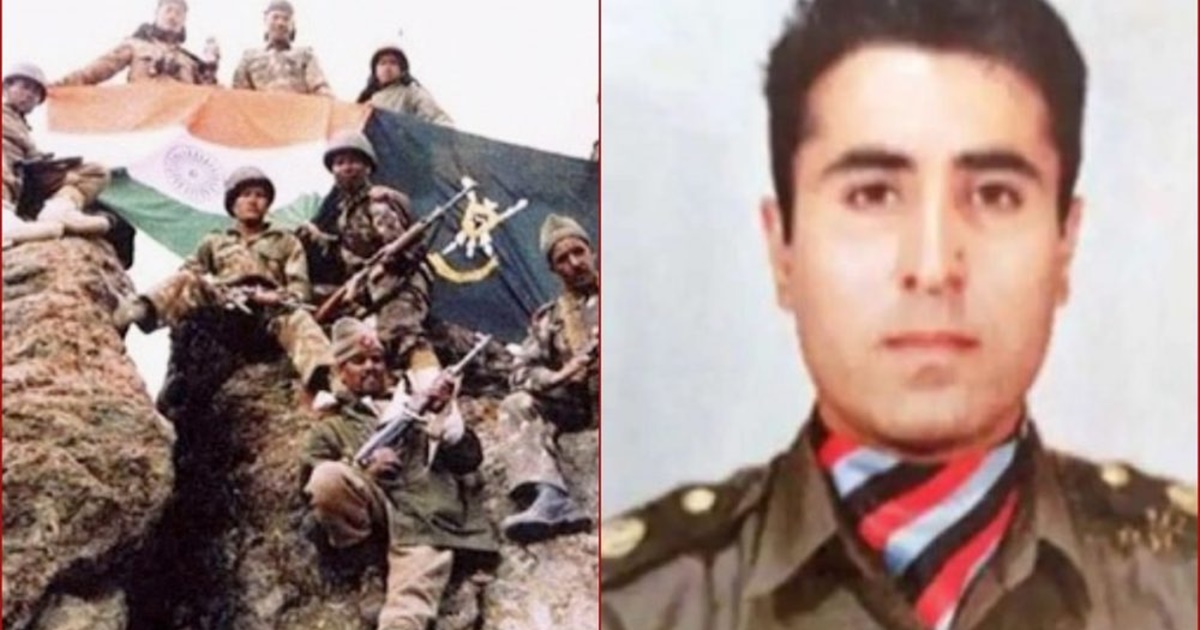
His sacrifice ignited a renewed fury among the Indian soldiers. Inspired by their commander’s courage, the troops intensified their assault, and by the morning of the same day, the Indian tricolor was flying proudly atop Khalubar Ridge.
The victory at Khalubar had a profound impact on the entire Batalik sector. Once the height came under Indian control, Pakistan’s defensive positions across the region began collapsing rapidly. Enemy troops struggled to hold their remaining posts and were forced into retreat.
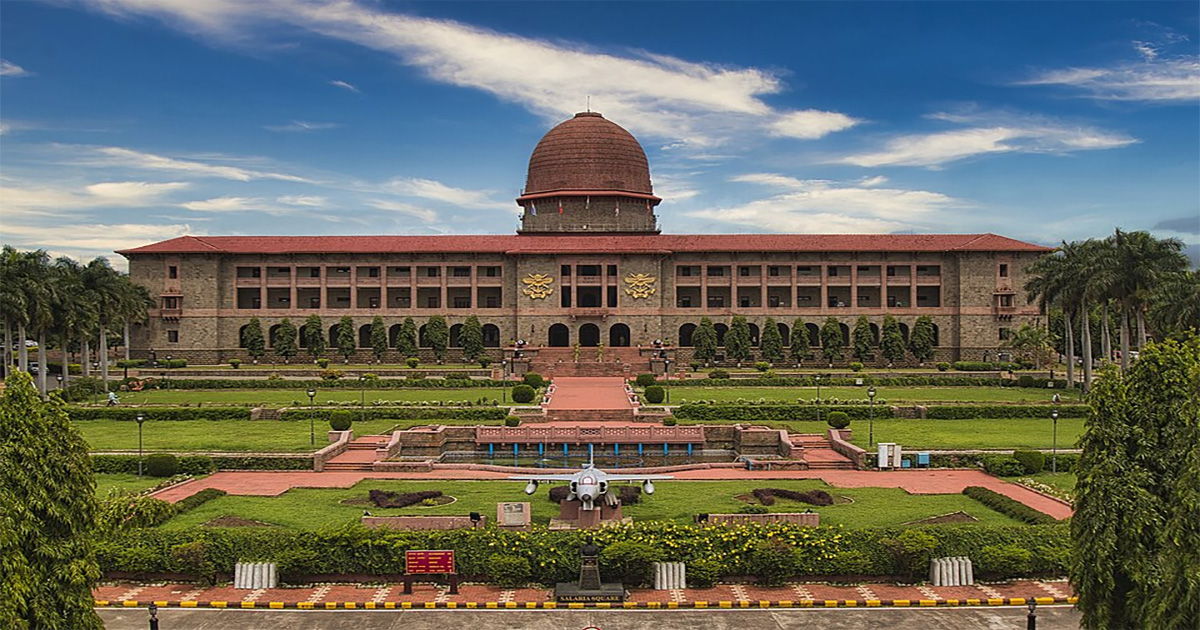
Born on 25 June 1975 in Sitapur, Uttar Pradesh, Captain Manoj Kumar Pandey was posthumously awarded India’s highest wartime gallantry honor, the Param Vir Chakra, for his unmatched courage, leadership, and determination to fight until his last breath.
The Battle of Khalubar not only altered the direction of the Kargil War but also serves as a timeless reminder that every moment of India’s freedom and security rests upon the sacrifices of brave sons like him. It is worth remembering that Pakistani forces had occupied several vacant Indian posts in crucial sectors such as Dras and Batalik in the Kargil region. The intrusion was first detected on 3 May 1999. On 25 May, the Government of India authorized the use of the Indian Air Force, leading to the launch of Operation Vijay. After nearly two months of intense fighting, India successfully reclaimed its territory, and the war officially ended on 26 July 1999.