Who was Rani Sada Kaur, Who Helped Maharaja Ranjit Singh in Conquest of Lahore?
Among these, a woman from the Kanhaiya Misl (States), Sada Kaur, was gradually becoming the center of Punjab's politics. Sada Kaur was not just the wife of a chieftain. She possessed the vision of a general and the patience of a ruler.

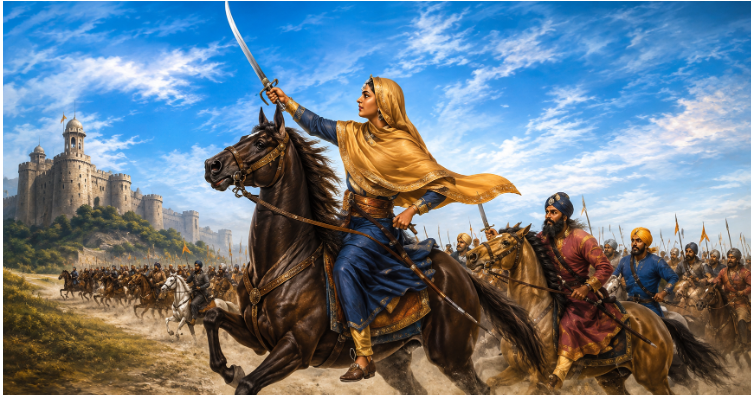
Rani Sada Kaur | Image Source: Sikh Missionary Society
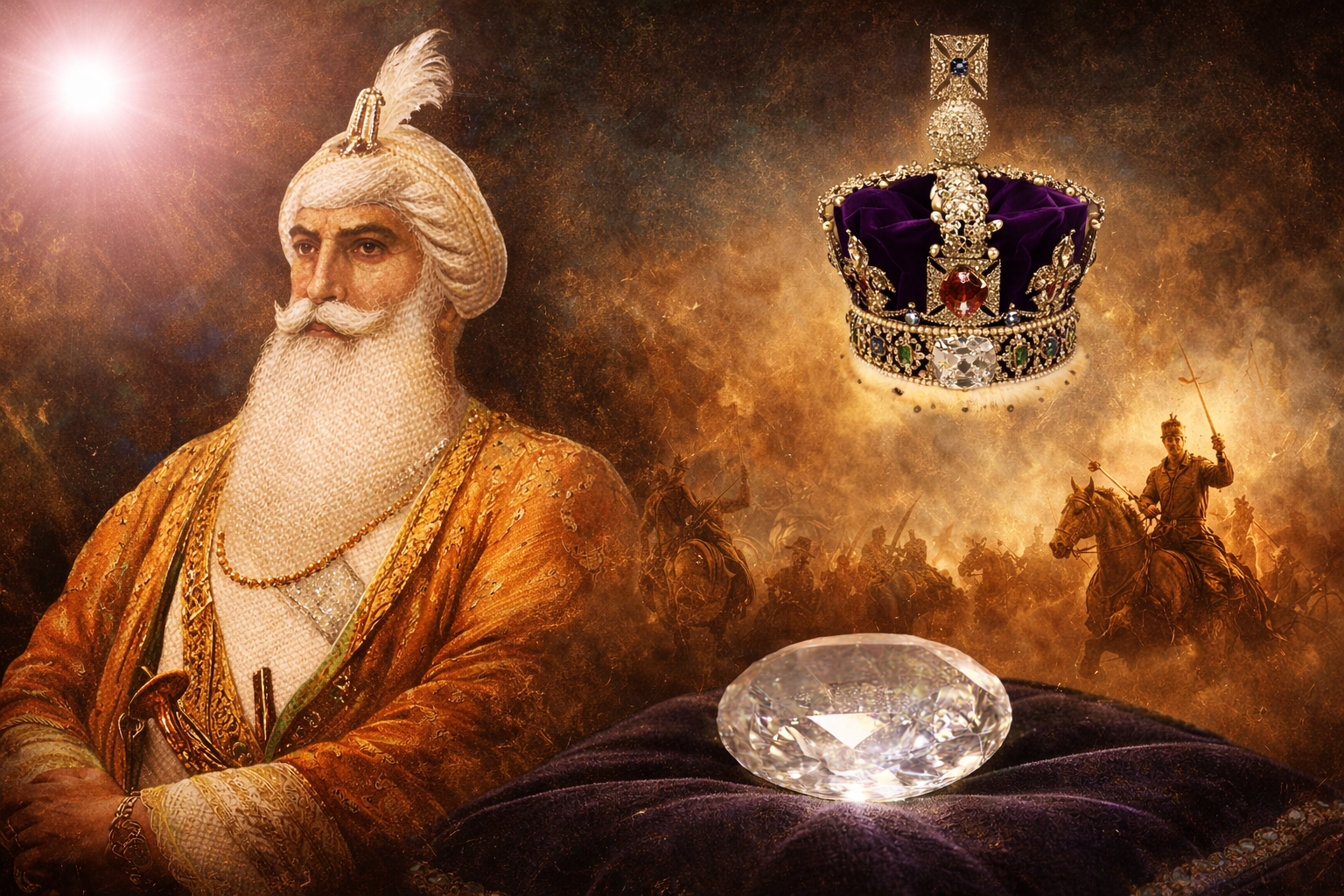
Maharaja Ranjit Singh united the scattered Misls to establish a powerful empire stretching from the Sutlej to Peshawar, a dominion founded upon the historic conquest of Lahore. Yet, behind the rise of this empire lay the immense political foresight, diplomacy, and military acumen of Rani Sada Kaur—a legendary warrior of Sikh history and Ranjit Singh’s mother-in-law. This is not merely the story of the capture of Lahore, but a chronicle of an unwavering bond of trust between a mother-in-law and her son-in-law, who together reshaped history through the power of the sword and the intellect.
In the 18th century, after Aurangzeb's death, Punjab was filled with the scent of ash and gunpowder. In 1707 AD, the Mughal Empire began to disintegrate. As a result of the continuous invasions of the Afghan ruler Zaman Shah between 1793 AD and 1798 AD, immense anarchy spread across Punjab. In 1798, Lahore was captured by the Afghans, and following Shah Zaman, the Afghans invaded India nine times between 1747 and 1769. Villages were burned, cities were plundered, and power seemed to shift every single day. At such a time, the Sikh Misls emerged as the shield of Punjab. There were twelve major Misls (Independent Sikh states (confederacies))—each Misl was the master of its own territory.
In fact, Misls were 'voluntarily formed independent Sikh military confederacies' or groups. In the 18th century, 12 Misls were formed to protect the Sikh religion and Punjab from the Mughals and Afghan invaders. Their job was to stand united and safeguard Sikh sovereignty against external enemies, which later laid the foundation for the great Sikh Empire of Maharaja Ranjit Singh. The Sukerchakia Misl was one of the most influential and powerful among the twelve Sikh Misls that emerged in 18th-century Punjab.
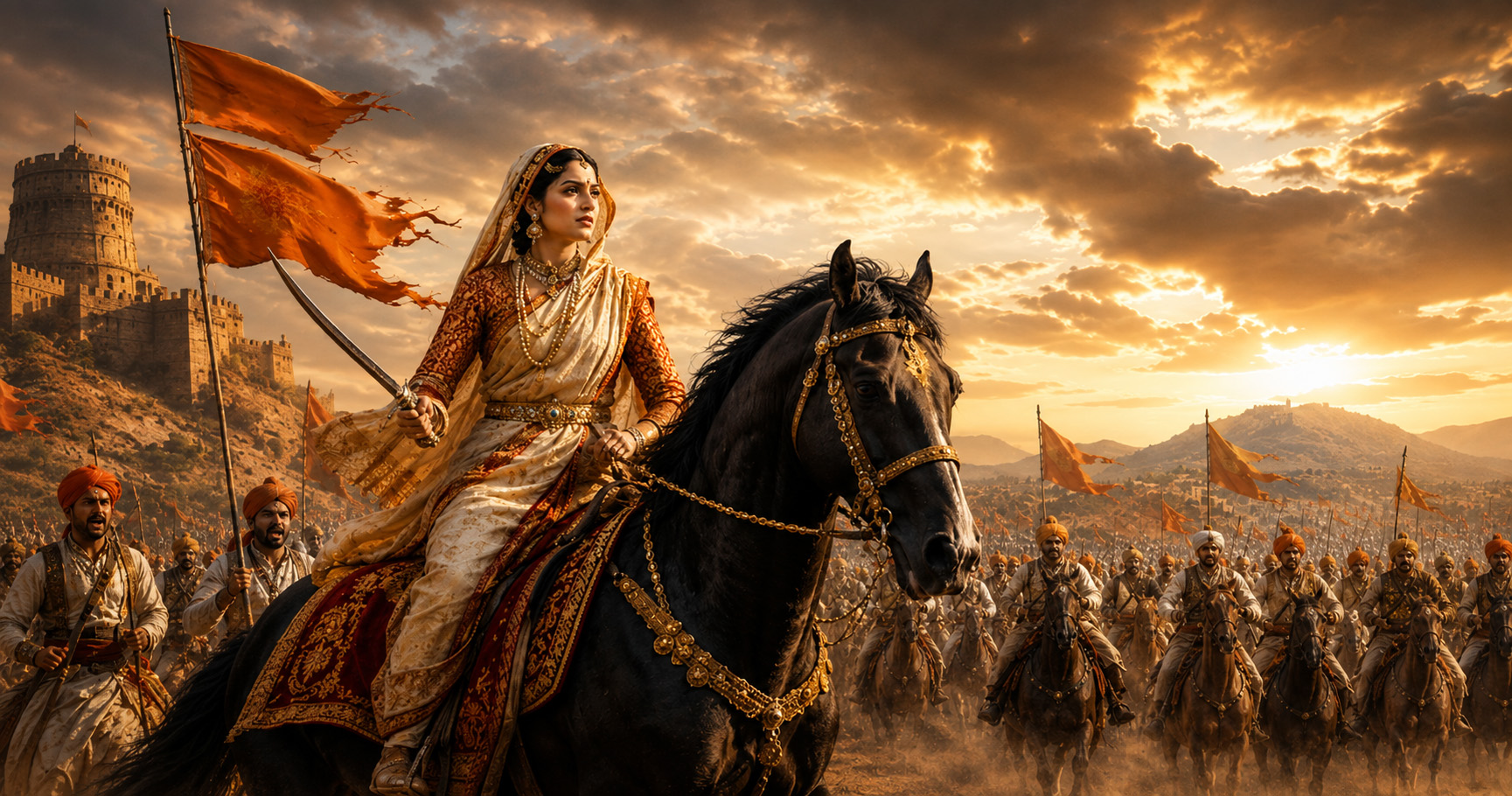
Among these, a woman from the Kanhaiya Misl (States), Sada Kaur, was gradually becoming the center of Punjab's politics. Sada Kaur was not just the wife of a chieftain. She possessed the vision of a general and the patience of a ruler. In 1785, when her husband, Gurbaksh Singh, was martyred in battle, many thought that the Kanhaiya Misl would now collapse. But the very next day, people saw a woman standing in front of the army, mounted on a horse. She had refused to remain behind the veil. She had picked up the sword. This woman was Sada Kaur, who took command of the Kanhaiya Misl and began leading an army of 8,000 cavalrymen. In the plains of Punjab, people now discussed not just her beauty, but her strategy.
Meanwhile, in the Sukerchakia Misl, a lean and frail boy was growing up rapidly. There were smallpox marks on his face, and the sight of one eye was lost, but inside him burned a fire. That was Ranjit Singh. Sada Kaur recognized very early on that this boy was not like the other chieftains. He possessed not just the strength to fight, but also a dream to unite Punjab. This was the reason why, in the year 1785, she betrothed her only daughter, Mehtab Kaur, to Ranjit Singh, and had the marriage performed in the year 1786. This was not just a relationship; it was the foundation of Punjab's future.
Ranjit Singh also respected Sada Kaur immensely. He regarded her not merely as a mother-in-law, but as "Mata Ji" (respected mother) and his guide. Whether it was war or politics, Ranjit Singh seldom took any major step without Sada Kaur's advice. In 1792, when Ranjit Singh's father, Maha Singh, died, Ranjit Singh was only 12 years old. In such a difficult time, Sada Kaur stood by him like a rock. She did not just teach him how to command an army, but also taught him that before conquering Punjab, it was vital to win the trust of the people.
Then came the year of July 1799, which changed history. Lahore at that time was in the weak hands of Sardar Chet Singh. The internal conflicts among the chieftains of the Misls had left the city insecure. The public was weary of wars. Meanwhile, Shah Zaman of Kabul also had his eyes on Lahore. But he knew that managing Lahore was no easy feat. On the other hand, the biggest challenge before Ranjit Singh was the shortage of troops. Ranjit Singh had a mere 3,000 soldiers. Advancing towards Lahore was akin to inviting death.
That night, Ranjit Singh was camped near Amritsar. Anxiety was clearly visible on his face. Just then, Sada Kaur came and sat before him. She asked in a calm voice, "How much army do we have?" Ranjit Singh said in a low voice, "Only 3,000. We have a shortage of troops." At that, Sada Kaur smiled. "Add my 2,000 cavalrymen as well. Then our total army of 5,000 will be enough. Combining both the Misls and some other small groups, there will be a total of 25,000 soldiers. Moreover, provided the war is fought with intellect, not with the sword."
Ranjit Singh remained silent. He feared that as soon as the army advanced, the enemy would attack from all sides. But there was no fear in Sada Kaur's eyes. She said, "We will not go straight to Lahore. First, we will go to Amritsar. Tell everyone that we are only going to bathe in the holy sarovar (pool)." And that is exactly what happened. News spread across Punjab that Ranjit Singh and Sada Kaur had arrived in Amritsar. The enemy became complacent. But late that very night, Sada Kaur devised a plan with the generals, and under the cover of darkness, the army began its march toward Lahore.
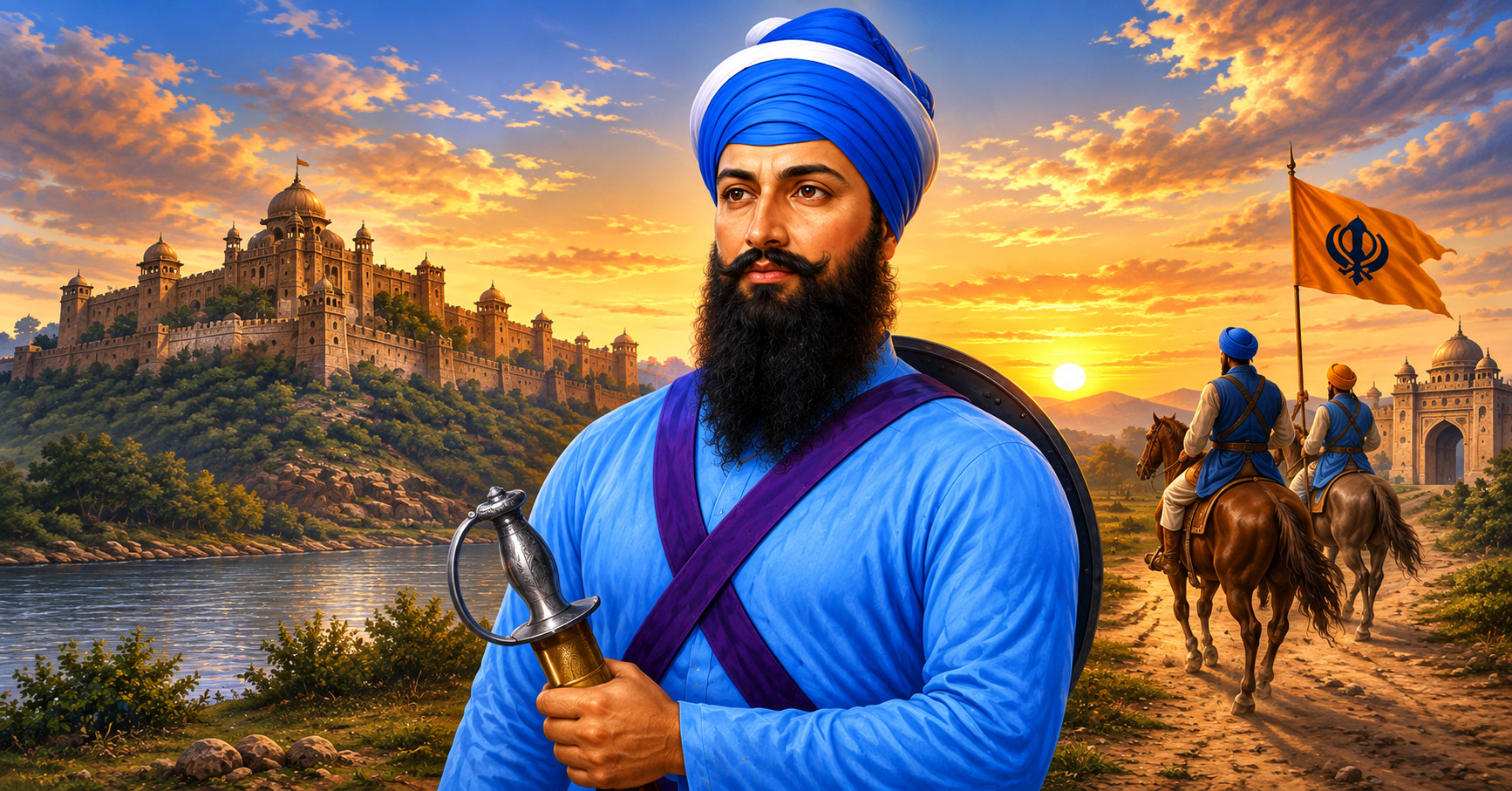
On the morning of July 6, 1799, when the thudding of horses' hooves echoed outside Lahore, before the enemy could even recover, gathering a strong force of 25,000 soldiers, Ranjit Singh advanced towards Lahore, and by July 7, the entire city was surrounded. Sada Kaur attacked the Delhi Gate, while Ranjit Singh scaled the walls of Lahore and demolished them with cannons. The people of the city were already in favor of Ranjit Singh. Several gates of Lahore opened without any struggle. Ranjit Singh moved towards the Lahori Gate, while Sada Kaur took command of the troops from the Delhi Gate. The move of both was so well-planned that the opponents began to flee in panic. But the real challenge was yet to come: Chet Singh's fort. There was still a possibility of resistance inside the fort. The soldiers were ready to attack, but Sada Kaur knew that if a war broke out, Lahore would be drenched in blood.
Just then, she took a step that stunned everyone. She walked into the fort entirely alone. No weapons, no soldiers. Sitting in the court, Chet Singh, too, had probably never seen such a fearless woman before. Sada Kaur said in a calm voice, "Lahore has changed now. The public wants Ranjit Singh. If you choose war, death is certain. But if you surrender the fort, your jagirs (estates) will remain with you." Silence enveloped the room. Two hours later, Chet Singh handed over the keys of the fort to Ranjit Singh. On that day, Lahore was won without major bloodshed.
When Ranjit Singh entered Lahore, people were calling him the "Lion of Punjab." But behind that lion stood a woman whose intellect had paved the way. Ranjit Singh never underestimated Sada Kaur's contribution. He knew that the conquest of Lahore was not merely a victory of the sword; it was a victory of strategy, patience, and trust.
And on that very day, the future of Punjab began to take a new shape. By 1801, Ranjit Singh had consolidated power across his Misls, and on April 11, 1801, he was declared the first Maharaja of the Sikh Empire.
Rani Sada Kaur was not just a mother-in-law. She was Ranjit Singh's political mentor, war advisor, and greatest supporter. History often remembers the king seated on the throne, but sometimes the real foundation of an empire is laid by the hands of a woman who, standing behind the scenes, alters the entire course of history. And in the history of Punjab, that name will remain forever—Rani Sada Kaur.