When Durgabai Deshmukh Compelled M. K. Gandhi to Address Devadasi Women
A twelve-year-old girl stood before senior Congress leaders and insisted that Mahatma Gandhi should not limit his speeches only to gatherings of men, but should also separately address Devadasi women and Muslim women.

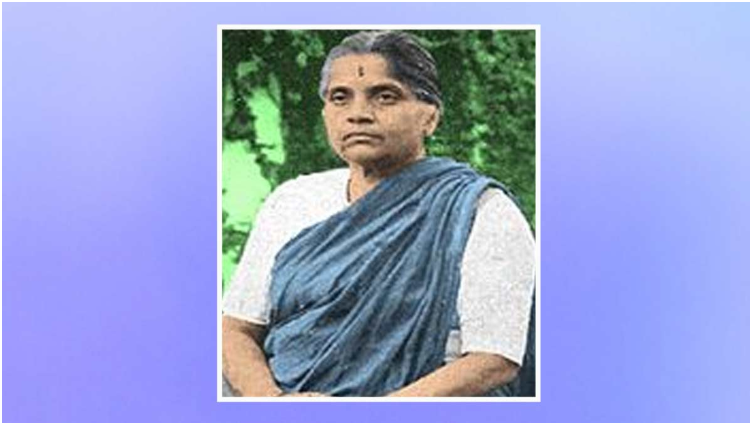
Durgabhai Deshmukh | Image Source: Her Zindagi
In 1921, an extraordinary incident took place in the town of Kakinada that challenged deep-rooted social prejudices and established norms. A twelve-year-old girl stood before senior Congress leaders and insisted that M. K. Gandhi should not limit his speeches only to gatherings of men, but should also separately address Devadasi women and Muslim women living behind the purdah system. At first, no one took her demand seriously. But eventually, everyone had to bow before the courage and determination of that young girl. That girl was Durgabai Deshmukh. This is the story of how a young Durgabai compelled M. K. Gandhi to speak directly to women whom society had long ignored and marginalized.
The year was 1921. Across the country, the spirit of the Non-Cooperation Movement was growing stronger. Gandhi was scheduled to visit Kakinada in present-day Andhra Pradesh. The entire town was filled with excitement. Senior Congress leaders such as Konda Venkatappayya were busy preparing for the event. Gandhi’s main political speech was to be delivered at the Town Hall before a massive gathering of men.
But at that very moment, twelve-year-old Durgabai Deshmukh was thinking differently. Deeply inspired by Gandhi’s ideals, she believed that his message should not remain confined only to the social mainstream. She felt that Devadasi women — whom society viewed with contempt and often equated with prostitution — as well as Muslim women living under strict purdah restrictions, should also hear Gandhi’s message of reform and empowerment.
Durgabai approached the event organizers and requested that Gandhi hold a separate gathering for these women, where he could speak about social reform, education, and self-reliance. The organizers were first surprised, then amused. They dismissed the idea as nothing more than a child’s fantasy. Mockingly, they told her: “If you can collect 5,000 rupees and present it to Gandhi Ji, then perhaps we can spare five or ten minutes for such a meeting.”
They were convinced that a little girl could never raise such a large amount. But Durgabai accepted the challenge. Without losing hope, she went directly to the Devadasi women for whom she wanted the meeting organized. She explained to them that this was not merely an opportunity for them individually, but a moment that could inspire broader social change. The Devadasi women, deeply moved by the courage of the young girl, decided to support her wholeheartedly.
They began collecting money through small savings, door-to-door efforts, and public appeals. To everyone’s astonishment, within just one week, Durgabai successfully collected the entire amount of 5,000 rupees. The organizers were stunned. But instead of honoring their promise immediately, they tried to avoid the commitment. They claimed Gandhi’s schedule was too busy and that not even a single extra minute was available.
Yet Durgabai stood firm. In a calm but unwavering voice, she reminded them: “A promise is a promise.” She appealed to their moral responsibility, and finally, impressed by her determination and sincerity, the organizers gave in. Durgabai personally arranged the venue for the gathering. She selected the compound of her own school. There was no grand stage, no lavish arrangements — only simplicity and a pure sense of purpose.
On the appointed day, Gandhi arrived before this special gathering of women. He addressed the Devadasi women and Muslim women on themes of social reform, education, self-reliance, and dignity. What was initially meant to be a brief appearance turned into a deeply emotional speech that lasted for more than half an hour.
Throughout the event, Durgabai stood beside Gandhi and translated his entire speech into Telugu so that every woman present could understand his words clearly. Many women in the audience were moved to tears. Gandhi himself was profoundly impressed by the courage, confidence, and determination of the twelve-year-old girl. So impressed, in fact, that he immediately decided Durgabai would accompany him as an interpreter during the remainder of his Andhra Pradesh tour. That single incident transformed Durgabai into a local heroine overnight.