Janjaati Hero Veer Gundadhur’s Bhumkal Rebellion: When the British Were Forced to Flee the Battlefield
On February 2, 1910, the uprising erupted with the looting of the Puspal market in Bastar. Janjaatis seized grain stocks and distributed them among the poor.

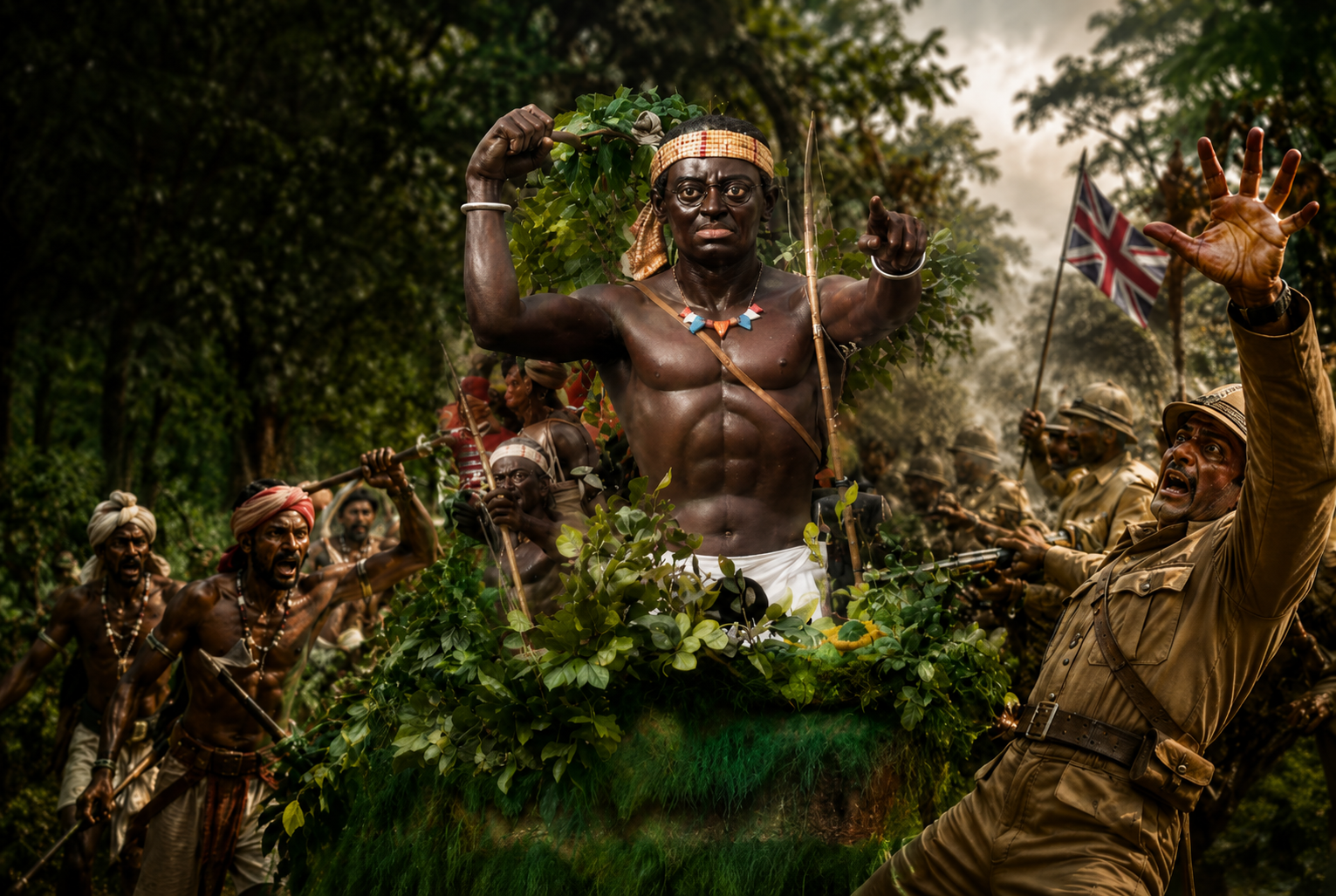
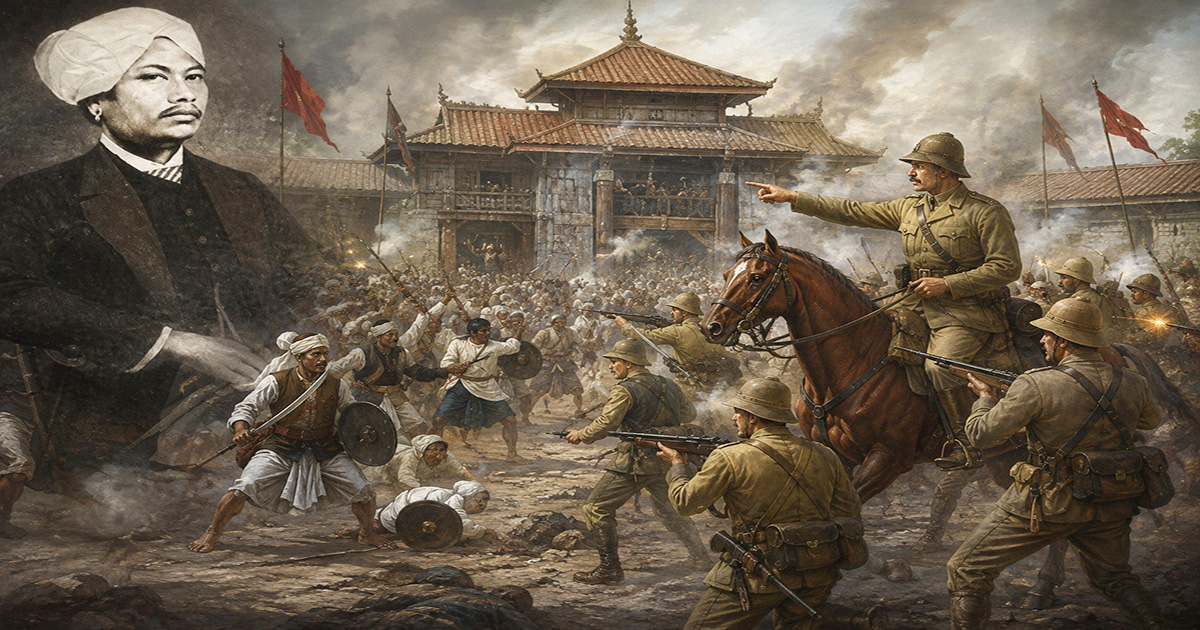
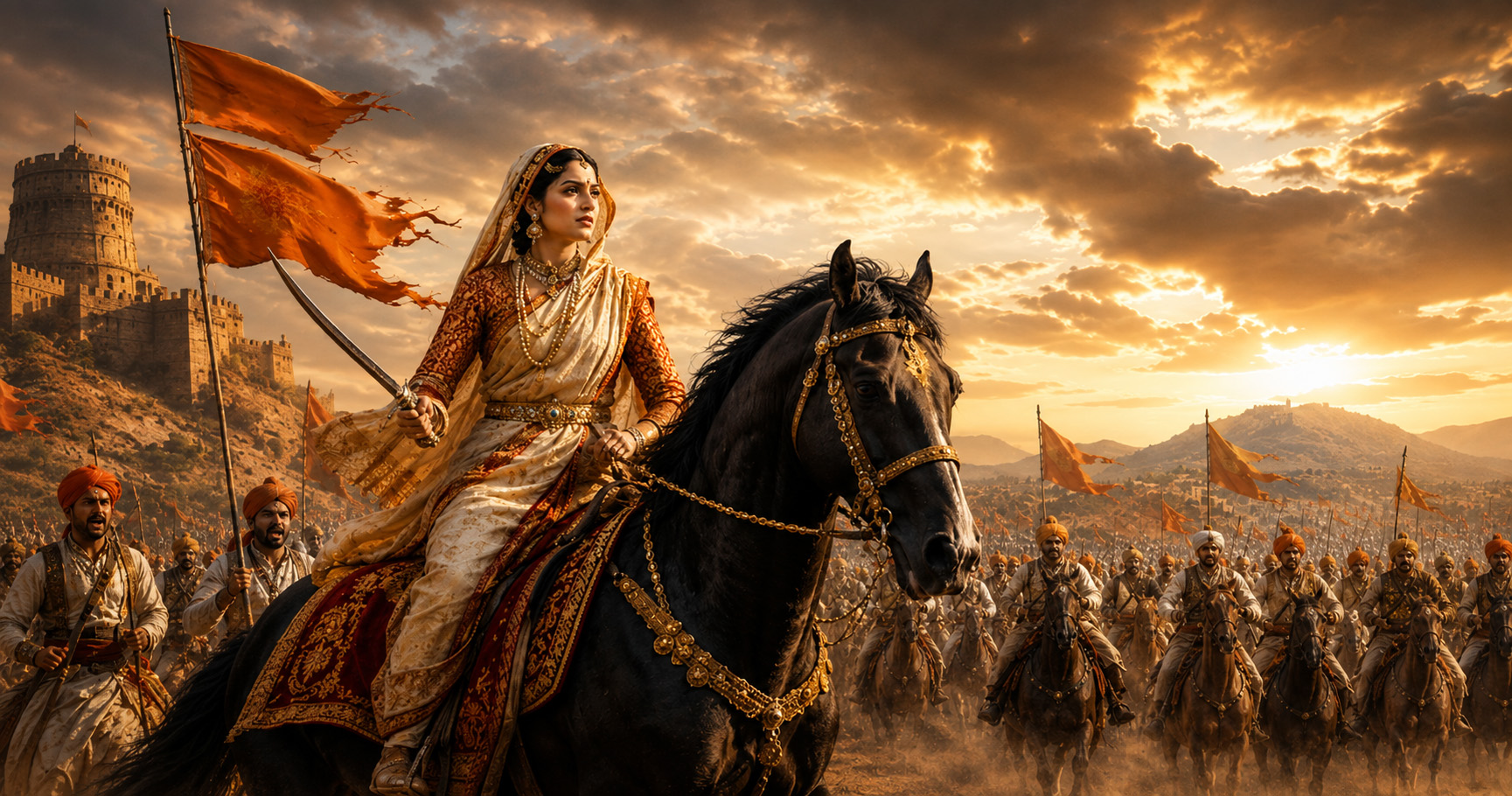
Bhumkal Rebellion | This image is AI-generated
During the Bhumkal Rebellion of 1910, a remarkable act of bravery unfolded in the dense forests of Bastar, where janjaati warriors armed with bows, arrows, and axes surrounded the British forces under the leadership of janjaati hero Veer Gundadhur. British soldiers, including Captain Gayer, fled the battlefield to save their lives. This is not a folk tale, but a historical reality. It is the story of how Veer Gundadhur, a young man from the Dhurwa janjaati community born in Netanar village of Bastar, openly challenged the British Empire.
The conflict began when the British government planned to seize control of the forests of the Bastar princely state. The proposal to declare nearly two-thirds of the forests as “Reserved Forests” became a matter of life and death for the janjaati communities such as the Dhurwa, Muria, Madia, and Gond tribes. Their traditional rights over podu cultivation, hunting, and the collection of mahua flowers and tendu leaves were being taken away. Forced labor, oppressive taxation, and exploitation further fueled the anger. At the time, Raja Rudra Pratap Dev of Bastar was merely a nominal ruler, while real authority rested in the hands of British agents. It was amid this growing unrest that great janjaati leaders like Gundadhur emerged. Gundadhur called for the Bhumkal Sabha across Bastar, and soon the Bhumkal Rebellion shook British rule to its foundations.
On February 2, 1910, the uprising erupted with the looting of the Puspal market in Bastar. Janjaatis seized grain stocks and distributed them among the poor. Police outposts were burned, and attacks on British officials intensified. The rebellion spread rapidly across remote regions. Gundadhur travelled throughout Bastar carrying a message of unity and resistance.
Alarmed by the scale of the uprising, the British administration summoned military reinforcements from Madras, Punjab, and other battalions under the leadership of Captain Gayer. Heavily armed colonial forces now launched a brutal campaign to crush the rebellion.
By the final days of March 1910, the Bhumkal Rebellion had entered its most decisive phase. Captain Gayer was desperately trying to suppress the resistance, but Gundadhur and his companions repeatedly countered him with innovative guerrilla tactics.
During this period, Gundadhur received intelligence that Captain Gayer had established his camp at Ulnar, also known as the Alnar Bhatha region. Upon hearing this, Gundadhur secretly devised a strategy alongside trusted comrades like Debridhur, Sonu Manjhi, and other warriors.
The janjaati fighters possessed no modern weapons, but they knew the forests, valleys, and hills better than anyone. Armed with axes, spears, battle-axes, and bows, hundreds of warriors silently spread around the British camp under the cover of darkness. Every movement was made with extreme caution so the enemy would remain unaware.
Then, at the perfect moment, the attack began. From all directions, arrows rained down upon the British camp. Chaos erupted instantly among the British soldiers. Many were wounded, while others fell dead on the spot. The colonial troops were completely unprepared for such a sudden and coordinated assault. The thunderous war cries emerging from the forests shattered their morale.
Captain Gayer himself found his forces surrounded. The fierce battle continued for nearly an hour, but the British army could not withstand the relentless assault. Finally, in order to save his own life, Captain Gayer abandoned the battlefield and fled.
The Battle of Ulnar became one of the greatest victories of the Bhumkal Rebellion. It proved that even with limited resources, the courage, unity, and determination of Janjaati warriors could seriously challenge British imperial power.
The story of the Bhumkal Rebellion is not merely the story of an uprising — it was a battle for identity, dignity, forests, land, and the very survival of tribal society. The rebellion ultimately forced the British administration to reduce the area designated as Reserved Forests, marking a partial victory for the tribal communities. Even today, Gundadhur remains immortal in Bastar. Landmarks such as Bhumkal Chowk, sports awards named after him, and the annual observance of Bhumkal Day on February 10 continue to honor his memory.
His story reminds us that true struggles for freedom are won not merely with weapons, but through courage, unity, and an unbreakable connection to one’s land and roots. Veer Gundadhur’s legacy continues to inspire all those who fight to protect their identity, heritage, and rights.