The Allahabad University Examination That Left C. V. Raman Astonished | The Untold Story of Rajju Bhaiya
During the examination, Rajju Bhaiya had to demonstrate an experiment related to the famous Raman Effect.

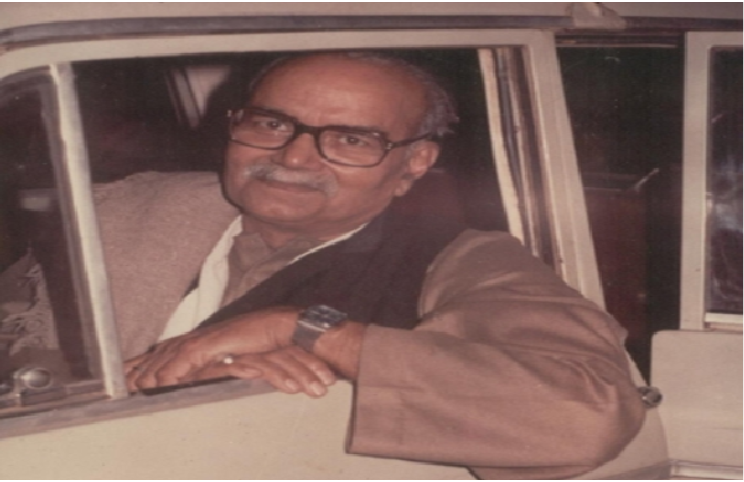
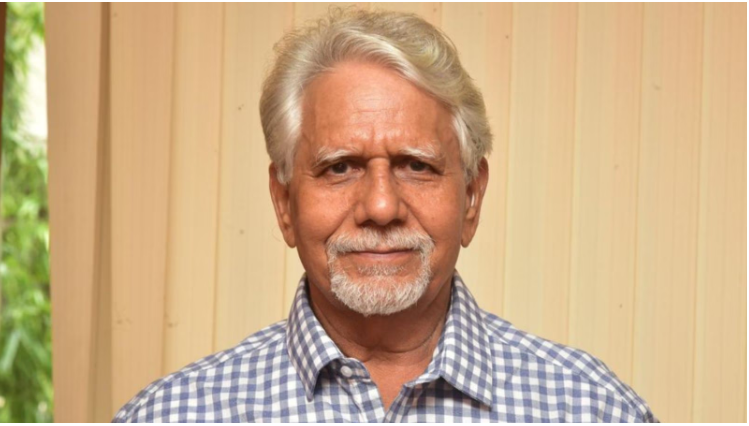
Prof. Rajendra Singh (Rajju Bhaiya) | Image Source: VSK Chhattisgarh
That day inside the laboratory of Allahabad University, it was not merely an examination taking place — it was a glimpse into the extraordinary future of Indian science. Two towering personalities were about to meet there: India’s legendary scientist and Nobel Laureate C. V. Raman, and Rajendra Singh, later known as Rajju Bhaiya, the fourth Sarsanghchalak of the RSS. At the time, Rajju Bhaiya was pursuing his MSc in Physics at the University of Allahabad. It was an era when C. V. Raman was revered almost like a living legend in the scientific world. For Raman himself to be impressed by a student’s brilliance was no ordinary matter. Yet, something exactly like that happened in the university laboratory that day.
The incident dates back to 1942. Rajju Bhaiya was then in the final year of his MSc in Physics at Allahabad University. The head of the university’s Physics Department at the time was Professor K. S. Krishnan, one of Raman’s most distinguished students. Because of this close association, Raman frequently visited Allahabad.
For the final practical examination of the MSc program, Raman arrived as the external examiner. During the examination, Rajju Bhaiya had to demonstrate an experiment related to the famous Raman Effect. He presented Raman with a spectroscopy image that he himself had prepared.
The moment Raman looked at the image, he asked which substance it represented. With complete confidence, Rajju Bhaiya replied: “This is benzene.” Raman immediately responded that it was not benzene, but carbon tetrachloride. Most students would likely become nervous at that moment. But Rajju Bhaiya remained calm and composed. He confidently answered that he was identifying it as benzene because Professor Krishnan had told him so.
Hearing this, Raman was visibly surprised. Smiling, he turned to Professor Krishnan and remarked: “Your student trusts you even more than he trusts Raman himself.”
This was not merely a humorous exchange — Raman was deeply impressed by Rajju Bhaiya’s clarity, confidence, and composure. When Raman later reviewed the final results of the practical examination, he was astonished. Rajju Bhaiya had demonstrated the Raman Effect with such brilliance that, according to accounts, he had explained it even more effectively than Raman himself and had derived the result through a method different from Raman’s established formula.
Greatly impressed by his intellect, Raman awarded Rajju Bhaiya a perfect score: 100 out of 100 in the practical examination. This was also a period when India had very few experts in advanced subjects like nuclear physics. Yet Rajju Bhaiya possessed an exceptional grasp of the discipline and could explain complex concepts with remarkable simplicity. As a result, when the final MSc results were declared, he secured the second rank in the entire university.
Recognizing Rajju Bhaiya’s extraordinary command over atomic physics, C. V. Raman invited him to Bengaluru to work alongside him in scientific research. But by then, Rajju Bhaiya had already become deeply associated with the Rashtriya Swayamsevak Sangh. He also had a deep love for teaching. Therefore, with great humility, he told Raman that he had already dedicated his life to the Sangh and would not be able to move to Bengaluru.
Some time later, Raman happened to meet M. S. Golwalkar, popularly known as Guruji. In a light-hearted tone, Raman remarked: “You have taken away a great scientist from the country.”
Guruji smiled and replied: “The country will find many more scientists, but the Sangh has only one Rajju Bhaiya.”
Birth and Association with the RSS
Rajendra Singh, affectionately known as Rajju Bhaiya, was born on 29 January 1922 in Banael village of Bulandshahr district. His father, Kunwar Balbir Singh, was the first Indian Chief Engineer during British rule.
Rajju Bhaiya came into contact with the RSS while studying at Allahabad University. In 1943, he underwent Sangh Shiksha Varg training while simultaneously serving as a professor of Physics at Allahabad University.
Alongside his teaching career, he remained actively involved in Sangh work. In 1966, he resigned from his professorship and became a full-time RSS pracharak. Over the years, he rose through the organization — becoming Sah-Sarkaryavah in 1977, Sarkaryavah in 1978, and eventually the fourth Sarsanghchalak of the RSS in 1994. After dedicating his entire life to the work of the Sangh, Rajju Bhaiya passed away on 14 July 2003 at Kaushik Ashram in Pune.