1965 Indo-Pak War: UN’s Ceasefire Intervention- A Historical Example of External Meddling Blocking India’s Hard-Earned

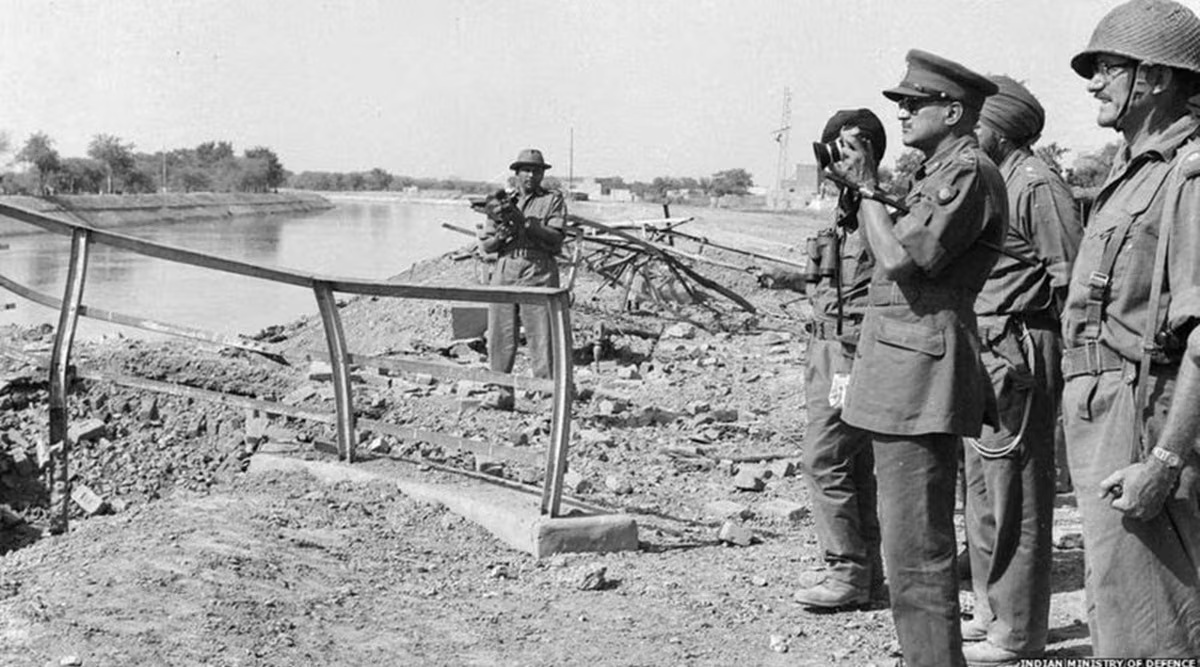
The Indo-Pak War of 1965 was not just a battle fought on the ground; it was a geopolitical contest where international pressure determined the final outcome. At a time when Indian forces had gained significant momentum, global powers, acting through the United Nations, imposed a swift ceasefire that halted India’s advances and forced a return to pre-war boundaries.
This sudden diplomatic intervention has sparked decades of debate: Was India on the verge of a decisive strategic advantage? And did the UN, under pressure from powerful nations, deliberately block India from securing a lasting solution to Pakistan’s aggression?
1. What Was the Official Name and Historical Context of the 1965 War?
Commonly referred to as the Indo-Pakistani War of 1965, this conflict is also known as the Second Kashmir War. It erupted due to Pakistan’s infiltration into Jammu & Kashmir under “Operation Gibraltar.” India, still recovering militarily after the 1962 war with China, was determined not to lose ground again. The war became a defining moment in South Asian history, not only for its intense battles but for the international interference that dictated its premature end, leaving the Kashmir issue unresolved and setting the stage for future confrontations.
2. When Did the War Begin and How Long Did It Last?
Major hostilities started after Pakistan launched Operation Gibraltar in early August 1965, with infiltration attempts across Kashmir. By 6 September, it escalated into full-scale war as Indian forces crossed the international border toward Lahore. The fighting continued until 22 September, when the United Nations enforced a ceasefire under Security Council Resolution 211. Pakistan formally accepted on 23 September. Although the war lasted just about three weeks, its political and strategic consequences were long-lasting, shaping India’s defense policies and diplomatic relations for decades.
3. Who Were the Primary Countries and Leaders Involved?
The war was primarily fought between India and Pakistan, but international actors influenced its course. India’s leadership included Prime Minister Lal Bahadur Shastri, Defence Minister Y. B. Chavan, Army Chief General J. N. Chaudhuri, and Air Chief Marshal Arjan Singh. Pakistan was led by President Field Marshal Ayub Khan and Foreign Minister Zulfikar Ali Bhutto, with General Muhammad Musa commanding its army. Global powers like the United States, the Soviet Union, and China played diplomatic roles, some pressuring for peace, others attempting to tilt the balance of power.
4. What Triggered the War and Why Was Kashmir Central?
The immediate spark came from Pakistan’s Operation Desert Hawk in the Rann of Kutch, followed by Operation Gibraltar in August 1965, when Pakistan sent thousands of armed infiltrators into Jammu & Kashmir to incite rebellion. Kashmir’s unresolved status, dating back to the 1947 partition, remained the core issue. Pakistan’s political ideology, rooted in the Two-Nation Theory, considered Kashmir essential for its national identity. India, however, viewed Pakistan’s infiltration as an act of war and responded with full military force to defend its sovereignty.
ALSO READ: “Top 20 Things You Must Know About the 1965 Indo-Pak War: How India Exposed Pakistan’s Blunders and Won Global Respect”
5. What Were the Key Battles That Shaped the War?
Several decisive battles turned the tide in India’s favor. At Asal Uttar in Punjab, Indian troops destroyed over 90 advanced Pakistani Patton tanks, crippling Pakistan’s armored strength. The Battle of Chawinda in Sialkot became one of the largest tank battles after World War II. India’s capture of the Haji Pir Pass cut Pakistan’s infiltration routes. These victories positioned India strongly on the battlefield, making the sudden UN-brokered ceasefire controversial because it stopped India from pressing its advantage further.
6. How Did the UN Intervene and Why Is It Criticized?
The United Nations enforced a ceasefire through Resolution 211 on 20 September 1965, just as India had seized key territories and was advancing near Lahore and Sialkot. Critics argue the UN acted under pressure from the United States and the United Kingdom, which prioritized Cold War stability over India’s security interests. The ceasefire froze territorial changes and forced India to return captured areas, effectively erasing the military gains achieved through significant sacrifices on the battlefield.
7. What Were the Casualties and Economic Impacts?
India lost around 3,000 soldiers, while Pakistan’s military deaths were estimated between 3,800 and 4,000. Civilians on both sides suffered due to bombings, displacement, and destruction of villages. Economically, India diverted critical funds from development projects to sustain its defense efforts. Pakistan faced even harsher consequences: foreign exchange reserves fell sharply, U.S. aid was cut, and industries suffered due to the embargo. Both nations experienced slowed economic growth and higher defense budgets for years to come.
8. Did India Gain Any Lasting Territorial or Strategic Advantage?
Although India captured approximately 720 square miles of Pakistani territory and gained strategic high ground like Haji Pir Pass, these gains were reversed after the Tashkent Agreement under Soviet mediation. The UN ceasefire prevented India from consolidating its victories. However, the war restored Indian military confidence post-1962 defeat and led to long-term defense modernization. For Pakistan, the war exposed its military overconfidence and heavy reliance on foreign weapons.
9. How Did Global Powers Shape the War’s Outcome?
The Cold War context meant the U.S., U.K., and USSR sought to prevent escalation into a larger regional conflict that could involve China. The U.S. imposed an arms embargo on both countries, hitting Pakistan harder since it depended heavily on American weapons. The Soviet Union used its influence to broker the Tashkent Agreement. China, though supportive of Pakistan, avoided direct involvement but issued threats to India. These global maneuvers forced a diplomatic outcome that favored stability over decisive resolution.
10. What Was the Public and Media Reaction?
Indian media focused on national unity and military heroism, with censorship hiding operational challenges. Pakistani state media exaggerated victories, claiming advances that never occurred. International outlets treated the conflict as a Cold War flashpoint, portraying both nations as equally responsible. Within India, citizens felt pride in their military but questioned why hard-earned battlefield successes were surrendered under external diplomatic pressure.
11. Why Do Many Indians Believe the Ceasefire Was a Lost Opportunity?
India had successfully repelled Pakistan’s aggression and held a strong negotiating position. Military experts argue that had India continued its advance, it could have forced Pakistan into a more disadvantageous settlement or secured stronger territorial safeguards. Instead, the UN’s intervention, and the subsequent Tashkent Agreement, restored the pre-war boundaries, leaving the Kashmir dispute unresolved and giving Pakistan room to regroup for future hostilities.
.png)
.jpg)