Battle of Haldighati: The Warrior Who Gave His Life to Save Maharana Pratap | The Untold Story of Jhala Bida
The battle of Haldighati is usually remembered for the heroism of Maharana Pratap. Still, few recall that at one of its most decisive moments, a sacrifice took place that saved not only a king’s life but also the very identity and pride of Mewar.

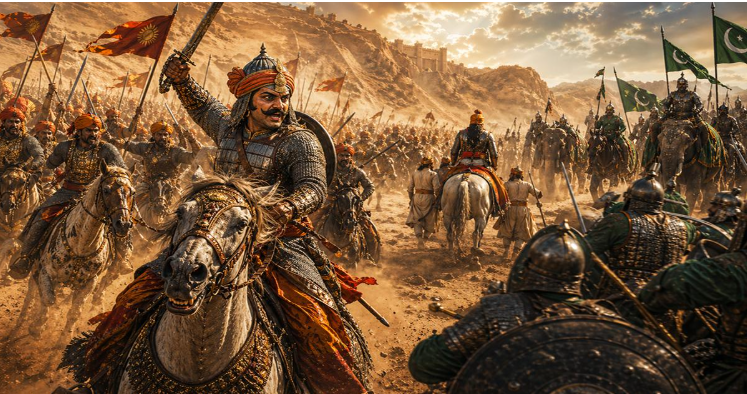
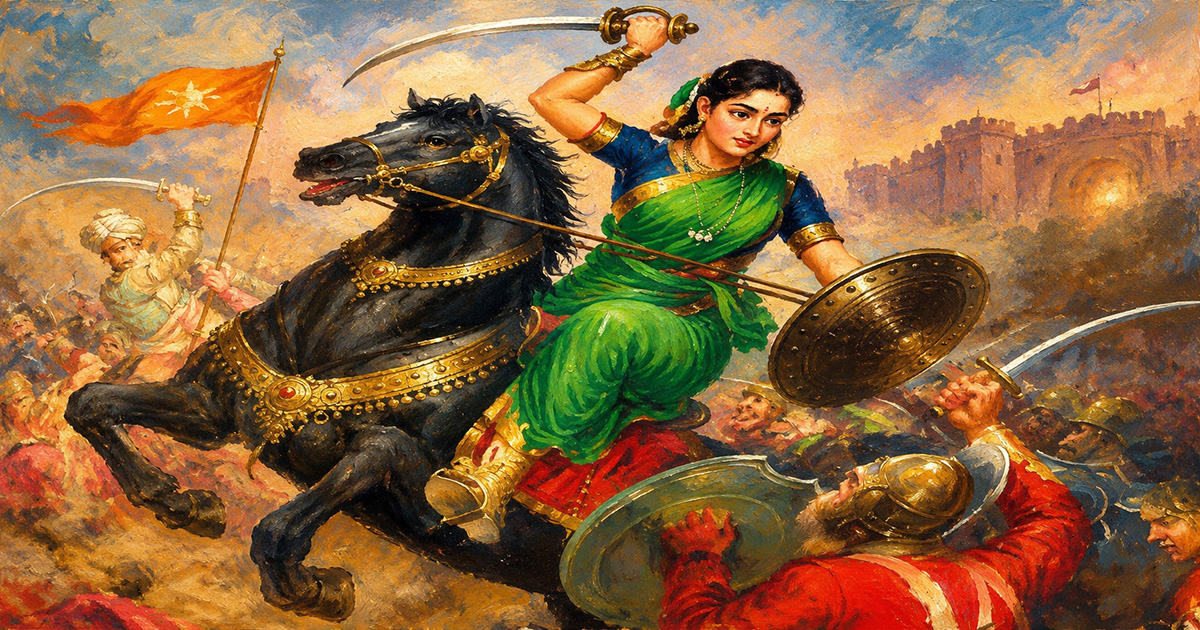
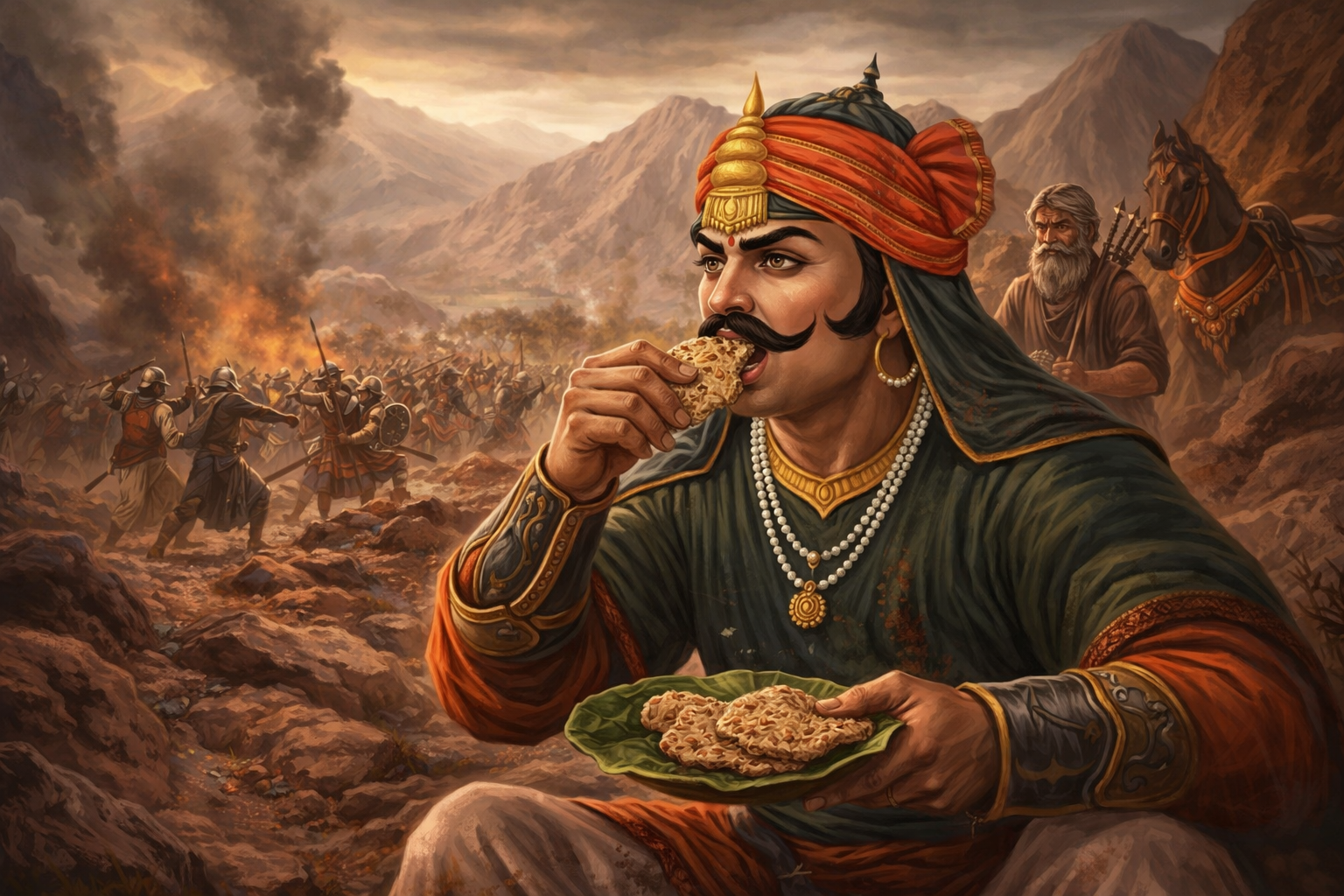
Battle of Haldighati | This image is AI-generated
On the blood‑soaked plains of Haldighati, a single warrior inscribed an epic that speaks not just of battlefield skill, but of an almost unmatched degree of swamibhakti (devotion to one’s master), courage, and sacrifice. This is the legend of the soldier known in history as Jhala Bida, a man whose name often lingers on the edge of memory, though his deeds deserve a central place in it.
The battle of Haldighati is usually remembered for the heroism of Maharana Pratap. Still, few recall that at one of its most decisive moments, a sacrifice took place that saved not only a king’s life but also the very identity and pride of Mewar. It was not just another war tale; it was the moment when loyalty stared down death, and one soldier offered his life so that his king might live on.
The Day of Haldighati
The incident happened on June 18, 1576, the day when the Battle of Haldighati reached its peak. On one side stood the vast Mughal army of Emperor Akbar, a massive force of well‑equipped soldiers and war elephants. On the other stood Maharana Pratap of Mewar, a thoughtful and resolute ruler, leading a smaller band of Rajput warriors into the fray with little more than courage and conviction.
The battlefield was filled with swirling dust, the clang of swords, and the roars of war cries. The Maharana himself plunged into the enemy ranks like a whirlwind, cutting through Mughal soldiers as if they were reeds. His purpose was clear: To defeat Akbar’s “jihadi” army on the battlefield and send the message that Mewar’s freedom could never be bargained away—no matter how weak the resources, how outnumbered the Rajputs.
The Turning Point – Chetak Falls, Pratap is Trapped
In the middle of the carnage, fate took a cruel turn. The Maharana’s beloved horse, Chetak, was struck by the sword attached to the trunk of Man Singh’s elephant. One of the horse’s legs was badly wounded, and the great stallion stumbled, leaving Maharana Pratap exposed and surrounded.
The Mughal forces, led by Man Singh, closed in and attacked the Maharana with relentless force. Though the king fought with astonishing bravery, blows rained upon him. Spears and swords tore his body, and still he stood his ground, refusing to yield. The royal canopy and insignia on his head made him a conspicuous target, and every Mughal soldier hoped to be the one who either captured or killed him. For a breathless moment, it seemed as if the sun of Mewar might truly set that day, and history might have taken a vastly different course.
The Sacrifice of Jhala Bida
In that critical hour, when death seemed only moments away, the eyes of Jhala Bida, one of the Maharana’s most trusted commanders, fell upon his wounded king. Jhala Bida was already fighting the Mughals in the thick of the chaos. Yet the moment he saw his king in mortal danger, he made a decision that was, in effect, a self‑chosen death warrant.
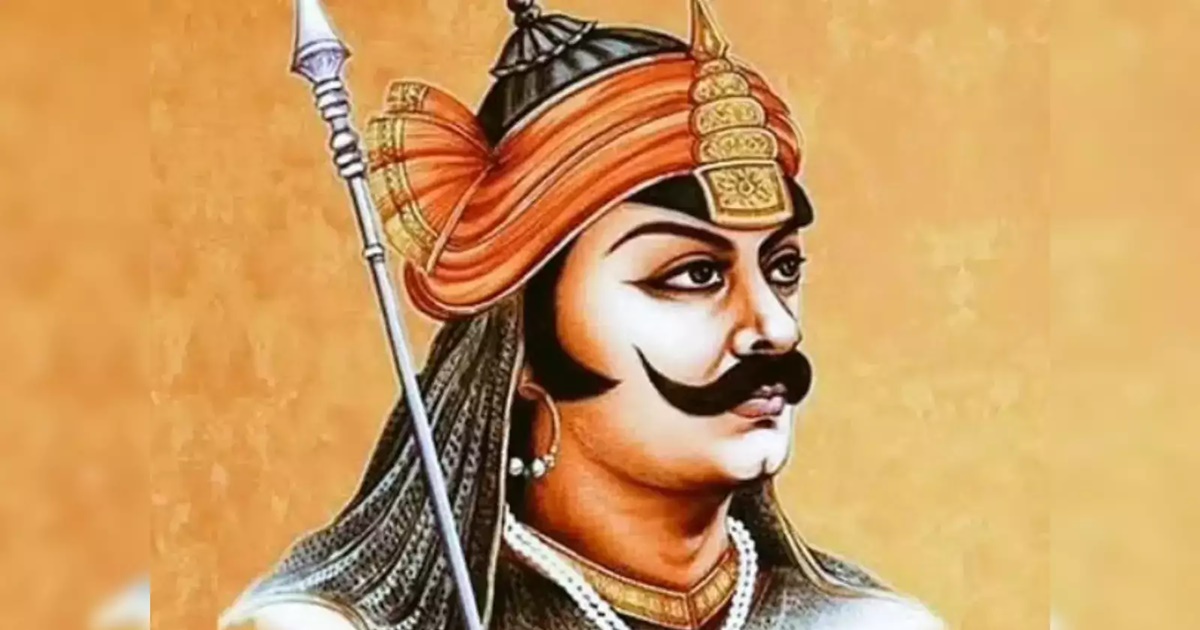
Without hesitation, he rushed to the Maharana, snatched the royal canopy from his head, and placed it upon his own. Then, gathering a band of around 350 loyal soldiers, he plunged back into the battlefield. The Mughal army, which had been hunting for the wounded Maharana, now saw the royal emblem glittering on Jhala Bida’s head and mistook him for the king. The entire weight of their attack shifted from Maharana Pratap to Jhala Bida.
Now the true horror of the battle unfolded. Jhala Bida, with his small band, stood defiantly before Akbar’s vast army, which lunged forward as if to swallow them whole. Yet not a trace of fear crossed his eyes. With every stroke of his sword, he fought as if he were the king himself, tearing through Mughal ranks and sending scores of their soldiers to their deaths. His intent was clear: To draw every arrow, every spear, every sword toward himself and keep his master alive.
With each passing moment, Jhala Bida moved closer to death, yet his resolve did not waver. His gaze held only one purpose—the safety of his Swami, Maharana Pratap. This was beyond mere bravery; it was the crossing of a boundary where the self is annihilated in devotion, and the life of the lord becomes more sacred than one’s own.
The Escape of the King
In the chaos caused by Jhala Bida’s sacrifice, Maharana Pratap’s loyal comrades seized the opportunity. They managed to pull the wounded king away from the battlefield and carry him to safety. Even the injured Chetak, the loyal horse, gave his last strength to help his master escape, staggering on with every breath until it was spent.
By the time the Mughal soldiers realized that the man they had been attacking under the royal canopy was Jhala Bida, not Maharana Pratap, it was too late. Pratap had disappeared into the hills, and the Mughals, exhausted and fooled, could not catch him.
Jhala Bida, however, was nowhere left to withdraw. Fighting till the last breath, he fell on the battlefield, his body pierced by countless weapons. His death was not just the end of a single life; it became the bedrock on which Mewar’s resistance survived, and the very soul of its honour was preserved.
Today, when one stands on the sacred soil of Haldighati, one does not only hear the memory of a great battle, but the undying echo of Jhala Bida’s sacrifice. His name may not always shine on the front pages of history, but in the hearts of those who understand dharma, duty, and devotion, he remains alive.
Jhala Bida’s life and death teach us that true heroism lies not merely in defeating an enemy, but in surrendering oneself to one’s dharma, one’s master, and one’s duty. His sacrifice is etched into the soil of Mewar forever, and it will continue to inspire every generation: That whenever a crisis threatens dharma and self‑respect, a figure like Jhala Bida will rise once more to turn history into legend.
.jpg)