Galwan Clash 2020: How Colonel Santosh Babu Led From the Front Until His Last Breath
On the night of 15 June 2020, in the icy heights of the Galwan Valley in eastern Ladakh, over 4,300 metres above sea level, a violent clash ended more than 45 years of no deaths along the India–China border.

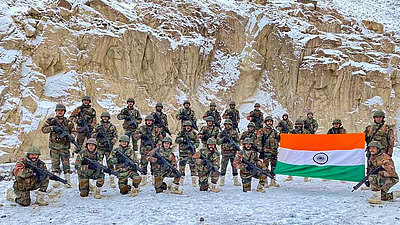
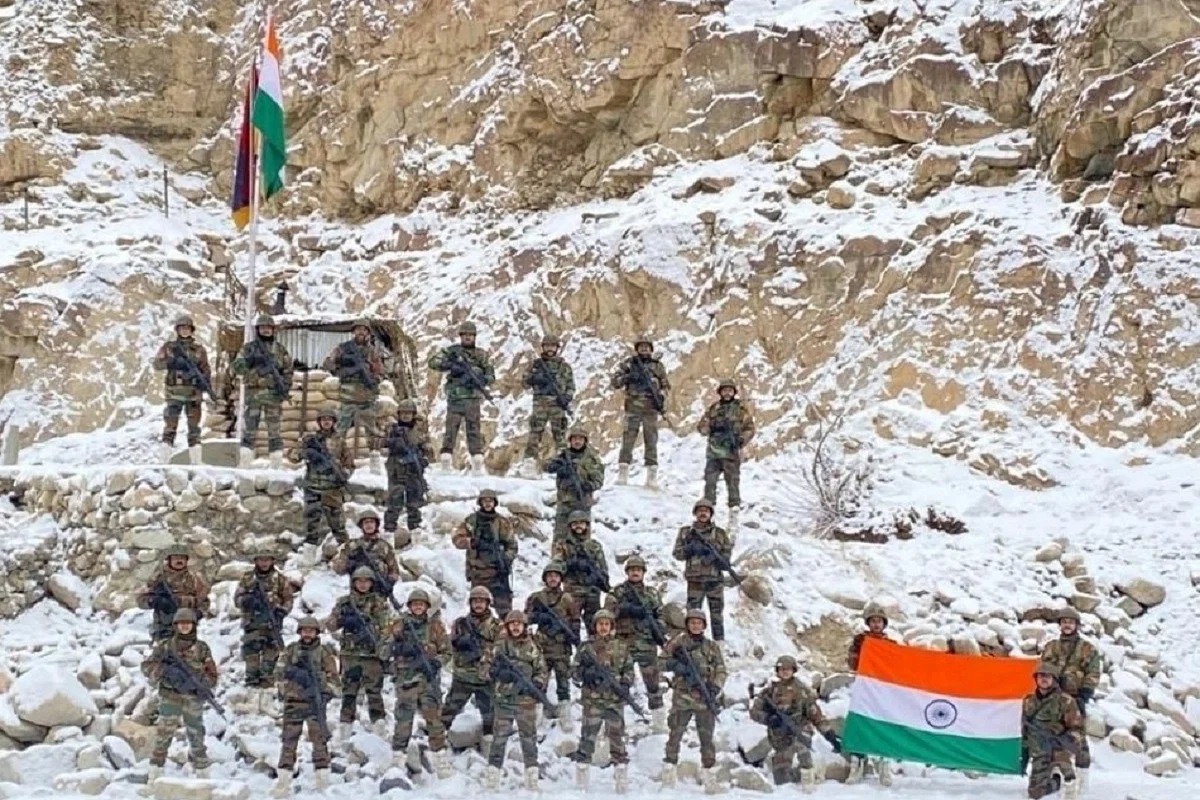
Indian Army soldiers pose for a photograph with the national flag on the occasion of New Year 2022, at the Galwan Valley in Ladakh | Image Source: Deccan Herald
On the night of June 15, 2020, in the icy heights of the Galwan Valley in eastern Ladakh, over 4,300 metres above sea level, a violent clash ended more than 45 years of no deaths along the India–China border. India and China had signed a series of border agreements in 1993, 1996, and 2005 to maintain peace along the Line of Actual Control (LAC).
The 1996 agreement reduced aggression by banning firearms and explosives within 2km of the LAC. As a result, when violence broke out, guns were not used. Instead, the confrontation turned into brutal hand-to-hand combat, with stones, bare fists, and medieval-looking clubs spiked with nails and wrapped in barbed wire.
At over 14,000 feet, where oxygen levels are low and temperatures drop below zero, the Galwan Valley is among the most treacherous terrains in the world, with steep, jagged slopes of nearly 50% and loose rocks underfoot. In these harsh conditions, Indian soldiers fought without guns, using stones, bare hands, and sheer courage. Yet beyond the brutality of that night lies a deeper story of leadership, restraint, and sacrifice.
At the centre of it stood Colonel B. Santosh Babu of the 16 Bihar Regiment, a leader who stepped forward not to start a fight, but to prevent one, and who, even when provoked, chose dignity over aggression, standing firm for the nation when it mattered the most.
As the last light faded behind the mountains, an uneasy silence settled across Patrol Point 14, broken only by the relentless roar of the Galwan River. Then, suddenly, came the sound of heavy footsteps, distant at first but growing louder with every passing second. Havildar Dharamvir Kumar Singh strained to listen, trying to understand what was approaching through the pitch-black valley. What he heard was not the steady movement of a patrol; it was something far more alarming. “They weren’t walking… they weren’t even jogging… they were sprinting.”
There were fewer than 400 Indian soldiers on the ground, and what was coming towards them was nearly three times that number. This was no routine confrontation. This was the beginning of a full-scale assault.
As tensions escalated earlier that day, Colonel Babu, the commanding officer, had made it clear that the Chinese could not be allowed to maintain their observation post at Patrol Point 14. Leading from the front, he moved ahead with his men to dismantle the structures and push the opposing troops back. The soldiers followed him with full confidence and determination. “We decided that we would go as a battalion… Josh aur jazbe ke saath… and evict the Chinese soldiers from there. Our CO saab was leading from the front, and we said, ‘Sir, we are all with you on this mission.’”
As he came face to face with his Chinese counterpart, he spoke firmly yet “You and your men go back, and we will also go back” It was not just a statement; it was an attempt to hold on to peace at the edge of war. But the response was immediate and hostile. Chinese soldiers began pushing and jostling—dhakka-mukki—their behaviour turning aggressive within seconds. Even when he himself was pushed, Colonel Babu did not lose his composure. Raising his voice slightly but still controlled, saying, “It doesn’t work like this… I will go back, and you will also go back”.
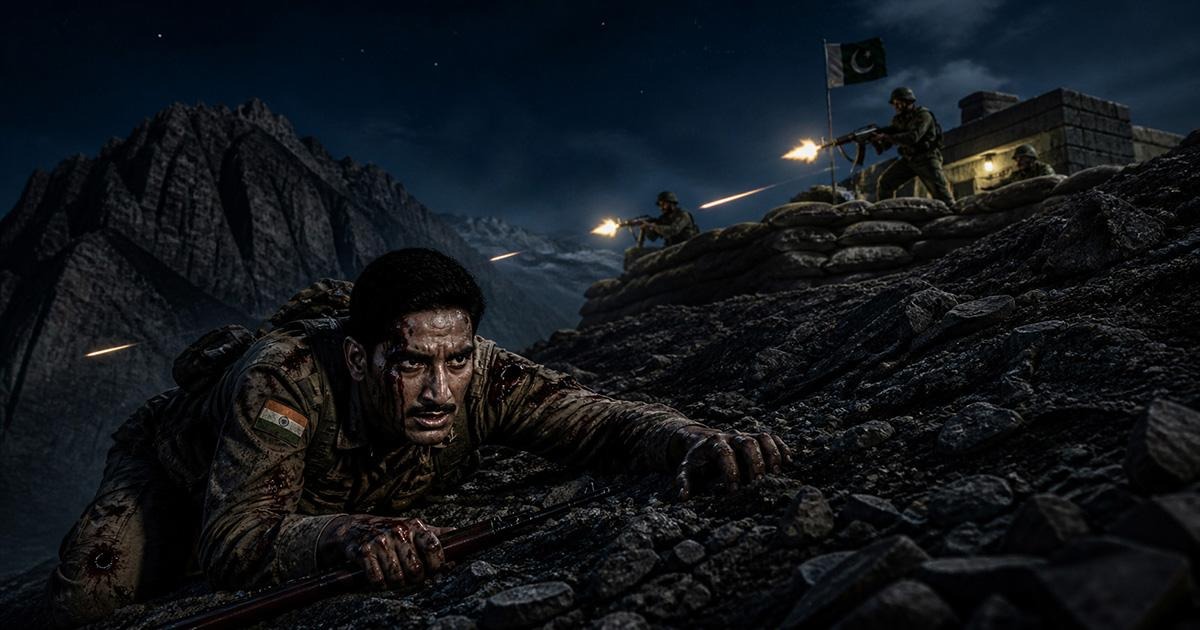
The Galwan Valley Clash | Image Source: WION
In that moment, he was not just a commanding officer; he was the last barrier between restraint and chaos. But no soldier can stand still when his leader is physically assaulted. What began as a tense exchange quickly spiralled into a violent clash of fists and stones.
Yet even amid this violence, Colonel Babu’s instincts remained rooted in responsibility. When several Chinese soldiers were left severely injured, unable to retreat, he did something extraordinary: he ordered medical aid for them. “Get the medics… these men need urgent first aid." It was a moment that revealed the depth of his character, a soldier who could fight when required, but who never lost sight of the value of human life.
As evening approached, darkness took over the valley and the temperature dropped sharply. Colonel Babu sensed that the situation was far from over. He called for reinforcements, understanding that what had happened so far was only the beginning. Soon after, in the pitch-black night, the Chinese launched their main assault. Hundreds of soldiers advanced through the darkness, their footsteps echoing across the valley.
The Indian soldiers stood their ground, but the battle quickly fragmented into smaller, desperate fights across the rocky terrain and near the freezing river. In this confusion, communication broke down. Units were separated, visibility was almost zero, and every soldier was fighting for survival. Somewhere in this unfolding chaos, Colonel Santosh Babu went missing. Attempts to contact him failed, his phone did not ring, and radio calls returned only silence.
"I am proud of my son," says martyred Colonel Santosh Babu's mother | India TV News
For his men, this was not just the loss of a commander in battle; it was the sudden absence of the person who had been guiding them through the crisis. Search teams moved through the darkness, stepping over the injured and the fallen, calling out his name, hoping to find him alive.
Hours passed in uncertainty and fear. Finally, shortly after midnight on 16 June, his body was found. He had suffered a grievous head injury, most likely caused by a heavy rock thrown from the heights during the intense fighting. He was rushed back, and doctors tried desperately to revive him, but the damage was too severe.
In that moment, the reality became undeniable. The man who had tried to prevent the conflict, who had stood firm in the face of aggression, and who had led his men from the front, had fallen in the very battle he sought to control.
By morning, as the cold light revealed the aftermath, the Galwan Valley stood silent, bearing witness to a battle that had changed the course of India-China relations, but beyond that, it left behind a deeper legacy. Colonel B. Santosh Babu stood where he was needed most at the front, ensuring that his men were never alone.
His story is not just of sacrifice, but of leadership defined by courage, restraint, and unwavering duty, qualities that will be remembered long after the echoes of that night have faded.