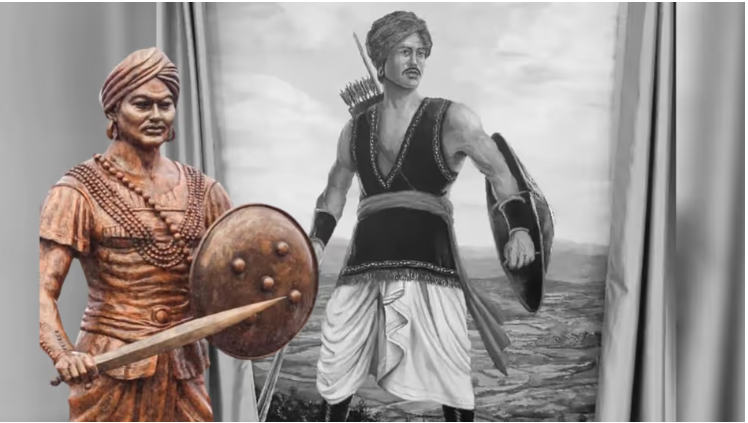
Dombari Buru Massacre: When 400 Janjaati Revolutionaries, Led by Birsa Munda Were Shot Down
These are the voices of the 400 tribal revolutionaries killed in the Dombari Buru massacre, when the oppressive British regime rained bullets on unarmed Janjaati revolutionaries.

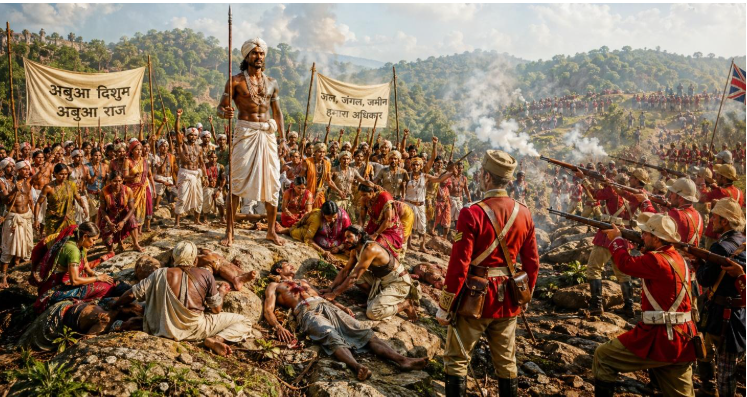
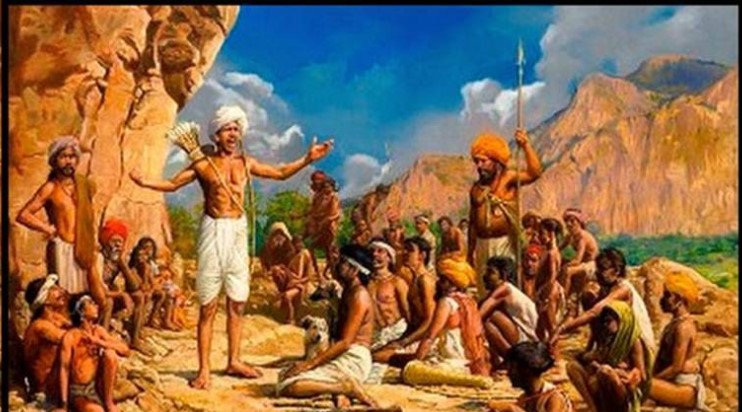
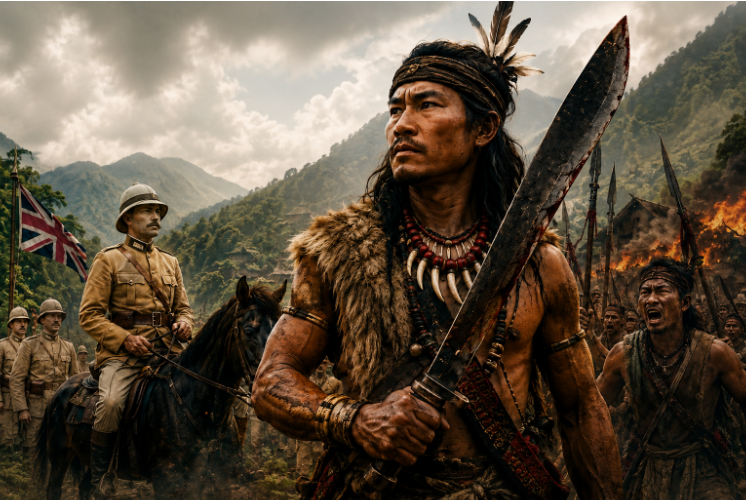
This image is AI-generated
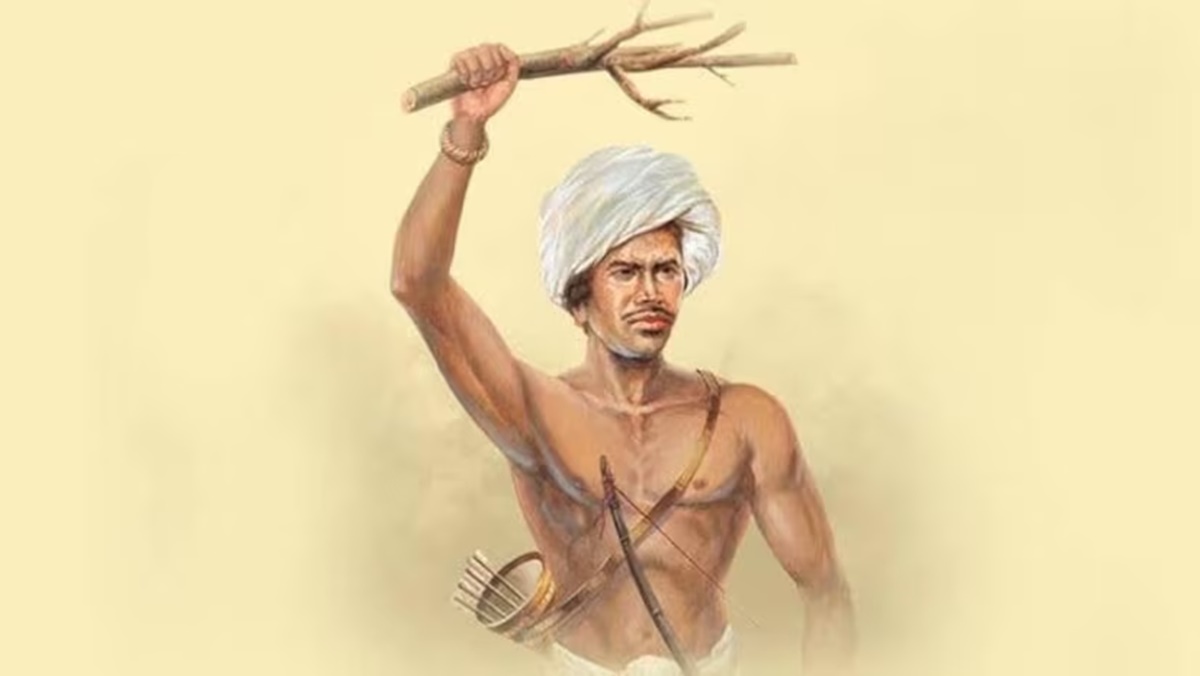
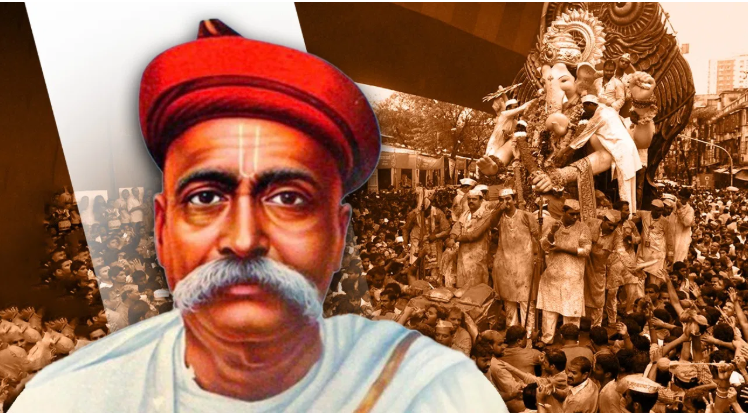
In the hills of Jharkhand, certain cries still echo, cries the world has heard but history has chosen to ignore. These are the voices of the 400 tribal revolutionaries killed in the Dombari Buru massacre, when the oppressive British regime rained bullets on unarmed Janjaati men, women, and children. This was not an ordinary incident; it was the moment an entire civilisation stood on the edge of being crushed. The heart and soul of that rebellion was Birsa Munda, whose slogan “Abua Disum, Abua Raj” (our land, our rule) had begun to boom through forests and mountains. The British found this call so dangerous that they decided to bury it forever. The hill of Dombari Buru still stands as a witness to the day when British power put on the cruelest and most brutal mask history had ever seen.
Birsa Munda and the Ulgulan (Great Rebellion)
Dombari Buru massacre | Image Source: Zee News 
These fighters were not just farmers; they were skilled with bows, arrows, spears, and shields, and they targeted the most brutal British officers. The British saw Birsa’s army as a serious threat and began plotting a systematic massacre to crush the movement in a single strike. They waited for the day when they could strike one decisive blow.
The Day of Blood: 9 January 1900
That day came on January 9, 1900, when thousands of vanvaasis held a peaceful meeting on Dombari Buru hill, led by Birsa Munda. Men, women, and children sat together, speaking quietly about their rights, their land, and their future. There was no armed aggression, only courage and conviction.
British intelligence, however, had been informed by informants. The local commissioner, A. Forbes, along with Colonel Westmorland and H.C. Straitfield, arrived on the hill with a heavy police force. They surrounded Dombari Buru on all sides. Then, without any warning, they opened indiscriminate fire. Screams, blood, and bodies littered the ground within minutes. The first few rounds of gunfire killed around 400 fighters; many more were seriously wounded. The bullets cut through entire families at once. Somehow, Birsa’s fighters managed to pull him out of the hill and carry him to Bartodih village, where he took refuge and continued to inspire the movement from concealment.
The Hidden Truth: 400 Lives Reduced to 12
Dombari Buru remains an open wound left by the British, a wound that has never healed. On that day, revolutionary leaders like Hadi Munda, Mazhiya Munda, Hopin Manjhi, and hundreds of others gave their lives. Yet Britain’s official records mention only 12 deaths, deliberately hiding the true scale of the massacre. The British did not just kill; they erased the identity and the memory of the martyrs.
But in tribal folk songs, oral traditions, and local legends, those 400 martyrs still live. Their names are carved into the songs sung by the Munda youth even today. Their sacrifice is also remembered in the brutal aftermath: many of those who escaped were hunted down and murdered with cruelty. Two of Birsa’s closest companions, Haathiram Munda and Singrai Munda, were buried alive by the British as a gruesome warning.
The Fall and Assassination of Birsa Munda
Birsa evaded capture for some time, but on 3 February 1900, the British lured him into a trap and arrested him. He was taken to Ranchi jail, where he was subjected to daily torture and humiliation. Then, on 9 June 1900, the British conspirators planned his murder inside the prison and made it look like he had died of cholera. In fact, they poisoned him, and his death was the result of a calculated assassination. Birsa Munda left this world at the age of 25, having given his life for the freedom of India.
Why Dombari Buru Matters Today?
Today, as we live in a free India, it is vital to remember that freedom did not come only from the big cities or the well‑known movements, but also from the hills and forests where massacres like Dombari Buru took place. Birsa Munda and his people remind us that history does not belong only to those whose names fill the pages of textbooks, but also to those whose blood has soaked the soil yet whose voices still echo.
The Dombari Buru massacre teaches us that the voice raised against injustice can be drowned in gunfire—but it cannot be silenced forever. The screams from that hill still ask us to remember, to honour, and to never let such cruelty be forgotten.