“Deccan Queen”: Behind the Glamour of the Train, the Hidden Story of 24,000 Indian Labourers Who Died
The beautiful railway line that the Deccan Queen so proudly travels over—particularly through the Bhore Ghats—was built on the silent sacrifice of thousands of Indian labourers.

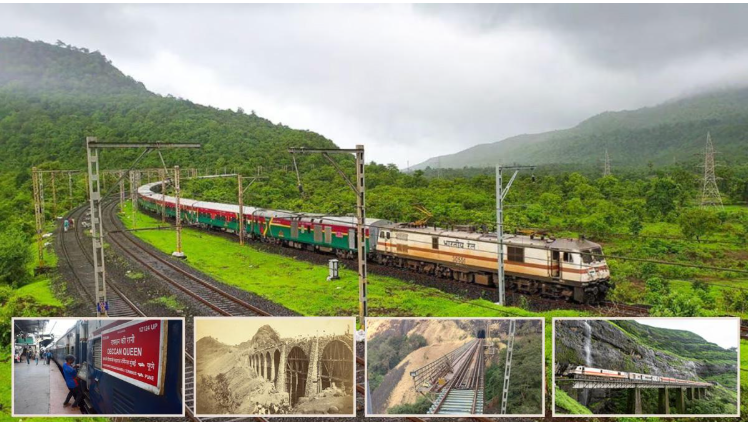
The Deccan Queen | Image Source: indianexpress.com, facebook.com, miraclemomentsin.wordpress.com, shutterstock.com
Across the Deccan plateau in Maharashtra runs a luxury train called the “Deccan Queen,” gliding through lush hills and tunnels like a royal chariot. The British introduced this train on June 1, 1930, to make the journey between Mumbai and Pune comfortable and pleasurable for their elite. But few people realize that behind the polished steel and elegant carriages of the “Dakkhan ki Rani” lies a harrowing story buried in the pages of history. The beautiful railway line that the Deccan Queen so proudly travels over—particularly through the Bhore Ghats—was built on the silent sacrifice of thousands of Indian labourers. It was their blood, not just stone and rails, that laid the foundation for the British comfort.
The Deccan Queen | Image Source: blog.indicinspirations.com
The Construction of the Bhore Ghats Line
This tragic chapter begins in 1861. By then, Bombay (now Mumbai) had become the commercial hub of British India. In 1861–62, the colonial authorities decided to lay a railway line through the steep Bhore Ghat pass, cutting through the rugged Western Ghats with the help of engineer J. W. Berkley. Around 42,000 labourers were employed in the project, and work went on until April 21, 1863, when the line was finally completed.
The British government awarded the construction work of this railway project to a harsh British contractor named William Forjoe, because he already had experience building railway lines in England. He was so cruel that he forced workers to excavate the mountains without any safety equipment. If they refused, he would abuse and torture them. When workers got injured while working, instead of arranging medical treatment, he would send them back to work immediately.
Indian workers are busy laying railway lines on difficult mountain passes | Image Sources: livehistoryindia.com
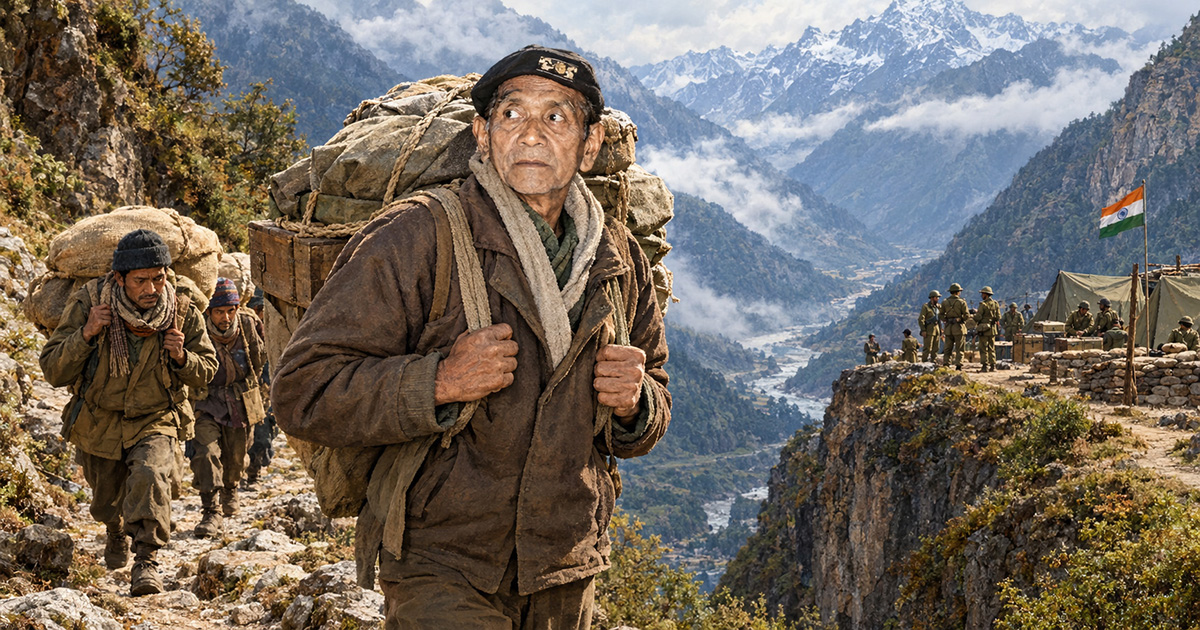
For the British, this was an economic and strategic decision. For the labourers, it was a daily brutal battle with death. The job was far more dangerous than ordinary construction work; it was like working in a battlefield. Thousands of men, women, and even children hung from ropes on the hillsides, cutting through rock without any safety harnesses or protective gear. Chisels and hammers in their bare hands, they hacked at the mountain so that the railway could pass through.
Life Amid Death in the Ghats
Every day meant blasting rock, carrying soil, and balancing on treacherous slopes. The slightest slip could cost a life. The danger was not only from falling rocks and sudden landslides, but also from the harsh conditions: a severe shortage of water, unbearable heat, and the constant fear of being crushed under a collapsing boulder. Yet the British kept pushing the Indian workers to labour day and night. At its peak, nearly 25,000 workers were always on the job, turning the steep incline into a living nightmare.
The real challenge, however, went beyond the brutal terrain. Epidemics like malaria and cholera broke out in the mid‑1850s, fed by stagnant, filthy water collecting in the foothills during the monsoon. There was no clean drinking water, no proper medical care, and no decent shelter. In that squalid environment, around 12,000 labourers died from disease alone. Over the span of eight years, the total number of Indian workers who died in accidents and illnesses reached nearly 24,000.
To the British, these deaths were just cold statistics. But each number was a broken family, a widow’s grief, a child’s orphanhood, heart-wrenching stories that never found a place in official records.
Engineering Marvel, Human Tragedy
On April 21, 1863, the Bhore Ghats railway line was inaugurated. The Indian labourers, through relentless toil, had carved 25 tunnels, 23 bridges, and 60 culverts through the mountains. The Governor of Bombay, Sir Bartle Frere, hailed the project as an engineering miracle. The British authorities called this the beginning of the “railway age” in British India and celebrated with pomp and ceremony. Not a single word was spoken about the army of Indian labourers who had given their lives to make this triumph possible.
The workers’ suffering did not end with the project’s completion. In many cases, the British simply withheld wages for months, and when pay did arrive, it was often half of what was promised. In 1859, when conditions became unbearable, the labourers revolted—only to be crushed with ruthless force by the colonial government.
The Deccan Queen: Comfort on a blood‑stained track
Decades later, the same railway line that had soaked in the sweat and blood of thousands of Indian workers became a symbol of British comfort and luxury. On 1 June 1930, the “Deccan Queen” began running along this route, carrying rich British patrons from Mumbai to Pune so they could enjoy the beauty of the hills, horse‑racing, and the cool air of the Deccan.
The train was designed for ease and elegance - soft seats, dining cars, and refined service while the labourers who had cleared the path for it remained invisible in both memory and history. The British never seemed to notice the suffering behind the scenery they admired from the train’s windows.
Today, when modern travellers move along the same route, they see green hills, deep tunnels, and elegant bridges, often marveling at the engineering skill. What they usually do not see is the invisible weight of sacrifice beneath their feet. This path was not built only with stone and iron, but with the lives of thousands of forgotten Indian workers.
History may have erased their names, but their struggle and sacrifice are etched into every rock and every curve of the Bhore Ghats. The story of the Deccan Queen reminds us that the comfort we now take for granted was purchased at an extraordinary human price: someone once put their entire life on the line so that the train could pass safely through the hills.