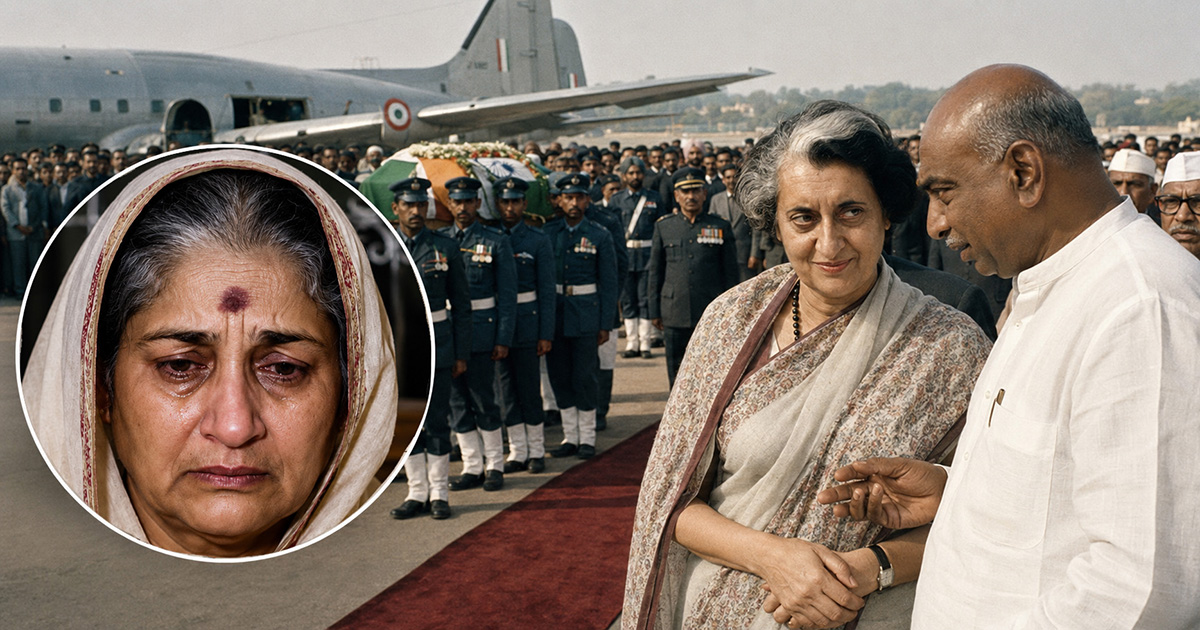
Those 10 Seconds at Rashtrapati Bhavan That Echoed for Years: When Air Chief Marshal Tipnis Refused to Salute General Musharraf
15 July 2001. Rashtrapati Bhavan, New Delhi. The red carpet had been rolled out to welcome Pakistan's President and military ruler, General Pervez Musharraf.

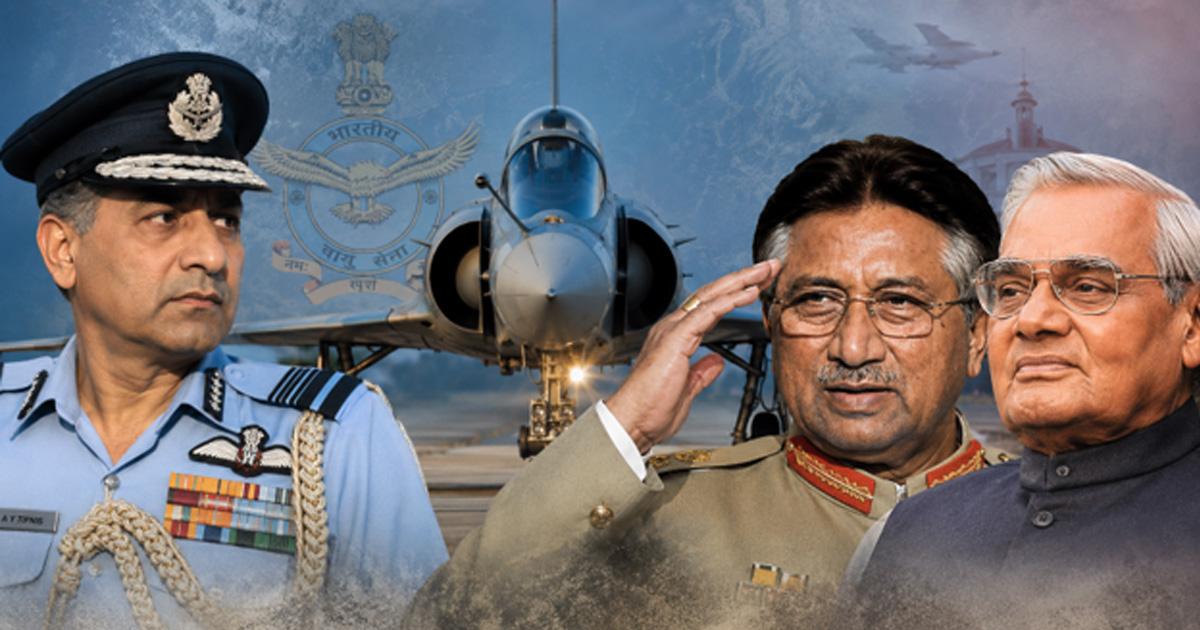
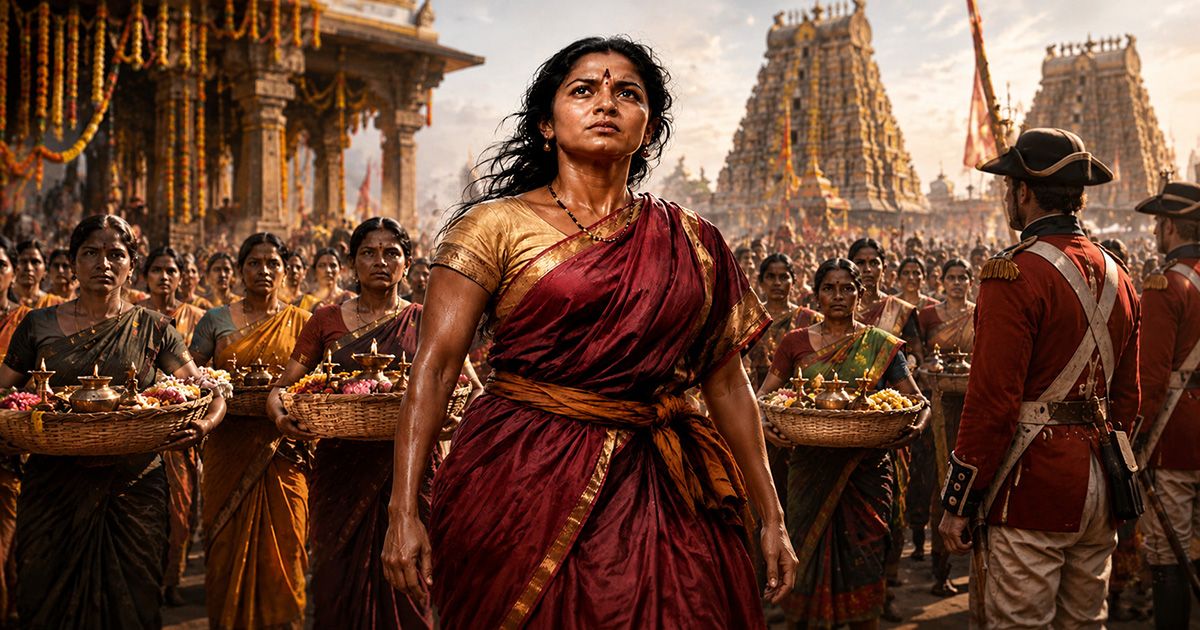
Air Chief Marshal Anil Yashwant Tipni Refused to Salute General Pervez Musharraf | This image is AI-generated
15 July 2001. Rashtrapati Bhavan, New Delhi. The red carpet had been rolled out to welcome Pakistan's President and military ruler, General Pervez Musharraf. It was the second day of the Agra Summit (14–16 July 2001), and cameras were focused on every movement. The chiefs of the Indian Army, Navy, and Air Force stood in the reception line. At the front was Air Chief Marshal Anil Yashwant Tipnis, the 18th Chief of the Indian Air Force, who led the Air Force from 31 December 1998 to 31 December 2001 and commanded Operation Safed Sagar during the 1999 Kargil War.
A few moments later, General Musharraf approached him. The two men shook hands. But those present immediately noticed one thing— Air Chief Marshal Tipnis did not offer a military salute to Musharraf. At a formal ceremony in Rashtrapati Bhavan, this was no ordinary gesture. Whispers began among military officers, diplomats, and journalists. The next day's newspapers carried photographs of the moment, but everyone was asking the same question: Was this merely protocol, or was there an older story behind it?
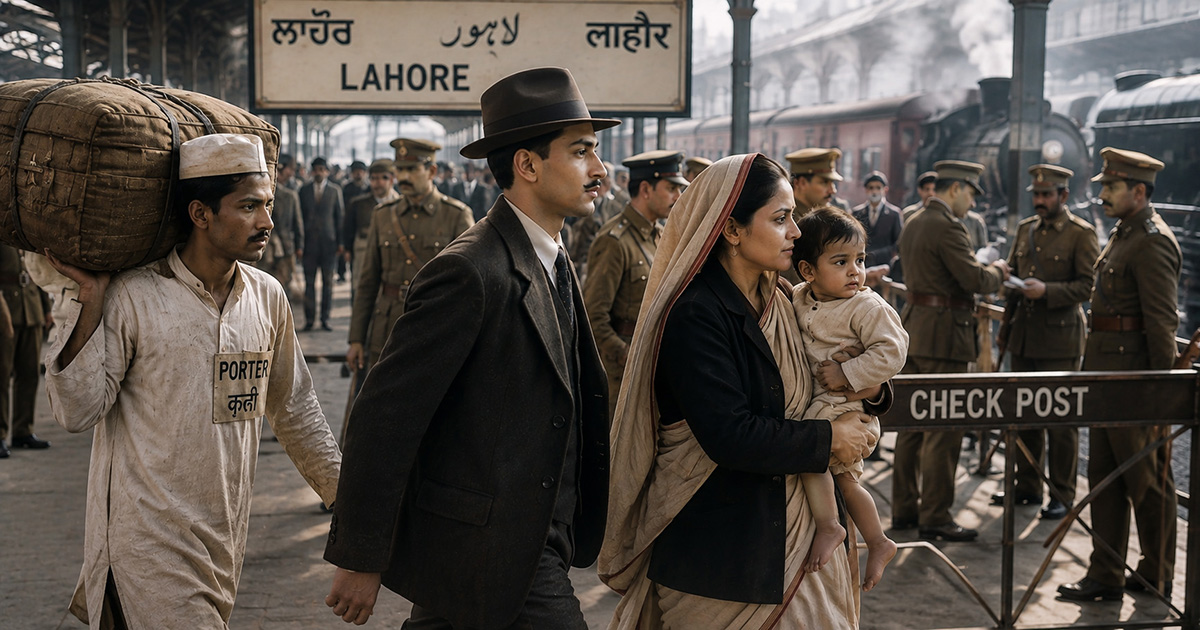
To find the answer, one only has to go back two years. On 20 February 1999, Indian Prime Minister Atal Bihari Vajpayee arrived in Lahore aboard the Sada-e-Sarhad Bus. The visit was regarded as the most significant effort to restore trust between India and Pakistan. At the Wagah Border, Pakistani Prime Minister Nawaz Sharif welcomed Vajpayee. However, Pakistan's Army Chief, General Pervez Musharraf, was absent. Not only he, but the chiefs of all three Pakistani armed forces also stayed away from the welcome ceremony. At the time, there was widespread discussion in Pakistan that the country's military leadership was uncomfortable with the peace process that had begun with India.
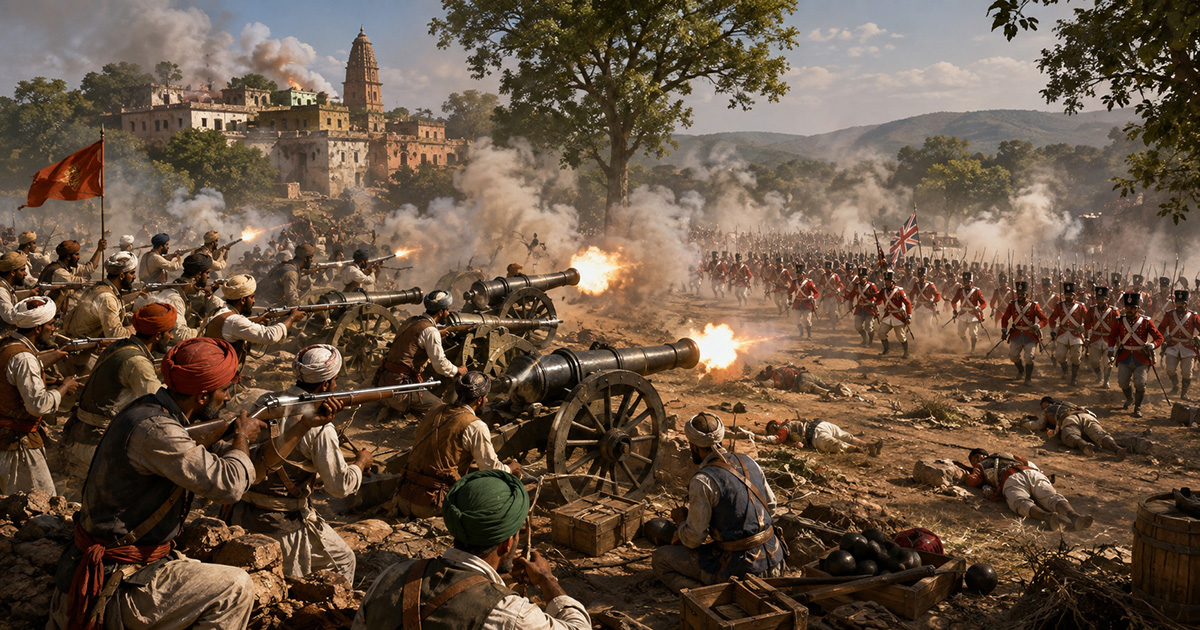
Despite this, on 21 February 1999, the Lahore Declaration was signed. Both countries spoke of peace, mutual trust, and dialogue. But that trust did not last long. In May 1999, Pakistani intrusions on the heights of Kargil came to light. The Indian Army launched Operation Vijay, while the Indian Air Force began Operation Safed Sagar on 26 May 1999. The entire air campaign was led by Air Chief Marshal A.Y. Tipnis. Under his command, the Indian Air Force carried out precise air operations at such high altitudes for the first time. On 26 July 1999, India declared victory in the Kargil War.
India's security establishment believed that General Pervez Musharraf was the principal architect of the entire operation. That is why, when the two men came face to face at Rashtrapati Bhavan on 15 July 2001, it was not merely a meeting between two military officers. On one side stood Air Chief Marshal Tipnis, who had led the Indian Air Force during the Kargil War. On the other stood General Pervez Musharraf, who faced accusations of being the chief planner of that very conflict.
During this meeting, Air Chief Marshal A.Y. Tipnis did shake hands with Pervez Musharraf, but he did not offer a military salute. The moment immediately became a subject of widespread discussion. Several newspapers and analysts viewed it in the context of Prime Minister Atal Bihari Vajpayee's Lahore visit in 1999 and the subsequent Kargil War. It was widely remarked that the general who had withheld full military courtesy while receiving the Indian Prime Minister in Pakistan was himself not accorded the same formal military honour by the Chief of the Indian Air Force.
Meanwhile, the combined 150-member Guard of Honour was led by Wing Commander Pawan Rishi, who stood nearly six feet tall. At the time, sections of the media speculated that he had been chosen so that Musharraf would have to look upward at the parade commander while taking the salute. However, this was never officially confirmed. Likewise, the Air Chief Marshal never publicly stated that his actions were intended as retaliation for any previous incident.
The entire episode at Rashtrapati Bhavan lasted only a few seconds. There was no official statement and no public controversy. Yet, history is not always written through long speeches; sometimes, it is written through a small military gesture.
Years later, in an interview, Air Chief Marshal Tipnis stated that, for him, the memory of the Indian soldiers who had laid down their lives in the Kargil War was paramount, and that Pervez Musharraf was the man India regarded as the principal architect of the Kargil intrusion. For this reason, that brief moment at Rashtrapati Bhavan continues to be remembered as one of the most discussed symbolic episodes in the military history of India and Pakistan.
The entire incident at Rashtrapati Bhavan was over within seconds. There was neither an official statement nor any controversy. Yet, history is sometimes written not through lengthy speeches, but through a simple military gesture. It was a moment that brought together diplomacy, military honour, and the memories of Kargil in a single enduring image.