The Untold Story of Quit India Movement: When a 17-Year-Old Girl Smiled in the Face of Death to Uphold the Honour of the Tricolour
Kanaklata Barua was chosen for this historic responsibility. At that time, she was only 17 years old.

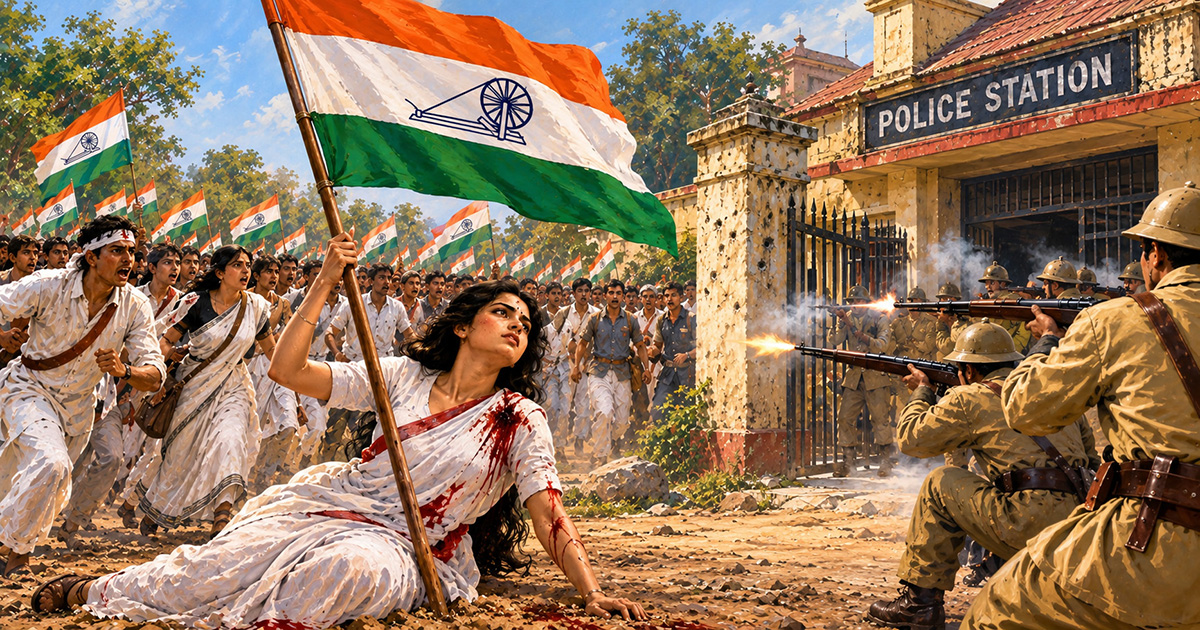
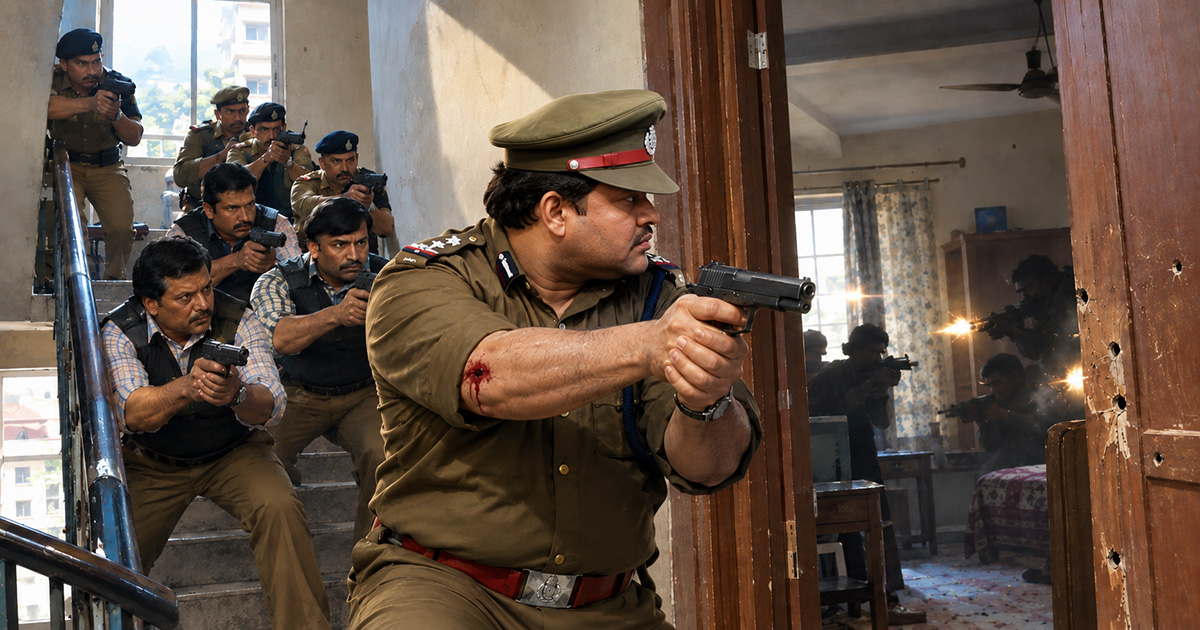
Kanaklata Barua safeguards the honor of the Tricolor | This image is AI-generated
Can anyone knowingly walk forward when they are aware that their very next step could be their last? Yet, the history of India's freedom struggle is filled with countless such examples. On 20 September 1942, history witnessed one such extraordinary scene at Gohpur in Assam. In 1942, the Quit India Movement was at its peak. Thousands of young men and women in Assam had also joined the movement. It was decided that, to openly challenge British rule, the Indian Tricolour would be hoisted at the Gohpur Police Station. This was not merely a flag-hoisting ceremony; it was a message to the British that Indians would no longer accept their rule.
Kanaklata Barua was chosen for this historic responsibility. At that time, she was only 17 years old. However, considering her courage and unwavering determination, she was entrusted with leading the mission. Kanaklata accepted the responsibility without the slightest hesitation and, carrying the Tricolour in her hands, set out to create history.
On the morning of 20 September 1942, under Kanaklata Barua's leadership, a massive procession of nearly 5,000 unarmed young men and women marched towards the Gohpur Police Station. They carried no weapons—only the Indian Tricolour and an unshakable faith in freedom. Raising slogans of "British, Quit India" and "Vande Mataram," the young procession continued towards the police station.
As the procession drew closer, the British officers stationed there became increasingly nervous. In an attempt to stop them, a British police officer warned that if anyone took even a single step forward, they would open fire. Such a warning could have frightened any ordinary person. The chests of the unarmed young revolutionaries stood directly before the barrels of British guns. Yet Kanaklata did not stop. She looked towards her companions and tightened her grip on the Tricolour. For her, there was now only one goal—to hoist the Indian flag at the police station and warn the British rulers to leave India.
Even after the British threatened to open fire, Kanaklata continued to move forward. There was neither fear on her face nor any concern for death. It was as though she had resolved that, no matter what happened, the Tricolour would be hoisted at the police station. When the British police officer realised that Kanaklata would not stop under any circumstances, he ordered his men to fire.
The very first bullet struck Kanaklata Barua, leaving her critically wounded. Blood streamed from her body. Yet, holding the Tricolour firmly in her hands, she continued to move towards the police station. Witnessing this, the British policemen opened indiscriminate fire. Kanaklata's body was riddled with bullets. She eventually collapsed unconscious onto the ground, but until her very last breath, she did not allow the Tricolour in her hands to fall.
This was not merely the sacrifice of a 17-year-old heroine. It was a symbol of an indomitable resolve—a determination to keep the Tricolour flying high at any cost. The incident outside the Gohpur Police Station shook not only Assam but the entire nation.
This 17-year-old girl had demonstrated that in the struggle for freedom, it was not age that mattered, but courage. Kanaklata Barua's sacrifice became a source of inspiration for thousands of young Indians. News of her martyrdom spread from village to village. People respectfully began calling her "Birbala" (the Brave Girl).
Her death, however, only made the flame of freedom burn even brighter in the hearts of thousands and lakhs of Indians. She became an enduring symbol of youthful courage and patriotism. The very Tricolour for whose honour she laid down her life became, just a few years later, the flag of an independent India.
Even today, whenever the Gohpur Police Station or Kanaklata Barua is remembered, the first image that comes to mind is that of the fearless young girl who continued marching forward with the Tricolour even in the face of bullets.
Her sacrifice reminds us that India's freedom was not won merely through the speeches of leaders, but through the blood of countless brave men and women who selflessly dedicated everything they had to the nation.
Kanaklata Barua's martyrdom stands as a timeless reminder that honouring the Indian Tricolour is not merely about respecting a national flag—it is also about honouring the countless sacrifices of those who laid down their lives so that it could one day fly proudly over a free India.