The Blow of Famine and the Threat of Conversion: When Lala Lajpat Rai Saved Hundreds of Hindu Orphans
At the beginning of 1897, news of famine-stricken Hindu families and helpless children was continuously reaching Lala Lajpat Rai, who was associated with the Arya Samaj.

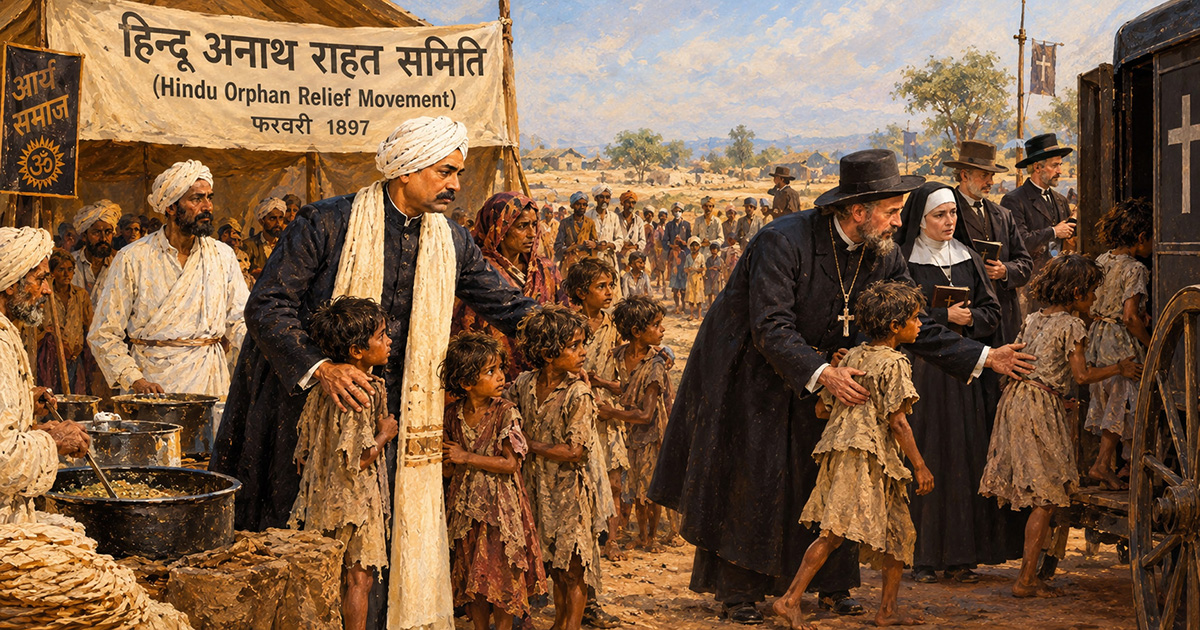
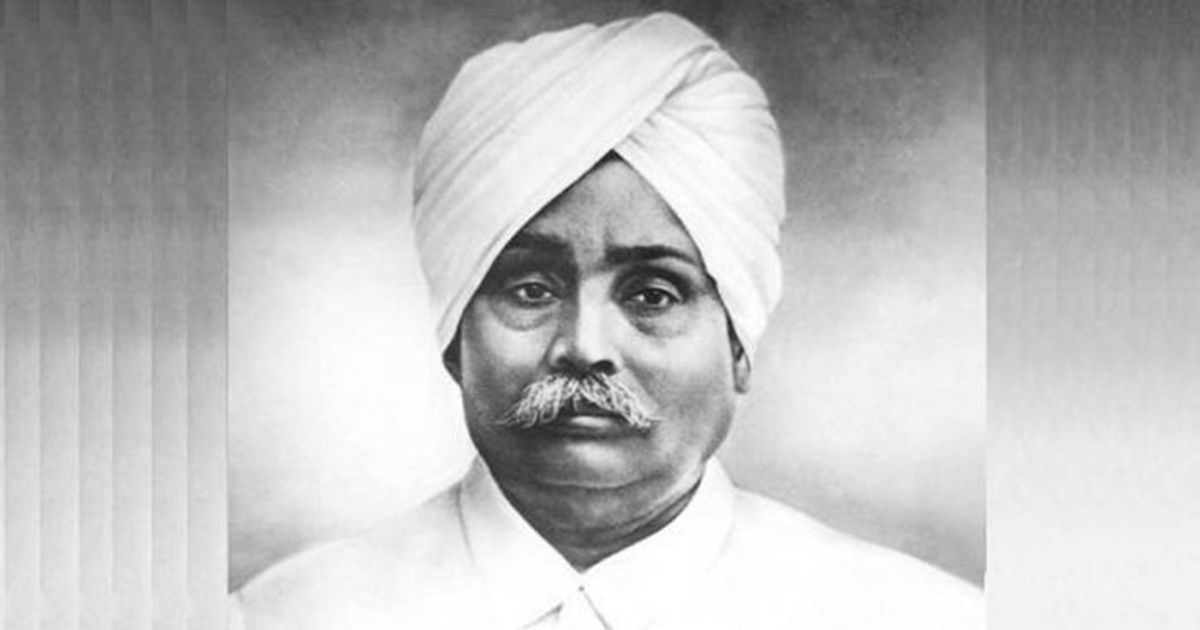
Lala Lajpat Rai during the 1897 famine | This image is AI-generated
At the beginning of 1897, it seemed as though the land of Central India and the surrounding areas had turned its back on the people. The rains failed, crops did not grow in the fields, and the hearths in villages began to go cold. This famine of 1896–97 began in Bundelkhand in early 1896 and affected several parts of India, including the United Provinces, Central Provinces and Berar, parts of Bihar, Bombay and Madras Presidencies, and Hisar district of Punjab. The famine also affected the princely states of Rajputana (northern and eastern), parts of Central India, and Hyderabad.
Among those worst affected by the famine were children whose parents had died because of hunger and disease. During those days, news of famine-stricken Hindu families and helpless children was continuously reaching Lala Lajpat Rai, who was associated with the Arya Samaj. The question before him was not merely about providing food to people struggling with hunger. He was seeing that Christian missionary institutions had begun the practice of conversion in the name of providing shelter to children who had no one left to support them. This was what worried Lala Lajpat Rai the most. In such circumstances, to provide shelter to orphaned Hindu children and protect their religious and cultural identity, he established an organisation called the Hindu Orphan Relief Movement in February 1897 and joined the relief efforts along with the Arya Samaj.
But relief work was easy on paper, not on the ground. Volunteers would set out towards famine-stricken areas, searching in villages and towns for children whose parents had fallen victim to famine and disease. They faced a shortage of food, the fear of illness, and no certainty about the future. Finding such children, identifying them, and then taking them to a safe place was a risky undertaking. Lala Lajpat Rai and workers associated with the Arya Samaj decided that Hindu society would have to make its own arrangements for its orphaned children. Providing assistance to the children, sheltering them, and ensuring that they did not have to depend on another religious institution under such circumstances was the immediate concern at that time.
Within a short time, the impact of this campaign was visible. Relief workers rescued around 250 Hindu children and brought them to Punjab. Arrangements had to be made for their accommodation and upbringing. The orphanage already existing in Faridpur/Firozpur did not have sufficient capacity, so new orphanages were established. Students of the Dayanand Anglo-Vedic College also joined this effort along with workers of the Arya Samaj. Some raised funds, some arranged food, while others brought children from distant areas. This work was not being carried out through files in a government office. It depended on the feet of volunteers, the cooperation of local people, and assistance collected from society. Children who, only a few days earlier, did not even know where their next meal would come from, were now reaching a place where arrangements were being made for their accommodation, food, and future care.
For Lajpat Rai, this campaign was not merely one-time relief. The famine also showed him that, when a crisis struck, society needed to have its own institutional resources. At meetings of volunteers, discussions were held about the number of children, arrangements for their food and accommodation, and the need to establish new shelters. Grain came from one place, clothes from another, and financial assistance from elsewhere. Gradually, it became clear that there was a need for permanent orphanages beyond relief camps. Taking a child out of a famine was not enough; to give that child a life, education, food, shelter, and discipline were also necessary. This thinking was giving a new shape to the social work of the Arya Samaj. Lala Lajpat Rai viewed this entire process not merely as an act of charity, but as an effort to make society stand on its own feet.
The story did not end here. Then came 1899. Once again, famine shook large parts of India. This famine was particularly severe in the Central Provinces and Berar, Bombay Presidency, the small province of Ajmer-Merwara, and Hisar district of Punjab.
Lala Lajpat Rai and the Arya Samaj had the experience of two years earlier before them. The old volunteers knew that merely finding children would not be enough; safe shelter for them would have to be arranged in advance. The relief campaign once again intensified. This time, the number was also much larger. During this period, efforts were made to rescue around 2,000 orphaned children and arrange for their care. The campaign was no longer merely the effort of a few volunteers. People from different sections of society began joining it. The idea that had begun two years earlier as a small campaign to rescue around 250 children had now transformed into a major social effort.
The most moving aspect of this story was that of the children who emerged from the famine and reached the doors of orphanages. Some had lost their parents to illness, some to hunger, and some along the way. They had neither property nor family nor any certainty about the future. But now there was a room in front of them, a plate of food, and people who had made arrangements for them by considering them their own. For Lala Lajpat Rai, this was the real test of the campaign. The fear of conversion certainly gave momentum to the movement, but on the ground, its meaning was to save those children who had no other way of surviving. The idea of establishing their own orphanages within Hindu society became stronger through this experience. If society wanted to protect its children, it would have to come forward itself in times of crisis.
The famine gradually ended, but the events of 1897 did not leave Lala Lajpat Rai and the Arya Samaj. The campaign that began by rescuing around 250 children reached thousands of helpless children during the next famine. In history, Lala Lajpat Rai is often remembered as a fiery nationalist and a leader who opposed British rule, but this picture of his life was somewhat different. There was no massive political platform here, no slogan, and no large gathering. There were only children broken by famine, volunteers searching for them, and a leader who realised that protecting society could not be done through speeches alone, but by standing among one’s own people in times of crisis.