Battle of Khanwa: When Babur Won by Poisoning Defeated Mughal Soldiers from Rana Sanga with Religious Zeal

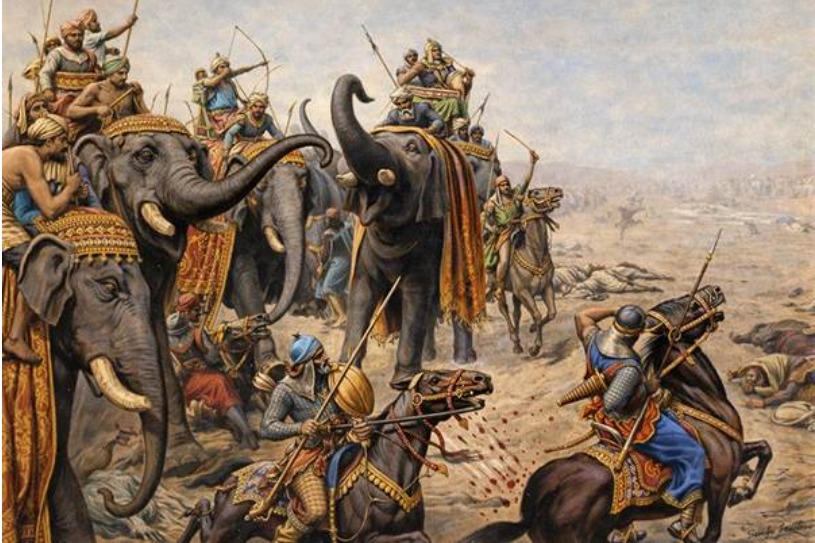
Battle of Khanwa
"History is written by the victors," meaning history is recorded by those who win. Until recently, Babur's story, the founder of Mughal rule in India, followed this principle, glorifying him. But the truth is now emerging. Babur was barbaric, steeped in Hindu hatred; rather than valor, he cloaked wars in religious fervor, using Islam as his shield. Modern history reflects these facts, shattering long-forged myths.
Khanwa Battle Realities
Examining the factors in Babur's victory over Maharana Sangram Singh (Rana Sanga) at Khanwa reveals a history starkly opposing Babur's mythologized image.
Prelude: Bayana Defeat
The Battle of Khanwa occurred on March 16, 1527, with Babur's victory - a tale most have read or heard. But exactly 24 days earlier came another battle: Bayana on February 21, 1527, where Rana Sanga's valiant soldiers crushed Babur's army.
Bayana was so ferocious that the terror of Rajput soldiers gripped the Mughal ranks. After winning the Battle of Panipat and seizing Delhi and Agra, Babur's men, rather than fight and die on the land of these despised infidels, begged to return to Kabul.
Baburnama Revelations

Babur in deep thinking | Image Source: Wikimedia Commons
Historian William Erskine translated Babur's autobiography into English: A History of India Under the Two First Sovereigns of the House of Taimur, Baber and Humayun. Babur's own account (pages 444–474) of Bayana - how he boosted morale using Quran and Islam - is worth reading: "Mughal soldiers until now faced Indian troops or Afghan foes (like Ibrahim Lodi's army at Panipat), but Rana Sanga's Rajputs surpass them all in bravery, strength, dedication to war, and national zeal. They have a leader (Rana Sanga) for whom they fear no enemy warrior, ever ready to sacrifice for honor. Mughals attacked repeatedly at Bayana, but Rajputs annihilated them each time. Rajput valor stunned Mughals. Even in victory, Rajputs followed war ethics. Amid repeated defeats, Mughal terror spread; common soldiers to commanders spoke of abandoning the infidel land Hindustan for Kabul. These murmurs reached Babur."
Babur's Desperation
Babur, expelled from Samarkand (modern Uzbekistan), driven out, wouldn't dream of returning empty-handed. He resolved to rule Hindustan, infusing it with religion - a decisive pivot.
Religious Rallying Cry
To revive demoralized Mughals, Babur invoked Islam, fanaticism, the Quran—every emotional lever. He framed the war not for power or wealth, but against idol-worshipping infidels. Post-Bayana (February 21, 1527), over 24 days before Khanwa (March 16), Babur addressed all—from generals to foot soldiers—centering Islam, jihad against non-Muslims.
Erskine details this in his book. Key utterances to rekindle the Mughal spirit:
- "This war against Hindus is not for power or wealth—it's jihad, for Islam."
- "Allah is greatest. Better to die a martyr in His name than live in disgrace."
- "Swear by Allah: no one, for a moment, thinks of turning from this fight against infidels. Master or servant, high or low—all hold the holy Quran and vow."
- "From today, no tax (tamgha) on any Muslim—issue the decree."
- "Drinking wine is haram in Islam. I renounce alcohol. Smash gold-silver vessels I used for it; distribute to the poor."
- "Pour all camp liquor onto the ground."
- "From today, no scissors or razor on my beard—let it grow."
- "Any Rajput met before battle: don't just kill—sever head, impale on spear, or hang from horse's neck by leather rope."
- "Raze villages-towns of any aiding Rajputs. Captivate all."
Tactical Preparations
Babur was a skilled commander. At Panipat, he defeated Ibrahim Lodi's 8-times-larger army using gunpowder, revolutionizing warfare. Post-Bayana, he wasn't idle—he fortified positions, dug deep trenches for cover, positioned cannons and muskets. Rana Sanga arrayed elite cavalry, swordsmen, and war elephants. At Khanwa plains (now Bharatpur, Rajasthan), armies clashed.
Battle Dynamics
Rana Sanga advanced in traditional frontal style; Babur used Tulughma tactics: Dividing forces left-center-right, hiding artillery behind carts, encircling with gunners for sudden strikes. Countless Rajputs fell; on March 16, 1527, technology triumphed over valor.

Battle of Khanwa
Battle of Khanwa | Image Source: Rajras
Post-Victory Atrocities
Babur didn't stop at victory. Despite praising Rajput ethics in Baburnama, he flouted them: Severed heads from "idolater Hindu Rajput infidels," built towers of skulls. Enslaved women and children from conquered lands. Message: defy Mughals, face skull towers, families enslaved.
Babur's True Legacy
After Panipat, Babur seized Delhi-Agra. But Khanwa earned him Ghazi status—a Muslim warrior of jihad. Victory over Rana Sanga, Rajputs, and Hindus outweighed Lodi's defeat. Without religious poison, India's history might differ.

.png)