Potti Sreeramulu’s Fast-Unto-Death: How It Became a Compass for the Formation of Linguistic States?

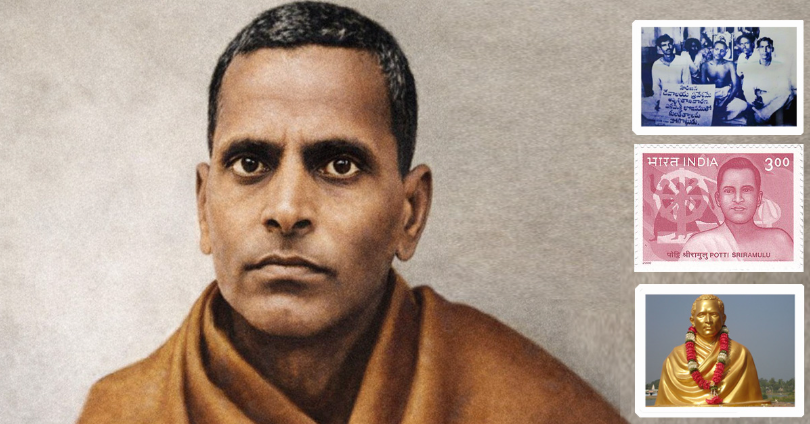
October 19, 1952, marked a historic milestone at Bulusu Sambamurti's residence in Mylapore, Madras, when Potti Sreeramulu began his fast-unto-death for a separate state for Telugu-speaking people. Sreeramulu’s demand was unequivocal and no one had then anticipated that it would fundamentally alter India's political landscape. Even the leadership of the time failed to foresee that this Satyagraha would trigger a massive political upheaval in modern Indian history. On the occasion of Potti Sreeramulu’s birth anniversary on March 16, this article explores how one sacrifice redrew the national map and exposed the flaws in the administration's approach.
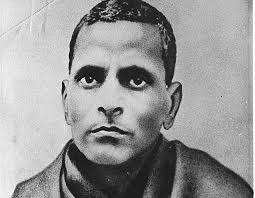
Potti Sreeramullu | Image Source: Drishti IAS
The Clear Demand and Local Conflict
He commenced his fast with the steadfast goal of achieving an Andhra State that included Madras. However, C. Rajagopalachari (Rajaji), the then Chief Minister of Madras, vehemently opposed this. Rajaji’s rigid stance that "Telugus have no right over Madras city" was more than an administrative decision; it was a direct challenge to the self-respect of millions of Telugus. Since Telugus played a significant role in the development of Madras, the demand for the state was already deep-rooted. Rajaji’s remarks transformed Sreeramulu’s fast into a full-scale struggle for identity.
The Center’s Indifference and 'Testing the Waters'
As the fast progressed, the central government, led by Prime Minister Nehru, failed to grasp the gravity of the situation. Even as Sreeramulu’s life reached a critical stage after 50 days of fasting, the leadership in Delhi remained unmoved. On December 9, Nehru’s letter to Rajaji suggested they should "test the waters" (observe the situation), effectively portraying the fast as a mere regional issue. Although the matter was raised in Parliament, the government adhered to a policy of "not yielding to pressure."
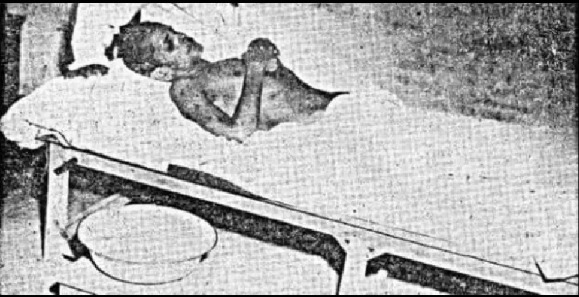
Potti Sreeramulu during the final days of his hunger strike | Image Source: KV Ramakrishna Rao
The Ultimate Sacrifice and the Aftermath
After 58 days of a relentless battle for righteousness without food, the great soul breathed his last on December 15, 1952. This martyrdom for a community's identity sent shockwaves through the national capital. The movement, which had been peaceful until then, suddenly turned violent following his death. As the entire Andhra region turned into a cauldron of unrest, the central government was forced to reconsider its previous stance.
The Sudden Shift in Governance
Recognizing the severity of the unrest, the central government made an official announcement in Parliament on December 19, 1952—just three days after Sreeramulu’s death. Prime Minister Nehru declared the commencement of the process for the formation of the Andhra State. The government, which had adopted a "wait and watch" approach during the fast, had to expedite its decision due to public outrage. This historic turning point occurred only after the loss of a great life.
Criticism in Parliament and the 'Nero' Analogy
The conduct of the administration during Sreeramulu’s final days drew sharp criticism from the then-opposition leader, Syama Prasad Mukherjee. He recalled Nehru’s own criticism of the British as "cruel" when Jatin Das died after a 63-day fast in 1929, arguing that the government had acted even more harshly in Sreeramulu's case. Mukherjee’s powerful words—"While Rome was burning, Nero was playing the fiddle; while Sreeramulu was dying, the Nehru government remained silent"—stood as a stern indictment of the system's failure.
The Birth of Linguistic States and Legacy
As a result of Sreeramulu’s sacrifice, the Andhra State was formed on October 1, 1953, with Kurnool as its capital, separating Telugu-speaking regions from Madras. It became India’s first linguistic state. This event triggered nationwide demands for states based on language. To provide a permanent solution, the central government established the States Reorganisation Commission (SRC) on December 22, 1953. Based on the recommendations of the commission (headed by Fazal Ali, with K.M. Panikkar and H.N. Kunzru as members), the States Reorganisation Act was passed on August 31, 1956, and came into effect on November 1. This led to the creation of 14 states and 6 union territories. The sacrifice of Amarajeevi Potti Sreeramulu remains the foundation for the map of India we see today, providing a historical and linguistic meaning to the Indian federal system.
.png)