The Immortal Flame of Jauhar in Chittorgarh: Pride That Outweighed the Cruelty of Muslim Invaders

Jauhar, a word that, upon hearing it, instantly evokes glimpses of sacrifice, renunciation, and unyielding pride. The Chittorgarh Fort in Rajasthan’s Chittorgarh has borne witness to three such Jauhars. In these, more than 36,000 women entered the fire alive to escape the cruelty of Muslim invaders. Even today, this fortress, a symbol of pride and valor, hosts the annual Jauhar Mela.
Held on the Ekadashi tithi of the dark half of Chaitra month, the Jauhar Mela has been organized continuously since 1948. It features numerous programs showcasing Rajasthani bravery and heroism. Yet, certain questions persistently compel us to reflect: What were the circumstances that drove women to Jauhar? The primary reason behind it was the cruelty of Muslim invaders. When Muslim aggressors won battles, they didn’t just seize kingdoms or plunder wealth. They crossed all limits of brutality with the women and children of Hindu warriors, not even sparing their lifeless bodies. This article is written about such cruel historical events.

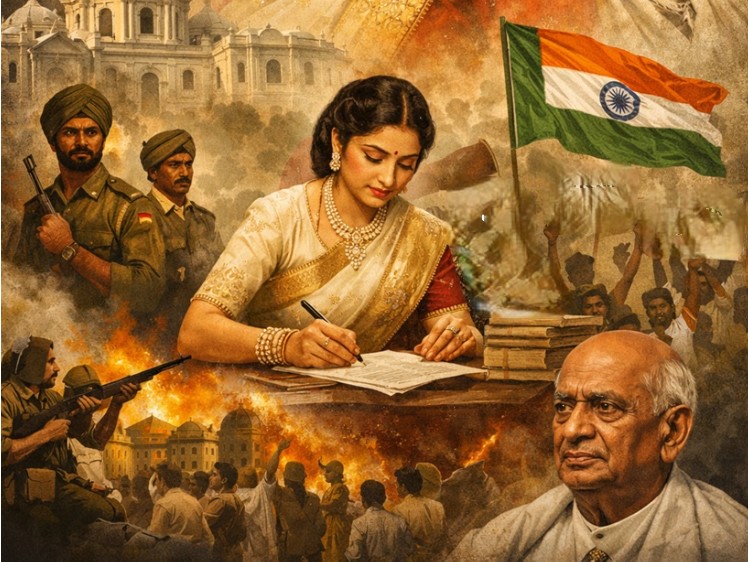
Women leaping into the fire to protect their honor | Image source: Amar Ujala
Why Jauhar, after all? Its most horrifying answer lies hidden in the story of Rani Kamala Devi and her daughter Deval Devi. In 1299, after the defeat of Gujarat’s Vaghela king Karan, Alauddin Khilji abducted his queen, Kamala Devi, and forcibly included her in his harem. Meanwhile, her daughter Deval Devi was forcibly converted to Islam and married off to Khilji’s son Khizr Khan. Later, Khizr’s two brothers, Shadi B and Qutbuddin, took turns holding Deval captive and marrying her. Not stopping there, Muslim invaders would capture the wives and daughters of slain Hindu warriors in battle, rape them, and sell them as slaves for profit. Even when women took their own lives to safeguard their honor, the barbarians did not spare their corpses; Muslim soldiers raped the dead bodies, too. To escape such a fate, the heroic women of Chittor chose Jauhar, ensuring that even in death, the invaders could not touch their bodies.
Before performing Jauhar, the married women would adorn themselves in full 16 shringar, don saffron garments and jewelry, and enter the fire pit laughing and smiling. Meanwhile, the men would wear saffron attire and fight the ‘Saka’ (final battle). Before the war, the king would prepare a Jauhar altar 40 to 50 feet deep using sandalwood, coconuts, wood, and ghee, so that upon the signal of defeat, the women could depart with honor. This tradition was not limited to the Rajputs alone. In 1294, India’s first Jauhar occurred in Jaisalmer, where 24,000 women of the Bhati dynasty leapt into the fire to protect their honor from the invader Alauddin Khilji. Beyond North India, Jauhar’s historical event is recorded in South India too. In 1327, when Muhammad bin Tughlaq attacked the Kampili kingdom founded by Hoysala general Singeya Nayaka III, seeing certain defeat, the women of the Hindu warriors consigned themselves to the flames.
Chittorgarh Fort, where the Jauhar Mela is held annually, witnessed three Jauhars by women over 264 years (1303-1568), each against the cruelty of Muslim invaders. The first Jauhar was in 1303 during Alauddin Khilji’s attack, led by Rani Padmini, wife of Rana Ratan Singh, with 16,000 women. The second was in 1535 during Bahadur Shah of Gujarat’s invasion, led by Rani Karnavati, wife of Rana Sanga, with 13,000 women. The third Jauhar was in 1568 during Akbar’s attacks, led by Phool Kanwar, wife of Rana Udai Singh, with 7,000 women. This Jauhar was not suicide but a symbol of pride. The women did not want even their corpses to fall into the hands of the invaders after death.
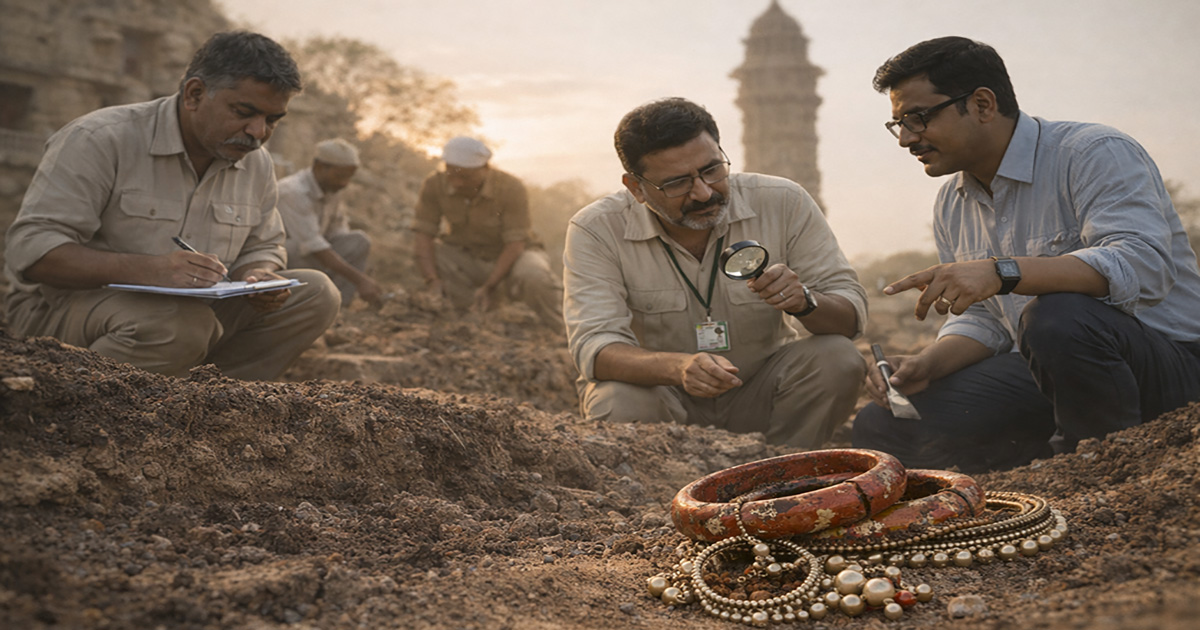
Archaeological evidence of these three Jauhars also exists. In 1958-59, the Archaeological Survey of India conducted excavations near the Vijay Stambh in Chittorgarh Fort, unearthing ash, bones, and lac bangles. A kund was also discovered containing soil, ash, and bones. Estimates suggest more than 40,000 women perished in that kund. To cherish these memories, a memorial festival is held every year at the Jauhar Smriti Sthal in Chittor Fort. Starting with yajna and havan in the morning, it continues till evening with folk dances, recitations, tableaux, various competitions, and a tribute assembly. Thousands of men and women participate wearing saffron attire, remembering the sacrifice of all those heroic women.

The Jauhar Kund in Chittorgarh, where women entered the flames | Image source: Hindi Nativeplanet
India’s history is rife with the Mughals’ cruelty. The Mughals didn’t just loot and perpetrate violence; they went further, committing countless inhuman acts. Among them, the stories of atrocities on Hindu women still chill the heart today. The Mughals abducted Hindu women, forcibly converted them to Islam, imprisoned them in harems, and forced them into prostitution. They raped them and performed forced marriages. It was due to these very deeds of the Mughals that the tradition of Jauhar began in India. Its purpose was to avoid falling into Mughal hands, alive or dead, so that no stain would touch a woman’s honor.
Today, when we read these tales of Jauhar and Mughal cruelty, tears well up in our eyes. The Jauhar of thousands of women teaches us what women did alongside men to protect their faith and honor. History warns us never to forget these atrocities, so that they are not repeated in the future.