Daantewada Massacre: Who Was Madvi Hidma, the Man Behind Martyrdom of 76 CRPF Jawans

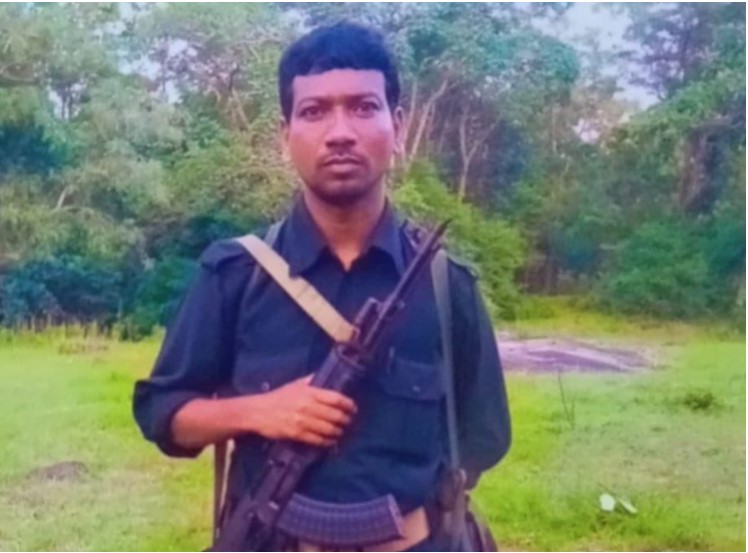
Madvi Hidma, the man behind Daantewada massacre
The 2010 Dantewada ambush stands as one of the most horrific Naxalite attacks in the history of India's internal security, an event that sent shockwaves across the entire nation. This article provides a detailed account of the brutality of that dark day, the ruthless planning orchestrated by the mastermind Madvi Hidma, and the ultimate blow dealt to the Naxalite movement in November 2025, when security forces finally eliminated him.
The Start of the Mission
Dantewada in Chhattisgarh was considered a stronghold of the Maoists, and they held complete dominance over the entire region surrounding the Chintalnar camp. To establish control of the security forces in this area and to flush out the Naxalites, CRPF Deputy Inspector General Nalin Prabhat ordered an 'Area Domination' mission on April 1. According to this order, the troops were required to stay in the forest for 72 hours and secure a 5 to 7-kilometer radius around the camp from Naxalites.
With this objective, the personnel of the 62nd Battalion's 'Golf Company' entered the dense forests of Dantewada. According to the original plan, this operation was to begin at 7:00 AM on April 4, and the troops were to return to the base by April 7. However, while the security forces' patrol was underway, Naxal commander Madvi Hidma had already completed his planning to surround the soldiers.
The Naxalites' Planning Phase
Under the leadership of Hidma, around 1,000 Maoists near Chintalnar village had initiated the planning for this attack well in advance, strategically capitalising on the fact that the soldiers had been using that location for rest for over a week. Prior to the assault, the Naxalites managed to acquire a CRPF wireless set, which enabled Commander Papa Rao to intercept all communications and monitor the troops' movement plans. Furthermore, Maoist scouts had been maintaining direct surveillance on the route for fifteen days and had persistently tracked the 62nd Battalion for twelve hours. In addition to this, it is suspected that the secret plan for the CRPF to move towards Tadmetla was overheard and relayed to the Naxalites by local villagers or sympathizers. Leveraging this comprehensive intelligence, they were able to execute a precise and deadly ambush.
Now, as the Maoists were well aware of the CRPF personnel’s movements, they began to strategize the plan. To surround and attack the soldiers, they identified 'Chinnagutta Boru', located 4 km from the Chintalnar camp, as the ambush site. They divided their forces into eight units and, after practicing at the location for three consecutive days, dug trenches and laid landmines and traps 400 meters from the road. Finally, the Maoists positioned themselves at strategic vantage points on the surrounding high ridges to open fire on the soldiers from three sides.
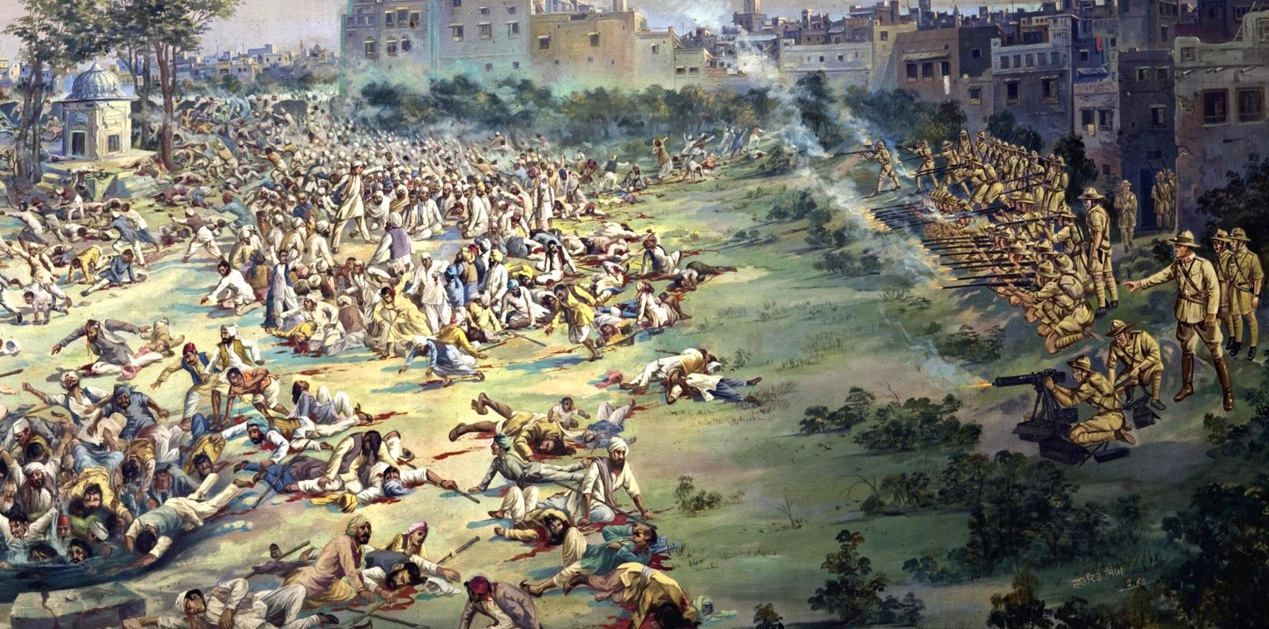
Around 6:00 AM on April 6, they deliberately allowed a contingent of approximately 80–85 CRPF personnel to enter a specific zone, and then launched a fierce attack with rifles and grenades from high-altitude positions on three sides. During this entire ambush, which lasted about 3 to 4 hours, the Maoists targeted the soldiers by firing over 3,000 rounds. After the attack, before retreating into the dense forest, the Naxalites looted about 82 weapons from the martyred CRPF personnel. Furthermore, to completely shatter the morale of the security forces, they brutally mutilated the bodies of some soldiers. This included inhumane acts such as gouging out eyes, using grenades to shatter skulls, and severing body parts or fingers.
Why was the attack carried out?
According to a statement released by the Maoists' Dandakaranya Special Zone Committee, this attack was primarily executed to oppose and halt the Central Government's 'Operation Green Hunt.' In the Maoists' view, the objective of this government campaign was to displace tribals from the forests, dismantle the revolutionary movement, and open up this mineral-rich region for exploitation by multinational corporations. They had meticulously planned this ambush over five to six months by closely monitoring the movements of the security forces. In this horrific attack, a total of 76 personnel, including 15 CoBRA commandos, were martyred, while the letter also claimed that 8 of their own members were killed.
Madvi Hidma: The Naxal Mastermind and Major Operations
The nation was gripped by a wave of outrage following this horrific incident, leading to an investigation by the 'Rammohan Committee.' Upon deep scrutiny, security agencies realized that the entire attack was masterminded by Madvi Hidma. Born in 1981 in the Purvati village of Sukma district and also known as 'Santosh,' Hidma was the head of the Naxalites' PLGA Battalion No. 1. Despite having only a 10th-grade education, he established dominance within the movement through his expert knowledge of the terrain and guerrilla warfare tactics. He orchestrated more than 25 major armed attacks, including the 2010 Dantewada ambush, the 2013 Jhiram Ghati massacre, the 2017 Sukma attack, and the 2021 Sukma-Bijapur encounter. Due to his involvement in these brutal operations, the government had placed a bounty of 50 lakh rupees on his head.
The Elimination of Hidma and a Major Blow to Naxalism
After a decade-long manhunt, security forces achieved a major breakthrough with the help of local intelligence networks and modern technology. On November 18, 2025, in a fierce encounter in the Maredumalli forest of Andhra Pradesh, Madvi Hidma, his wife Raje, and four other Naxalites were killed. The elimination of Hidma, who had spread terror for years, dealt one of the biggest blows to the Naxalite movement. Following his death, citizens in the tribal regions of Sukma and Bastar celebrated by bursting firecrackers. This success significantly strengthened anti-Naxal operations and further boosted the morale of the security forces.