The Chicago Confrontation of 1893: When Swami Vivekananda Exposed Pandita Ramabai’s ‘Propaganda Network’ to the World

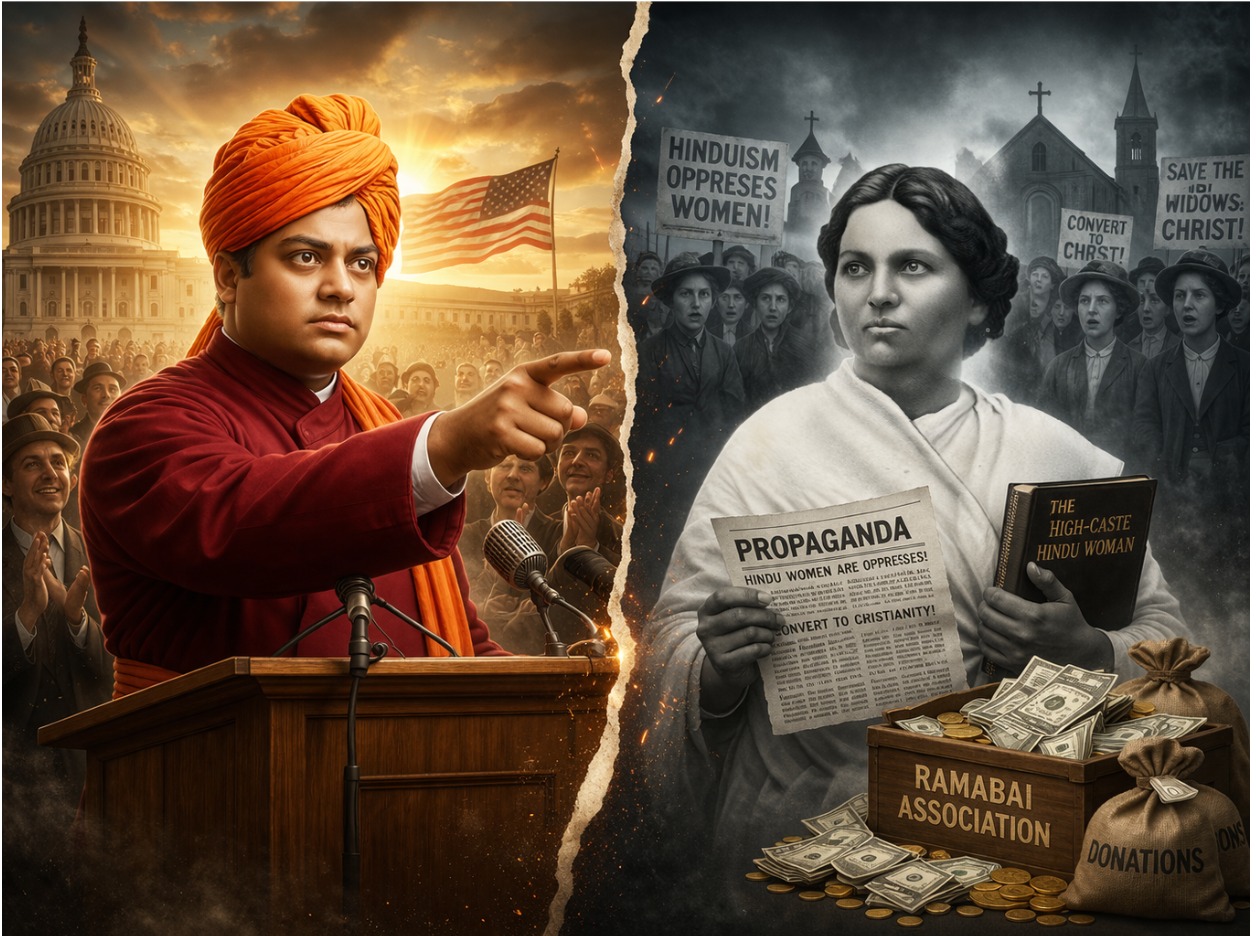
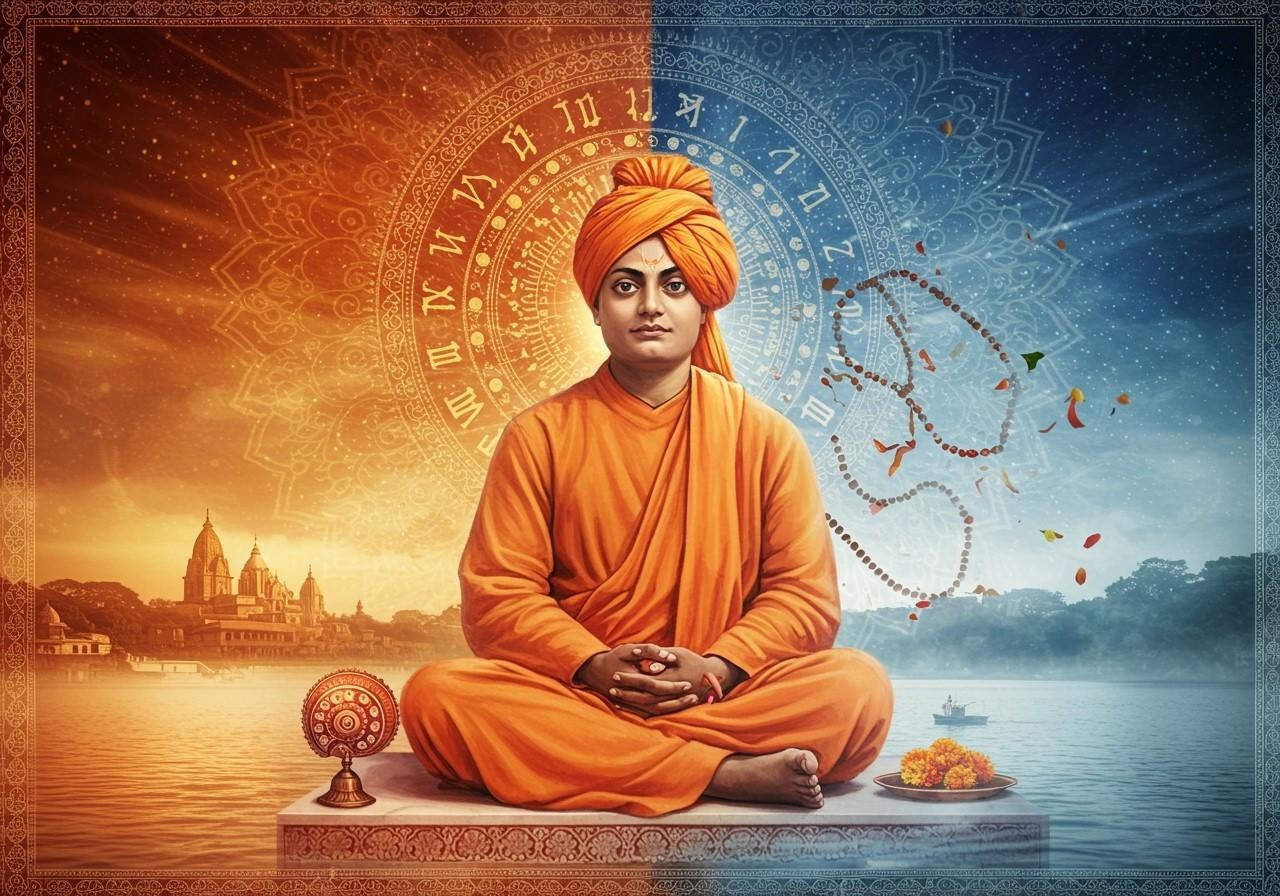
This image is AI-generated
In 1893, a storm broke out on American soil that forever etched the tension between the radiance of Sanātana Dharma and the aggressive propagation of Christianity into the pages of history. At the heart of it stood the fierce opposition of Swami Vivekananda to the very Christian influence around Pandita Ramabai. Born on 23 April 1858, Ramabai passed away on 5 April 1922 in Mumbai. Let us now see how this Indian scholar, once revered as a symbol of Hindu dignity, fell into the net of Christianity and began to conspire on American platforms against one of her own country’s greatest monks. This story exposes the naked truth of greed for donations and of propaganda, where the “Ramabai Association” tried to suffocate Vivekananda’s voice.
Chicago’s Parliament and the Clash of Visions
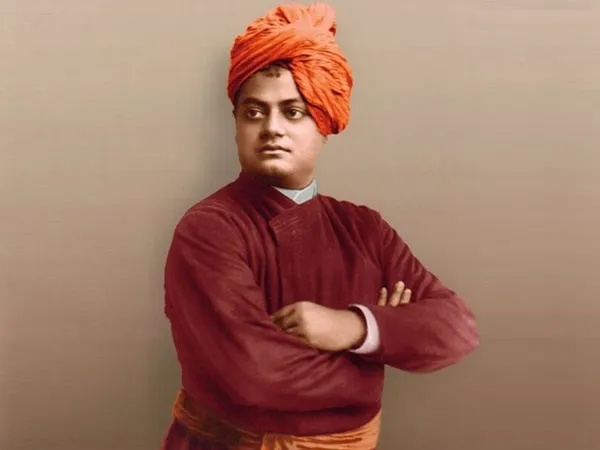
At the 1893 World Parliament of Religions in Chicago, Swami Vivekananda unveiled the glory of the eternal Indian society before the eyes of the entire world. Yet, under Ramabai’s influence, the centres bearing her name launched a fierce campaign against his message. The irony was stark: while Vivekananda highlighted the compassion and dignity embedded in Hindu tradition, Ramabai’s network had been busy painting Hindu society as cruel and oppressive. The ground was already laid for a confrontation.
The Making of a Christian‑Inspired Mission
In fact, Pandita Ramabai had stayed in America from March 1886 to November 1888. During this time, she delivered lectures across the country, speaking about the “plight” of Hindu women and girls, often magnifying and distorting the so‑called “evils” of Sanātana Dharma - some real, many imagined. In 1887 she published the book The High‑Caste Hindu Woman, whose heart‑rending stories captivated the American public. Within a year, the Ramabai Association was formed in Boston, and under it sixty‑three Ramabai centres were set up across the United States. The declared goal was to open schools in India for suffering women, and hence massive appeals for donations were launched. In the very first year, Ramabai received around 16,000 dollars - roughly equivalent to about 5 crore rupees today - and this was merely the beginning of a long chain of fundraising.
(Notably, Ramabai had gone to England in 1883, where she converted to Christianity, and then returned to India via America in 1886, carrying the zeal of Christian mission in her heart.)
Missionary Machinery Against Vivekananda
By the time Vivekananda arrived in America, Ramabai herself had already returned to India; but the Ramabai centres in the United States continued to propagate the image of Hindu women as helpless victims, and used this narrative to collect hundreds of thousands of dollars from American Christian communities. Vivekananda’s speeches, however, shone a bright light on the positives—on women’s honour, widows’ protection, and the cultural dignity of Sanātana Dharma—thereby threatening to dismantle the very image of “Hindus are barbaric” that Ramabai’s centres had laboured so hard to construct. Those under the spell of Christian influence, including Ramabai and the women tied to her centres, grew afraid that if Vivekananda’s words spread, the flow of donations would dry up and their entire missionary enterprise would collapse. From this fear, the first organised opposition arose, as Ramabai’s Christian avatar turned into a weapon against her own ancestral culture.
Vitriolic Campaigns And Public Defamation
The women of the Ramabai centres began organising meetings and press campaigns everywhere. They began branding Vivekananda as a “Hindu reactionary” and as someone who “oppressed women,” because he was speaking the positive truth about Sanātana traditions. The grip of Christian influence had become so deep that these women, once Indians by blood and culture, were now tarnishing the image of their own ancestors in order to keep the churches’ donations flowing. Letters were sent to the press, articles were written, and rumours were spread that Vivekananda was belittling Western civilisation and trying to portray India as morally superior. Ramabai’s money and her missionary network became the fuel for this entire campaign. The opposition was so intense that Vivekananda faced resistance at every step, yet he never retreated; instead, he treated it as an opportunity to present the truth even more firmly and fearlessly.
The Boston Ladies’ Club Episode
When Vivekananda reached America, one of the first places he visited was the Ladies’ Club in Boston. There, almost every seat was filled by Christian‑influenced women from Ramabai centres. With calm and clarity, the Swami addressed them, describing the real condition of Indian women and explaining that, in the nineteenth century, Hindu widows and women enjoyed far more protection and honour than many American women of the same period. The truth, however, sat ill with those present, because years of Christian influence had made them unwilling or even unable to hear anything positive about Hindu society. The moment they stepped out of the club, they intensified the campaign of slander against him- articles, letters, taunts, and caricatures flooded the press. The Ramabai effect was plainly visible: she had become a Christian preacher wearing a Hindu skin, for whom donations mattered more than anything else.
The Decisive Brooklyn Speech
The most dramatic and pivotal moment came in Brooklyn, where Vivekananda delivered a historic lecture titled “Some Customs of the Hindus: What They Really Mean, How They Are Misinterpreted.” There, he laid bare the propaganda of the Ramabai centres. The Swami thundered: “I am astonished at the falsehoods they have invented about me. Every day at Chicago, slanders were being spread against me. These women are certainly the most Christian of all Christians!” He based his arguments on solid facts, exposing how Christian missionaries and the Ramabai centres were running a false campaign in the name of helping Hindu women - using the supposed “backwardness” of India to lure donations by presenting Western civilisation as superior and Hindus as savage. This was a direct blow to Ramabai’s entire project. The influence of Christianity had blinded her so deeply that she was selling Hindu society on foreign soil for the sake of donations. The speech proved to be Vivekananda’s victory, shaking the very foundation of Ramabai’s empire.
The Enduring lesson of this Story
This episode teaches that under the influence of Christianity, even the most learned individual can fall to shocking depths. A scholar like Ramabai, who traded the weaknesses of Hindu society for donations, was exposed by Vivekananda, who rekindled the lamp of truth. Even today, centres such as Ramabai’s Mukti Mission continue to operate, where the game of “service in the name of charity” often masks religious conversion, and the greed for donations ends up crushing local culture. This struggle reminds us that the dignity of Sanātana Dharma never kneels before propaganda or money. Vivekananda’s story remains relevant in today’s India, where people like Ramabai still lurk in different forms - but the voice of truth, once it is spoken with courage, always emerges victorious. The lesson is clear: hold your roots firmly, remain vigilant against propaganda, and, like Vivekananda, have the courage to speak the truth.