10 Important Things About Swami Vivekananda’s 1893 Speech That Changed How the World Saw India

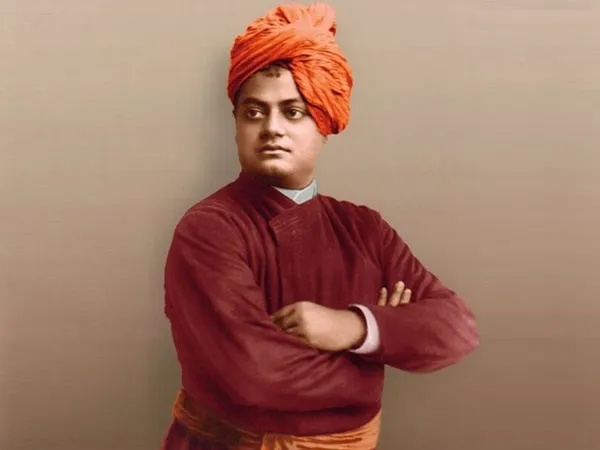
11th September, 1893, let’s go back to a moment that honestly doesn’t get talked about enough. That day, a young Indian monk named Swami Vivekananda stood on a stage in Chicago, looked at the huge crowd in front of him, and simply began with, “Sisters and Brothers of America.” This wasn’t just a normal speech; it was a historic statement that India is telling the world: “We have something valuable to say.” It wasn’t about religion alone; it was more about unity, tolerance, and the depth of Indian thought. Now, following this, let’s take a look at why this speech still matters today and how it shaped the world’s view of India, but before that, we will understand some of the basic and important information, before moving towards his speech.
Swami Vivekananda’s iconic address at the World’s Parliament of Religions in Chicago on September 11, 1893, remains a defining moment in global religious discourse and India’s spiritual diplomacy. Here are 10 key takeaways that highlight the deep impact of his speech:
What Made “Sisters and Brothers of America” So Powerful?
When Swami Vivekananda began his speech with “Sisters and Brothers of America,” it wasn’t just a line; it was a cultural breakthrough. It instantly broke the ice between East and West, breaking the expected formality of international speeches. The audience of more than 7,000 people erupted into a standing ovation that lasted nearly two minutes. This deep emotional resonance showed how, even in 1893, a simple yet heartfelt phrase could humanize someone from a distant land. It made the world listen, not just to a man from India, but to the spiritual voice of a great ancient civilization.
How Did Vivekananda Redefine Hinduism for the West?
Until then, most Westerners saw Hinduism through a colonial lens, exotic, chaotic, even backward. Vivekananda dismantled this misconception by presenting Hinduism as a highly philosophical, rational, and deeply spiritual system based on logic, tolerance, and peace. He explained the concepts of Advaita (non-duality), the Upanishads, and the eternal truth of the soul in clear terms. He showed that Hinduism was not about idol worship or caste dominance, but about the oneness of all beings. This made the West see Hinduism as a serious spiritual science, rather than a primitive faith.
What Was His Core Message About Religion?
Vivekananda’s message wasn’t just about Hinduism; it was about harmony among all religions. He spoke against religious bigotry, fanaticism, and violence in the name of faith. He highlighted India’s tradition of respecting every religion and accepting truth in all paths. One of his most quoted lines was: “We believe not only in universal toleration but we accept all religions as true.” This radical spiritual diplomacy stood in sharp contrast to the West’s religious exclusivity. His message laid the foundation for modern interfaith dialogue and made the Parliament of Religions a truly historic event.
Did This Speech Help Combat Colonial Stereotypes?
Absolutely. Under British rule, India was projected globally as a land of poverty, superstition, and ignorance. Vivekananda’s presence and powerful speech shattered those stereotypes. Here was a man, dressed in saffron robes, speaking fluent English, quoting scientific reasoning, and offering spiritual insights that left Western thinkers speechless. He turned the image of the “Indian subject” upside down, no longer a victim of empire, but a torchbearer of ancient wisdom. His speech served as a form of cultural resistance against the colonial narrative that belittled Indian knowledge systems and spiritual traditions.
How Did Western Media and Public Respond?
The American press went wild with praise. Newspapers like the New York Herald and Boston Evening Transcript called him “a great orator by divine right” and “undoubtedly the greatest figure in the Parliament.” He wasn’t just another speaker; he was a sensation. Public lectures he gave afterward were packed, and he was invited to speak across the U.S. His calm demeanor, magnetic voice, and intellectual depth impressed audiences who had never encountered an Indian monk before. For many Americans, he became their first real introduction to India—an introduction that shattered old prejudices.
How Did This Speech Influence American Spiritual Thought?
The speech had a ripple effect on the spiritual landscape of the West. It opened doors for Indian spirituality, especially Vedanta and yoga, to enter American consciousness. Vivekananda stayed in the U.S. for nearly three years, founding Vedanta Societies in New York and San Francisco. His ideas influenced spiritual seekers and intellectuals alike, including thinkers like William James and Nikola Tesla. It started a wave of interest in Eastern thought that would later be carried forward by other Indian philosophers, gurus, and yoga teachers. His Chicago speech marked the beginning of a spiritual bridge between India and the West.
What Was the Impact on India’s National Consciousness?
Back in colonial India, the news of Vivekananda’s triumph was like a thunderbolt of pride. Indian newspapers, especially in Bengal, printed every detail of his success. He was hailed as a national hero who showed the world that India was not just a land of snake charmers but of saints and sages. This deeply inspired the youth and freedom fighters. For the first time in decades, India had a reason to feel proud on a global stage. His success proved that Indian culture and intellect were not inferior and gave moral strength to the early nationalists.
Did This Moment Spark New Institutions or Movements?
Yes. After returning to India in 1897, Vivekananda founded the Ramakrishna Mission, combining spiritual teachings with practical service. Inspired by his own guru, Ramakrishna Paramhansa, the mission took up education, healthcare, and disaster relief, reflecting his belief in “service to man is service to God.” In the U.S., his students formed Vedanta Societies, which still operate today, teaching Vedanta philosophy and interfaith dialogue. These institutions weren’t just religious; they were socially impactful, shaping a new model of how spirituality could be practiced in the modern world.
ALSO READ: “7 Facts About Shaheed Rajguru – The Revolutionary Who Became Immortal at Just 22”
How Has India Commemorated the Speech Over the Years?
India has honored this historic moment in many ways. The Ramakrishna Mission observes September 11 as Universal Brotherhood Day, organizing talks, debates, and youth events nationwide. In 2013, marking the 150th birth anniversary of Vivekananda, the Indian government issued coins and postage stamps in his honor. Statues of him were installed at key public spaces, including the University of Chicago campus. Schools continue to teach his message of tolerance and self-confidence. The Ministry of Youth Affairs also celebrates National Youth Day on his birthday (January 12), to inspire students through his legacy.
Why Does This Speech Still Resonate Today?
In a world still torn by religious violence, cultural divisions, and identity politics, Vivekananda’s call for unity in diversity feels more relevant than ever. His belief that every religion holds truth and that love is more powerful than hate is echoed in modern peace movements. His words inspire not just religious people, but scientists, youth leaders, and philosophers. In India, he remains a symbol of cultural pride and a reminder of what Indian civilization truly stands for. His Chicago speech is not just a relic; it’s a roadmap for global harmony.
.png)