11 Facts to Know About Sir Dorabji Tata – The Visionary Who Built India’s Industrial, Sporting & Philanthropic Legacy

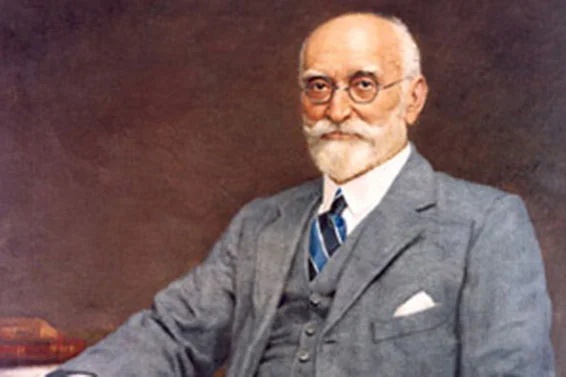
Sir Dorabji Tata (1859–1932) was Jamsetji’s eldest son. He played a significant role in the growth of the Tata Group and was knighted in 1910 for his contributions to India’s industrial development. Dorabji had no children and dedicated much of his life to expanding the family’s business legacy.
1. How did Sir Dorabji Tata’s birth and early upbringing position him for leadership within the Tata legacy?
Born on August 27, 1859, when his father, Jamsetji Nusserwanji Tata, was just 20, Sir Dorabji Tata grew up in the intellectual and entrepreneurial shadow of one of India’s foremost industrial visionaries. Educated initially at the Proprietary High School in Bombay, Dorabji was primed early on to inherit not just a business, but a larger mission of nation-building.
2. What role did international exposure play in shaping Dorabji Tata’s worldview and ambitions?
His formative years in England, under private tutors in Kent and later at Gonville and Caius College, Cambridge, were pivotal. This exposure, followed by his return to India and education at St. Xavier’s College, gave Dorabji both the global perspective and local grounding necessary to steer the Tata legacy with vision and purpose.
3, Before joining the family business, how did Jamsetji Tata ensure Dorabji developed a broad skillset?
Jamsetji encouraged Dorabji to gain hands-on experience across fields—including journalism—before entrusting him with the textile project in Pondicherry. This experience laid the foundation for Dorabji’s stewardship of Empress Mills in Nagpur, honing his industrial instincts and managerial expertise.
4, How did Dorabji Tata interpret his father’s philosophy of wealth and responsibility?
Deeply influenced by Jamsetji’s ethical vision, Dorabji once reflected, “To my father, the acquisition of wealth was only a secondary object in life.” This philosophy deeply informed his own decisions—placing national upliftment, intellectual progress, and industrial self-reliance above personal gain.
5, In what ways did Sir Dorabji Tata promote education and scientific research in India?
Perhaps his most enduring educational contribution was the establishment of the Indian Institute of Science in 1909—a major leap toward advancing scientific and technical research in India. This institution reflected Dorabji’s commitment to empowering Indian intellect and innovation.
6. How did Sir Dorabji Tata become a foundational figure in India’s Olympic journey?
Sir Dorabji Tata was not only a pioneer in industry but also a visionary in sport. At a time when India had no formal sports administration, Dorabji personally financed the country’s first Olympic team for the 1920 Antwerp Games. Four years later, he again funded the contingent for the 1924 Paris Olympics, ensuring India’s continued presence on the world stage. Realising the need for institutional backing, he helped create the provisional All India Olympic Committee and supported the launch of the All India Olympic Games in 1924 (the precursor to today’s National Games). These initiatives culminated in the formation of the Indian Olympic Association in 1927, with Dorabji as its first President. His efforts laid the foundation for India’s Olympic movement, making him one of the country’s earliest champions of international sport and proving that his vision for nation-building extended well beyond industry.
7. What challenges did Sir Dorabji face in expanding the Tata enterprise after World War I?
Post-war, Dorabji led an ambitious five-fold expansion of the Tata enterprise. However, unforeseen global disruptions—rising costs, labour shortages, and Japan’s devastating earthquake (a key steel buyer)—combined with plummeting steel prices, created a financial storm that threatened the survival of Tata Steel.
8. How did Dorabji’s personal sacrifice during Tata Steel’s 1923 crisis reflect his leadership ethos?
In a remarkable act of commitment, Dorabji pledged his entire personal fortune—including his wife’s jewellery—to secure loans that kept Tata Steel afloat. This selfless gesture earned admiration from national leaders like Jawaharlal Nehru and Mohammed Ali Jinnah, who recognised Tata Steel as vital to India’s industrial aspirations.
ALSO READ: ‘Brahmo Samaj: Raja Ram Mohan Roy’s Legacy of Reform and the Divisions It Created”
9. Beyond industry and sport, what philanthropic institutions did Dorabji establish, and what personal experiences shaped them?
Dorabji’s philanthropy was deeply personal as well as visionary. The most poignant example was the Lady Tata Memorial Trust, founded in 1932 after the death of his wife, Lady Meherbai, from leukaemia. At a time when the disease was scarcely understood and treatment options were nonexistent, Dorabji transformed his grief into global action by endowing one of the world’s earliest dedicated research funds for leukaemia. The Trust continues to support international scientists and Indian researchers in hematology and allied fields, carrying forward Meherbai’s memory as a beacon of hope for patients worldwide. In addition, Dorabji created the Lady Meherbai D. Tata Education Trust, enabling Indian women to train in social work and public health overseas, and the Sir Dorabji Tata Trust, which remains one of India’s most influential philanthropic institutions in education, healthcare, and social welfare. Together, these initiatives reflected Dorabji’s unique ability to turn personal loss into lasting contributions for humanity.
10. What were the final years of Dorabji Tata’s life marked by, and where did he pass away?
Even in his final years, Dorabji remained devoted to philanthropy. On April 11, 1932, he left for Europe with plans to continue his charitable work and to visit his late wife’s grave. He passed away on June 3, 1932, in Bad Kissingen, Germany—leaving behind a legacy not merely of wealth, but of visionary patriotism and institutional nation-building.
11. What is the enduring legacy of Sir Dorabji Tata in modern India?
Sir Dorabji Tata’s life embodies the idea of industrial enterprise in service of national development. His contributions to science, sports, education, and public welfare continue to shape India’s institutional landscape. He remains a beacon of responsible capitalism and visionary philanthropy.
.png)
.jpg)