Brahmo Samaj: Raja Ram Mohan Roy’s Legacy of Reform and the Divisions It Created

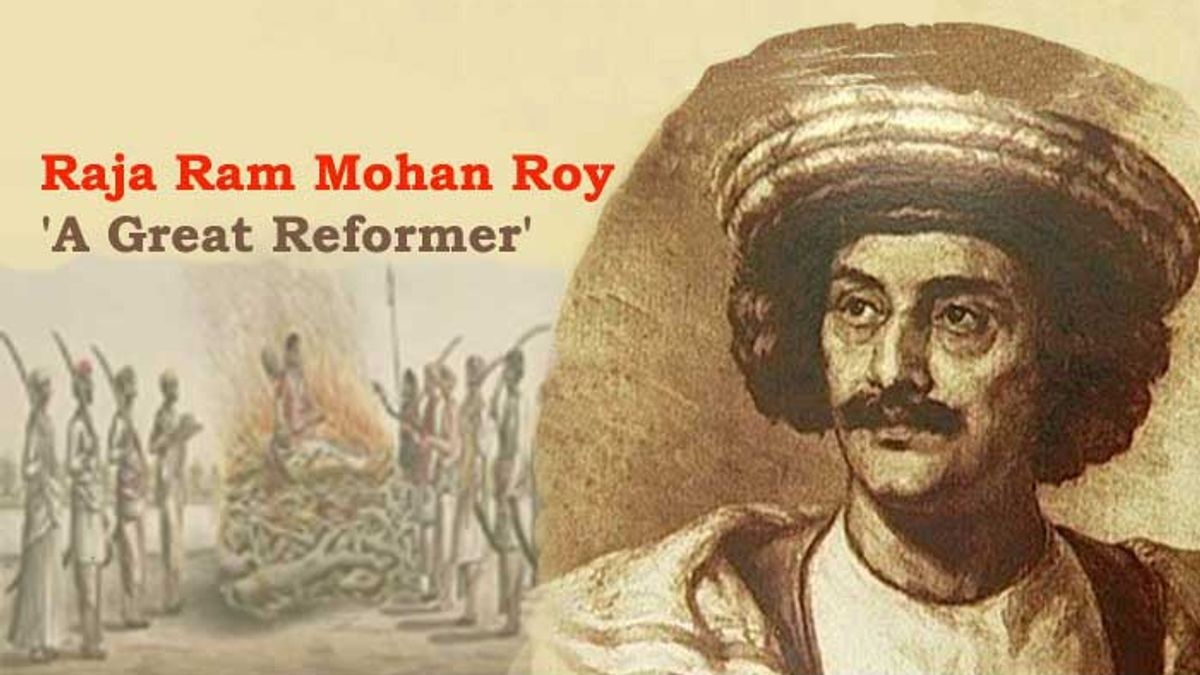
Over two centuries after its inception, the Brahmo Samaj—one of India’s earliest socio-religious reform movements—remains a subject of reverence, criticism, and renewed historical inquiry. While once hailed as a torchbearer of India’s cultural renaissance and modernist reform, recent debates have resurfaced questions about its ideological legacy and internal cohesion.
Who founded the organization? Raja Ram Mohan Roy founded the Brahmo Samaj in 1828. (India Today)
What were their backgrounds or motivations? Raja Ram Mohan Roy was a scholar, reformer, and polyglot deeply concerned with practices like Sati, caste discrimination, orthodox Hindu practices. He aimed to purify Hinduism by promoting monotheism and rationalism. (India Today), Print
Are the founders still active or influential? While Raja Ram Mohan Roy passed away in 1833, his ideological influence remains significant in India’s religious reform and educational movements. Later reformers like Debendranath Tagore and Keshab Chandra Sen continued to develop the movement.
1.2 Establishment Date
When was the organization formally established? The Brahmo Samaj was formally established in August 1828 in Calcutta (now Kolkata). (India Today),
Under what circumstances or socio political environment? The Samaj emerged during a period of British colonial rule, growing Western influence, and rising Indian intellectual awakening. Social practices like Sati, child marriage, and caste rigidity were under critical examination
1.3 Core Purpose / Mission
What is the officially stated mission or purpose? The Brahmo Samaj’s mission was to reform Hinduism, promote monotheism, abolish social evils, and encourage rational thought and morality.
Has this evolved over time or remained constant? While its core religious and ethical values remained, the Brahmo Samaj later diversified into two major factions: Adi Brahmo Samaj (conservative; led by Debendranath Tagore) Brahmo Samaj of India (progressive; led by Keshab Chandra Sen)
2. Constitution Block
2.1 Organizational Structure
What is the internal hierarchy or leadership model? Initially, leadership was based on intellectual and moral authority, not rigid hierarchy. Over time, central committees and councils managed affairs.
Are there regional chapters, wings, or verticals? Yes, branches of the Brahmo Samaj were established in other parts of Bengal, Punjab, and South India, notably in Madras and Bombay.
2.2 Legal Registration
Is the organization formally registered? Yes. Various branches of the Brahmo Samaj were registered under Indian Trusts Acts and local governance frameworks.
Under what legal act or statute does it operate? Some Brahmo institutions were registered under the Societies Registration Act of 1860 or Religious Endowments Acts, depending on region and time.
2.3 Governance Framework
How are decisions made (board, committee, leadership council)? Decisions are typically made by central councils or managing bodies, which evolved over time. Some factions had more formalized governance models.
Are there checks, balances, or election mechanisms? In certain Samaj groups, elections or nominations occurred for committee roles. However, much authority historically rested with prominent leaders.
3. Strengths
3.1 Influence, Funding, Leadership, Policy Alignment
What areas or sectors does the organization influence?
- Religion: Promoted monotheism and rational spirituality
- Education: Advocated for modern education, especially for women
- Social Reform: Fought against Sati, casteism, and child marriage
- Politics: Inspired Indian nationalism and reformist policies
Where does its funding come from (donors, government, internal sources)? Primarily from philanthropic individuals, reformist families, and membership donations. Later some educational institutions received government aid.
Who are the key leaders and what makes them effective?
- Raja Ram Mohan Roy: Visionary reformer with deep knowledge of Eastern and Western thought
- Debendranath Tagore: Gave structure and scriptural depth
- Keshab Chandra Sen: Charismatic, spread the Samaj across India and connected with international reformers
Is the organization aligned with any major public policies? Historically, Brahmo Samaj supported British policies on social reform, like the abolition of Sati and promotion of women’s rights. It influenced modern secular, egalitarian values embedded in Indian constitutional principles.
4. Weaknesses
4.1 Internal Conflicts, Legal Battles, Declining Membership The Brahmo Samaj split in 1866 due to doctrinal differences between Debendranath Tagore and Keshab Chandra Sen.
This led to the formation of Adi Brahmo Samaj and Sadharan Brahmo Samaj—a major internal division.
Membership has significantly declined in recent decades; it has become largely symbolic or ceremonial in presence.
There is no current major legal battle, but the group has historical legal relevance via the Brahmo Marriage Act (1872).
Legal Cases: While not a litigious organization in general, legal recognition of marriages under Brahmo customs led to challenges, prompting the Brahmo Marriage Act of 1872.
This was an early effort to ensure legal status for non-Hindu and non-Islamic religious communities.
Membership Decline:
Yes, especially post-independence.
With the rise of secularism, mainstream Hindu reform movements, and political priorities, Brahmo Samaj’s influence waned significantly by the late 20th century.
It continues today with small communities in Kolkata and elsewhere, mostly as a legacy institution.
5. Narrative Block
5.1 Narratives It Supports
Promoted Ideologies:
- Monotheism, universalism, rationalism, rejection of idol worship.
- Social reform: abolition of caste, widow remarriage, women’s education, and opposition to child marriage.
- Ram Mohan Roy was greatly influenced by western modern thought and stressed on rationalism and modern scientific approach.
- Ram Mohan Roy’s immediate problematique was the religious and social degeneration of his native Bengal. (www.drishtiias.com)
- He believed that religious orthodoxies have become causes of injury and detrimental to social life and sources of trouble and bewilderment to the people, instead of tending to the amelioration of the condition of society.
Raja Ram Mohan Roy concluded that religious reform is both social reform and political modernisation. Ram Mohan believed that each sinner must make restitution for his sins and it is to be done through self-purification and repentance and not through sacrifices and rituals.
Tied to Communities/Policies:
- Upper-caste Bengali bhadralok and emerging educated middle class.
- Closely tied to progressive education reforms, Indian Civil Society, and social legislation.
5.2 Narratives Surrounding it -Opposed Practices/Groups: Orthodox Hinduism (especially polytheism, rituals, caste hierarchy). -Superstitions and dogma in all religions. Any religion-bound patriarchy or casteism. – Ram Mohan was attracted to Islamic monotheism. He said that monotheism is also the fundamental message of Vedanta. (www.drishtiias.com)
– His idea of a single, unitarian god was a corrective to the polytheism of orthodox Hinduism and to Christian trinitarianism. He believed that monotheism supported one universal model for humanity.
5.3 Narratives Against It
Criticisms: -Labeled by Hindus of the time as “Westernized” or “Anglicized” Hindus. www.degruyterbrill.com -Accused by some of being too elitist and urban-centric. .degruyterbrill.com -Internal critics said it lacked political assertiveness during the later nationalist phase. (several books)
Nature of Criticism:
Mixed: some based on genuine religious difference, others driven by political or cultural insecurities.
5.4 Narratives In Support of It
- Advocated monotheism, rationalism, and moral purity.
- Supported social reform: women’s education, widow remarriage, and abolition of caste and child marriage.
- Promoted education and enlightenment ideals influenced by the European Renaissance and Indian Vedantic thought.
Promoters:
- Press outlets of the Bengal Renaissance, English-educated Indians, and progressive societies.
- Missionaries also sometimes appreciated its anti-idolatry stance.
Alliances or Voting Patterns
Alliances:
Allied with Indian social reform movements, like Arya Samaj, Indian National Congress, and educational institutions like Hindu College.
Electoral Influence:
Minimal direct influence. But ideologically supported modern democratic principles, secular education, and civic participation.
6. Controversies Block
6.1 Public or Legal Disputes
Legal Cases:
- Prominent in shaping legal discourse via the Brahmo Marriage Act (1872).
- Legal resistance from orthodox communities for not aligning with traditional Hindu law.
- The Contribution of Raja Ram Mohan Roy- The Founder of the Brahmo Samaj stophindudvesha
Background & Image in Indian History
- Often hailed as a modernist and reformer, but many of his beliefs aligned closely with British colonial interests.
- Supported by colonial historians and British officials for promoting Western-style reforms.
- Worked (1803–1814) as diwan for East India Company officials, then moved to Calcutta to focus on reforms.
Religious Views and Brahmo Samaj
- Criticized idol worship and Hindu rituals—seen by some as denigrating Hinduism. Founded Brahmo Samaj, inspired by Western thought. Rejected Vedas, Ramayana, Mahabharata as divine—this alienated traditional Hindus.
- Founder of Atmiya Sabha (1814) and Brahmo Sabha (1828), which evolved into the Brahmo Samaj
- Advocated monotheism, criticizing ritualism, idol worship, caste divisiveness, and intellectual stagnation
- Translated and disseminated Vedantic teachings in English/Bengali to democratize spirituality
Social Reforms & Women’s Rights Drashti IAS, journalijdr
Led the campaign against sati, using his Bengali paper Sambad Kaumudi from 1821 to denounce the practice His activism influenced the 1829 Bengal Sati Regulation by Lord Bentinck Also fought for widow remarriage, women’s property rights, women’s education, and against child marriage, polygamy, and caste discrimination
Legacy & Controversies
- Remembered as the “Father of Indian Renaissance”, sparking the Bengal Renaissance
- Inspired future leaders like Swami Vivekananda, Tagore, Aurobindo .
- Faced strong orthodox backlash—e.g., the creation of the conservative Dharma Sabha opposing sati abolition
- Critics argue he espoused a Eurocentric, colonial-influenced reform agenda; a Reddit debate noted:
“Raja Ram Mohan Roy is often glorified … but in reality, he was India’s first Westernized elite … perfect tool for the British to push their ‘civilizing mission’”
.png)
.jpg)