Chittisinghpora Massacre: "Everyone Died, I Pretended...": Nanak Singh's Story Will Shock You

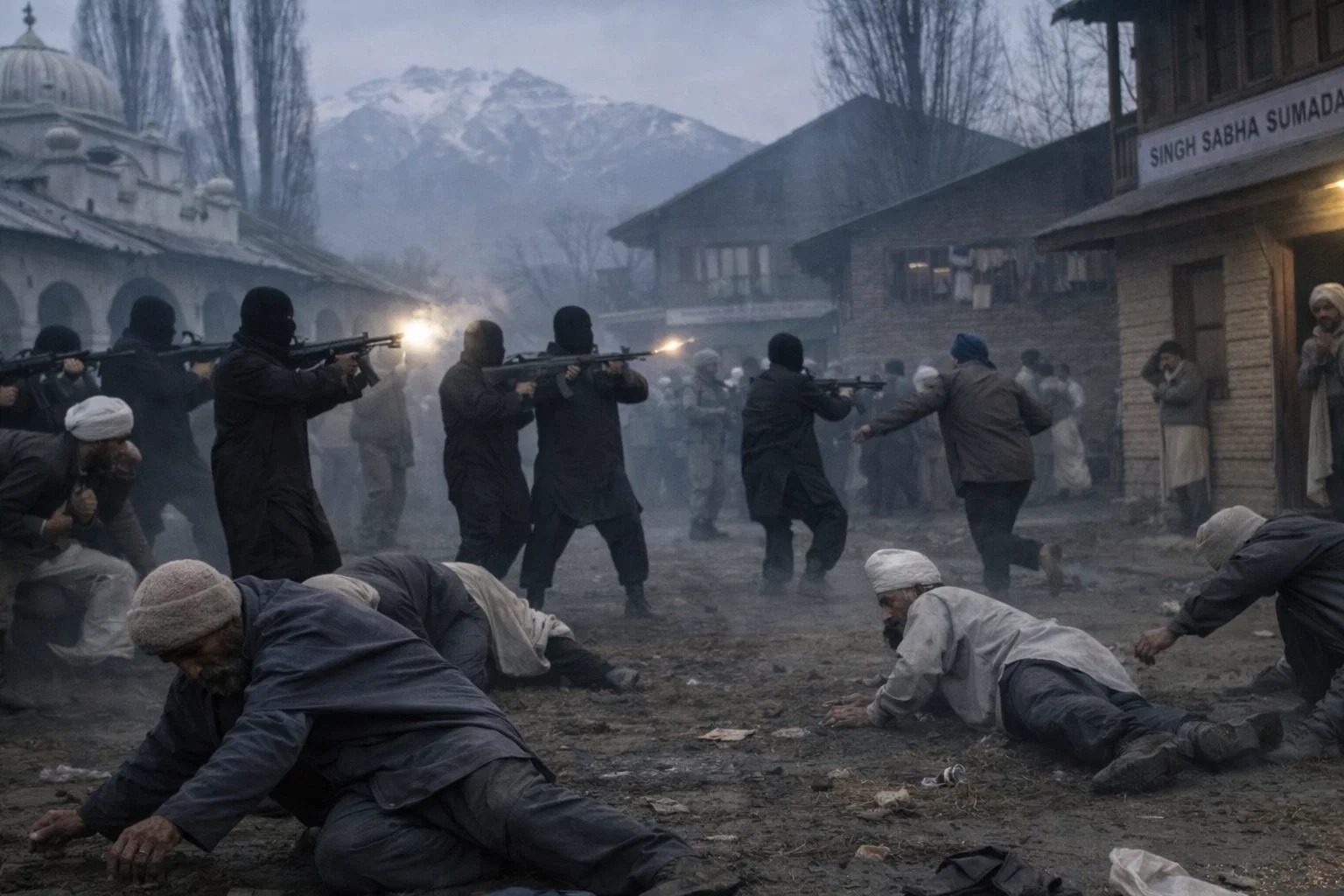
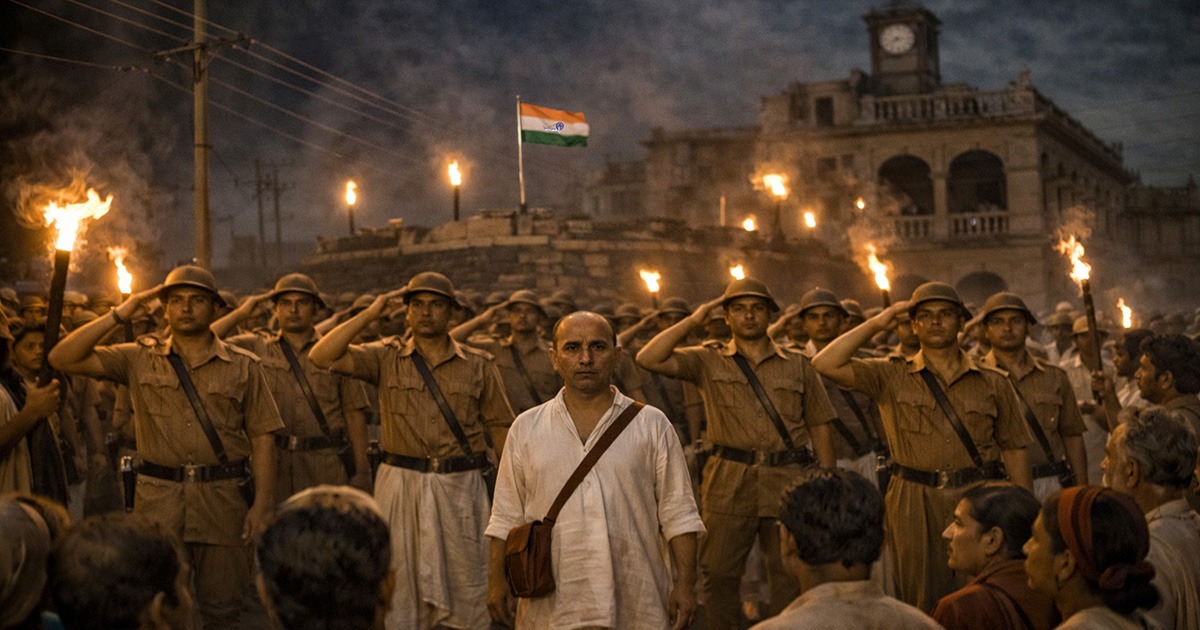
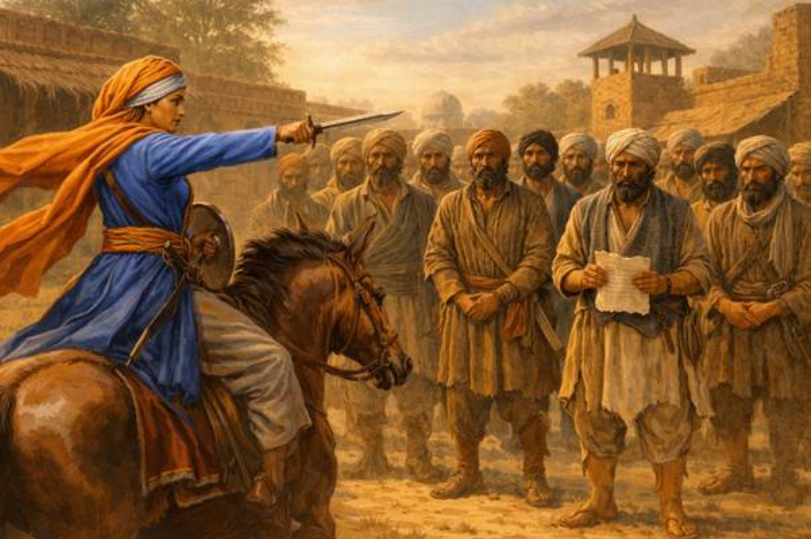
This image is AI-generated
On the evening of March 20, 2000, hours before then U.S. President Bill Clinton’s visit to India, 15–20 masked terrorists in military-style uniforms barged into the Sikh-dominated village of Chittisinghpora in Anantnag, south Kashmir, and carried out a targeted massacre of the minority Sikh community. They split into two groups, rounded up Sikh men outside Shaukeen Mohalla Gurdwara and Singh Sabha Sumandri Hall Gurdwara barely 150 metres apart and opened indiscriminate fire at point-blank range, killing 36 men. The attack left around 30 women widowed, many children orphaned, and spread fear across the Sikh community, prompting several families to leave the Valley. In the aftermath, several Sikh families chose to leave the region and shift to other parts of Jammu and Kashmir or outside the state, fearing for their safety and uncertain about their future in the Valley. Only one man survived Nanak Singh; it's the story of the sole survivor.
Nanak, now an older person with a grey beard and a gentle voice, used to work for the government. That night, Nanak lost his son Gurmeet Singh, his brother Darbari Singh, and three cousins: Sartaj Singh, Kulbeer Singh, and Ujjal Singh. He had put on his pheran, a traditional Kashmiri cloak. Like every day, he and others were gossiping as they walked home from the temple. The gunmen came into their village through a narrow path from the back. At first, their presence didn't seem too alarming, as it was somewhat common to see armed people in those days. They thought they were soldiers. But soon, their actions showed that something very wrong was about to happen. There were many of them, and one person seemed to be giving orders. They split up. One group went towards a religious building down the road.
Nanak and others asked the gunmen what was happening, if everything was alright. The gunmen replied that everything was fine, and they just needed to check identity cards, saying it would only take about 10 minutes. Some of the gunmen then went into nearby houses and brought out more men. Among those brought out were Nanak's son Gurmeet Singh, who had just finished school, Nanak's 28-year-old brother Darbari Singh, who was a farmer with two young children, and Nanak's three cousins: 22-year-old Sartaj Singh, 20-year-old Kulbeer Singh, and 25-year-old Ujjal Singh. Sartaj Singh had been married for only 10 months. The gunmen asked about militants, saying they had information that some were visiting the village. Nanak and others replied that they had not seen any militants and that the gunmen might have wrong information. Dark thoughts began to cross Nanak's mind. He quietly whispered to his neighbor, Charan Singh, standing nearby, expressing a terrible fear that they were all going to die that day. A murderous rage could be sensed in the gunmen's actions.
The people were lined up outside one of the religious buildings. There were 19 individuals in this group. Nanak's son Gurmeet Singh was standing right next to him. At the same time, the other group of gunmen lined up 17 people outside another religious building, about 150 meters away. It was 7:45 in the evening. There were about eight to ten gunmen in front of Nanak's group. Still, the people were unsure of the gunmen's true plan.
Then, one of the gunmen fired a shot into the air, a signal to the other group. After that, they began shooting at the people without stopping. The firing went on for several minutes. Everyone fell to the ground. Nanak did not get hit by a bullet at first but dropped to the ground and pretended to be dead, quietly praying, "Waheguru Ji, Waheguru Ji." The firing stopped, and the gunmen shone torches on the fallen. One of them gave an order: "Shoot these people again. Make sure no one is left alive." At that moment, Nanak was ready to die.
They fired again. A bullet hit Nanak's left leg and broke a joint in his right thigh. He did not scream. As the gunmen left, disappearing the way they had come. He was bleeding heavily. Opening his eyes, he saw that someone had clutched him with an arm. Lifting the arm, he realized it was his son, Gurmeet. Nanak shook his son's body, called him, and tried to wake him up. Then, touching his son's head, it was found to be soaked in blood. Tears flowed down Nanak's face. He was unable to stand. A drink of water was desperately wanted.
A pile of bodies lay in front of Nanak, in a pool of blood. Some were still moving slightly. Each person had been hit by many bullets, perhaps 10 to 12. That terrible scene is still clearly in his mind. His cousin Sartaj Singh, a strong person, managed to walk to a house despite being hit by many bullets. Then, villagers arrived, crying and grieving. Nanak was picked up. The gunmen had turned the village into a place of slaughter. The road was red with blood, and blood squished underfoot.
Nanak and his injured cousin Sartaj Singh were placed in a room. There were no vehicles in the village. Men, women, and children were all crying and screaming for help. Some young people from the village ran to the police station, about seven kilometers away. Nanak was also crying, screaming. He had witnessed the brutal death of his loving son.
Sartaj Singh, in a weak voice, told Nanak to stop crying. By the time the police reached the village, Sartaj Singh had passed away. It is believed that with immediate medical help, Sartaj Singh might have lived. The police took Nanak to a hospital, and from there to another, and then to an army hospital, where he stayed for 25 days and had one operation. Still unable to walk, he went to Amritsar, where a Sikh committee helped find a senior doctor.
He underwent two more surgeries, including a hip replacement, and spent months recovering, unable even to attend his son’s final rites. Devastated by the trauma, he later stayed with relatives, as nothing is more painful than witnessing loved ones killed so brutally.
As the sole survivor, Nanak gave interviews and testified in courts and government offices, but no justice followed. The massacre appeared planned, yet investigations were flawed and promises unfulfilled. It was later suggested the killings were meant to send a misleading message about Kashmir during former U.S. President Bill Clinton’s visit.
The government asserted that the targeted killing was carried out by Islamic militant groups Lashkar-e-Toiba and Hizbul Mujahideen, like the other massacres in Jammu and Kashmir that have been happening for years.
A Lashkar-e-Taiba militant, Suhail Malik, was arrested in connection with the massacre and reportedly showed no remorse, stating it coincided with U.S. President Bill Clinton’s visit to India. He was later acquitted by a Delhi court. Malik was a nephew of LeT chief Hafiz Saeed.
After the massacre, Nanak refused to leave Kashmir, choosing to remain in his village despite the trauma. Each year, residents mourn the victims for three days, though hope for justice has faded and the killings remain unresolved. The victims’ families received compensation and government jobs.
Massacre of innocent, unarmed villagers, especially non-Muslims, has been a regular occurrence in Jammu and Kashmir for decades. Islamist terrorists operating with secessionist forces in the valley have targeted non-Muslims on many occasions. Poor, innocent villagers in remote hamlets of the valley have on several occasions been massacred by terrorists.
.png)